
Brodetto di Pesce
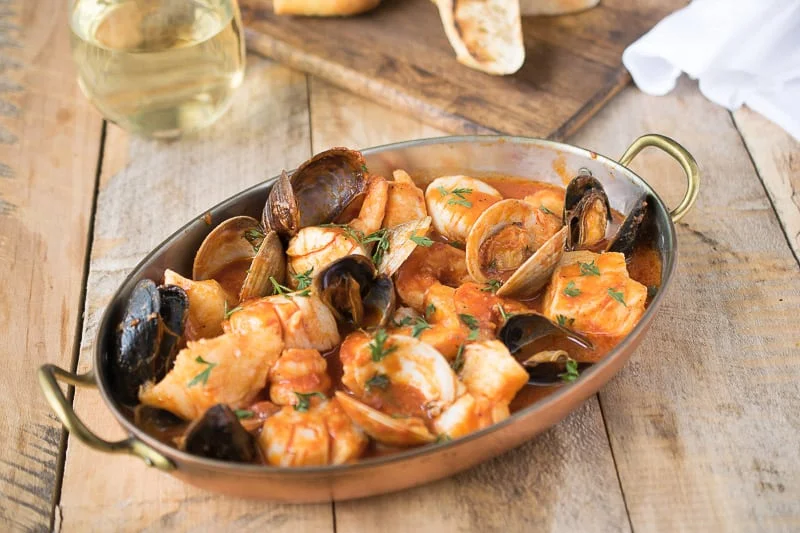
Brodetto di pesce is an Italian seafood stew of mixed fish and shellfish in a light tomato, garlic and white-wine broth. It comes together quickly, making it a useful choice when you want a seafood supper with plenty of broth for crusty bread.
Ingredients
- 15 ml (1 tablespoon)olive oil
- 3 cloves, finely chopped or gratedgarlic
- ¼ teaspoonred pepper flakes
- 177 ml (¾ cup)dry white wine
- 226 g (8 ounces)crushed or diced tomatoes, or passata
- to tastesalt and pepper
- 680 g (1½ pounds)assorted seafood, such as seabass, mussels, shrimp, scallops and firm fish; scrub the shellfish well
- 2 teaspoonsfresh parsley, chopped
- as neededcrusty bread, to serve
Instructions
- 1
Build the broth
Heat the oil in a large, heavy Dutch oven or saucepan over medium-low heat. Add the garlic and red pepper flakes and cook for 1 minute without letting the garlic brown. Pour in the wine, stir and let it reduce slightly. Stir in the tomatoes, salt and pepper, tasting to check the seasoning. Raise the heat to medium and bring the broth to a simmer.
- 2
Steam the shellfish
Add the clams and mussels and stir. Cover the pan and steam for 5 minutes, until the shellfish have opened.
- 3
Cook the seafood
Season the shrimp, scallops and seabass evenly with salt and pepper, then add them to the pan. Stir to coat them in the sauce and cook, covered, for a further 5 minutes. Discard any shellfish that have not opened.
- 4
Serve the stew
Serve warm, garnished with parsley and accompanied by crusty bread.
What is brodetto di pesce?
Brodetto di pesce is an Italian fish and seafood stew, with versions associated with coastal communities along the Adriatic. The name refers to the broth, which is the heart of the dish.
This version builds a quick tomato-and-wine base, then cooks the seafood in it. The short cooking time helps keep the fish and shellfish tender while giving the broth their flavour.
Nutrition and macros by portion
The nutrition label shows one serving as written: 220 calories, 26g protein, 8g carbs, 6g fat.
| Portion | Adjustment | kcal | Protein | Carbs | Fat |
|---|---|---|---|---|---|
| Lighter | Less bread, more salad | 154 kcal | 18g | 6g | 4g |
| This serving | As written | 220 kcal | 26g | 8g | 6g |
| Hungry | Extra bread portion | 330 kcal | 39g | 12g | 9g |
The tomatoes and wine provide most of the carbohydrates, while olive oil contributes much of the fat. Seafood supplies most of the protein; bread adds extra carbohydrates and can make the meal more filling. For balance, serve with a modest piece of bread and a simple salad or other vegetables.
The broth’s building blocks
Garlic and chilli: Cook them gently in the oil so they flavour it without browning. Burnt garlic can make the broth taste bitter.
Wine and tomatoes: Let the wine reduce a little before adding the tomatoes. This gives the base a chance to concentrate before the seafood goes in.
Choose seafood that cooks evenly
Shellfish: Scrub the shells well and discard any that remain closed after cooking. The recipe adds clams and mussels first because they need time to steam open.
Fish and prawns: Use firm fish and similar-sized pieces where possible. Add these later so they have less time in the simmering broth.
Watch the cooking cues
A steady simmer is enough; a vigorous boil can break up delicate fish. Keep the lid on while the shellfish steam and while the remaining seafood cooks.
The shellfish are ready when they open, and the fish should be opaque and just cooked through. Check towards the end of each cooking period, as seafood size can affect timing.
Keep the seafood tender
The two covered cooking stages take 5 minutes each, but the seafood should guide the final check. Avoid leaving the pan over the heat after everything is cooked.
Stir gently when adding the later seafood, just enough to coat it in broth. Too much stirring can break apart the fish.
Serve with something to dip
Crusty bread is a natural partner: use it to soak up the tomato, wine and seafood broth. Add it at the table rather than leaving it in the pan, so it stays crisp.
A simple green salad can round out the meal without competing with the stew. Sprinkle over the parsley just before serving for a fresh finish.
Recipe notes & tips
- Scrub the shellfish thoroughly before cooking.
- Keep the heat gentle when cooking the garlic so it colours as little as possible.
- Taste the tomato broth before adding the seafood and adjust the salt and pepper.
- Use a pan large enough to hold the seafood in a reasonably even layer.
- Serve as soon as the fish is cooked to help prevent it turning tough.
Variations
- Use passata: Swap it in for the crushed or diced tomatoes to make a smoother broth.
- Adjust the heat: Use fewer red pepper flakes for a milder stew.
- Change the fish: Choose another firm fish that can hold its shape in the broth.
- Add more shellfish: Include extra mussels or clams, keeping the same doneness checks.
- Make it more tomato-forward: Use diced tomatoes instead of passata for a more textured broth.
Common mistakes to avoid
- Browning the garlic: It can turn bitter; cook it gently for 1 minute without browning.
- Boiling hard: The fish may break up; keep the broth at a simmer.
- Overcooking the seafood: It can become tough; check the fish and shellfish as the stated cooking times finish.
- Skipping the shellfish check: Discard any shellfish that have not opened after cooking.
- Adding bread to the pan: It will soak up broth and soften; serve it alongside instead.
How to store
Refrigerate leftovers promptly in a covered container and use within 1–2 days. Reheat gently in a saucepan until piping hot, taking care not to simmer the seafood for long; discard any shellfish that did not open during cooking.
Frequently asked questions
Can I use frozen seafood?
Yes, if it is suitable for cooking in a stew. Thaw it safely first and drain away excess liquid so it does not dilute the broth.
Can I make the broth ahead?
You can prepare the tomato and wine base ahead, then chill it. Reheat it to a simmer before adding the seafood and cooking it through.
Why are some shellfish discarded?
The method says to discard shellfish that remain closed after steaming. Do not try to force them open and serve them.
What fish works best?
Choose a firm fish that holds together in hot broth. Cut it into similarly sized pieces so it cooks at a similar rate.
What should I serve with brodetto di pesce?
Crusty bread is served with this recipe and is useful for soaking up the broth. A simple salad or vegetables also make a good side.
Cook it from the original
This recipe comes from culinaryginger.com. Their page has the author’s own photos, notes and tips — the best place to cook it from.
Open the recipe on culinaryginger.com