
Vegetarian "Beef" Samosa
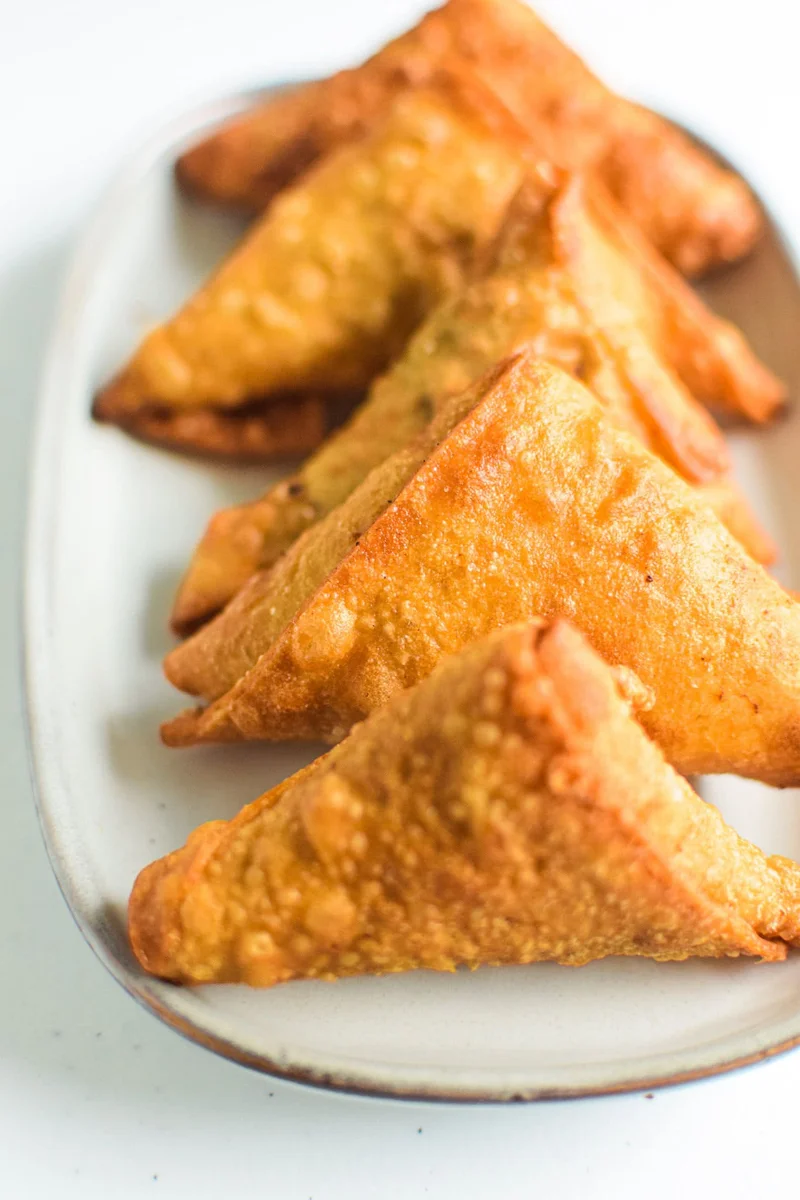
These East African-style samosas have a crisp homemade wrapper and a warmly spiced plant-based mince filling. Make them for a savoury snack or appetiser, and choose either deep-frying or air-frying to finish.
Ingredients
- 230 gplain flour
- ½ cup (155 g)water
- 1 packet (340 g)plant-based mince
- ½ smallonion
- ⅓spring onion
- ⅓carrot
- 1 clovegarlic
- ½ tspcumin
- ½ tspgaram masala
- ¼ tspblack pepper
- to tastesalt
Instructions
- 1
Mix the dough
For homemade wrappers, put the flour in a bowl and mix in ½ cup (155 g) water. Add a little more water if needed until the dough is soft but not sticky. Knead for 5 minutes to form a soft ball, then place it in a well-oiled bowl and leave it to rest. Skip this step if using shop-bought wrappers.
- 2
Prepare the filling
While the dough rests, finely chop the onion, spring onion, carrot and garlic, and measure out the spices. Cook the plant-based mince in a pot over medium heat until it changes colour and begins to crisp, breaking up any large clumps. Stir in the spices and chopped vegetables, then cook until the vegetables are tender, roughly 10 minutes. Transfer the filling to a bowl and chill it in the fridge.
- 3
Shape the wrappers
For homemade wrappers, roll the dough into a log and cut it into 6 even pieces. Roll one piece into a circle about 5–6 inches (13–15 cm) in diameter. Brush the top generously with vegetable oil, sprinkle with flour, then roll out a second piece to a similar size and stack it on top. Repeat with a third piece, but do not oil the top of the final circle. Make another stack in the same way, then roll each stack into an 11–12-inch (28–30 cm) circle.
- 4
Part-cook wrappers
Cook each rolled-out stack in a large pan over low-medium heat until the top begins to turn translucent. Flip it and cook the other side for 1 minute. Repeat with the remaining stack, then take the wrappers off the heat and let them cool for about 5 minutes. Skip this step if using shop-bought wrappers.
- 5
Make flour paste
For either folding method, mix about 2 tbsp flour with enough water to make a thick, glue-like paste.
- 6
Fold strip samosas
Cut each round wrapper into 3 even strips. Trim the curved edges if needed to make rectangular strips, saving the offcuts to fry as chips, then gently separate the strips. Fold one corner over to form a triangle, then fold again to make an upside-down triangle. Apply flour paste to the unfolded edge and fold the triangle onto it to form a cone. Fill the cone, paste the remaining open edge and fold it over the filling to seal the samosa.
- 7
Fold quarter samosas
Alternatively, cut each round wrapper across the diameter from left to right and then top to bottom to make 4 pieces, and gently separate them. With a piece’s sharp corner pointing upwards and the rounded edge downwards, fold in the rounded edges to make an upside-down triangle and use flour paste to join the sides. Lift it gently and hold it like a cone, fill it, then tuck the shortest edge into the filling. Paste the flap and fold it over to complete the triangle, sealing all the corners.
- 8
Deep-fry samosas
Pour neutral oil into a pot to about one-third of its depth and heat over medium heat. Test it with a scrap of dough; the oil is ready when the piece floats and sizzles. Add the samosas one at a time until the pot is filled, and fry until golden brown on each side. Remove them and drain on a paper towel.
- 9
Air-fry samosas
Arrange the samosas in an air fryer and spray them generously with oil. Air-fry at 370°F (188°C) for 20 minutes, turning them halfway through, or until golden brown.
What are East African samosas?
Samosas are filled pastries found across many regions, including East Africa, where they are commonly served as snacks or appetisers. This version uses plant-based mince in place of meat and wraps it in a crisp pastry.
The homemade wrapper is built by stacking and rolling dough circles, while the spiced filling is cooked before assembly. That makes it easier to portion the filling and gives the finished samosas a savoury, tender centre.
Nutrition and macros by portion
The nutrition label shows one serving as written: 160 calories, 6g protein, 14g carbs, 9g fat.
| Portion | Adjustment | kcal | Protein | Carbs | Fat |
|---|---|---|---|---|---|
| Lighter | Air-fry with less oil | 112 kcal | 4g | 10g | 6g |
| This serving | As written | 160 kcal | 6g | 14g | 9g |
| Hungry | Serve extra samosas | 240 kcal | 9g | 21g | 14g |
The flour wrapper supplies most of the carbohydrates, while the plant-based mince contributes much of the protein and may also add fat. Frying oil adds further fat, with the amount depending on how much the samosas absorb; serve a smaller number alongside vegetables or salad to balance the plate.
The plant-based filling
Mince texture: Break up the plant-based mince as it cooks so the filling is easy to pack into the pastry. Let it cook until it changes colour and starts to crisp, as described in the method.
Vegetables and spices: Finely chopped onion, spring onion, carrot and garlic distribute through the filling without leaving large pieces. Cumin, garam masala and black pepper provide the seasoning; add salt to taste.
Getting the wrappers right
Rested dough: Kneading for 5 minutes develops a soft dough, and resting it in an oiled bowl makes it easier to roll. Add water gradually if it feels dry, aiming for soft rather than sticky.
Layered circles: The oil and flour between the first two circles help keep the stack distinct as it is rolled. Leave the top of the third circle un-oiled, then roll the stack out into a larger round.
Folding and sealing
Flour paste: Mix the flour and water to a thick, glue-like consistency so it can hold the pastry edges together. A runny paste may not seal the folds as securely.
Choose a shape: Cutting the wrapper into strips makes long triangles, while quartering it makes four rounded pieces to fold. Whichever method you use, fill the cone without overpacking and seal every open edge.
Cooking and colour
Deep-frying: Test the oil with a scrap of dough; it should float and sizzle before you begin. Fry the samosas until golden brown on each side, then drain them on paper towel.
Air-frying: Spray the assembled samosas generously with oil and cook at 370°F (188°C) for 20 minutes, turning halfway. Use the golden-brown colour as the stated visual cue for doneness.
Serving ideas
These samosas are best eaten hot and can be enjoyed on their own. For a more substantial plate, serve them with a crisp salad or vegetables, and add a dip if you like.
If you trim the wrappers for the strip method, keep the curved scraps rather than discarding them. The recipe suggests frying them as chips.
Recipe notes & tips
- Chop the vegetables finely so they mix evenly into the mince.
- Break up any large clumps of mince while it cooks.
- Let the filling cool in the fridge before assembling the samosas.
- Use the flour paste to seal the edges as you fold each samosa.
- Test the frying oil with a scrap of dough before adding the samosas.
- Turn the samosas halfway through air-frying for even browning.
Variations
- Shop-bought wrappers: Use them to skip the homemade dough and wrapper-cooking stages.
- Quarter folds: Cut each wrapper into four pieces for a rounded-edge folding method.
- Strip folds: Cut each wrapper into three strips to make long triangular samosas.
- Wrapper chips: Fry the curved offcuts from the strip method as a crisp snack.
- Air-fried finish: Spray the samosas with oil and cook them in the air fryer instead of deep-frying.
Common mistakes to avoid
- Sticky dough: Add water gradually and stop when the dough is soft but not sticky.
- Large mince clumps: Break them up during cooking so the filling is easier to portion.
- Warm filling: Chill the cooked filling before stuffing the wrappers.
- Loose seals: Use thick flour paste and seal all the edges and corners.
- Unready frying oil: Wait until a scrap of dough floats and sizzles before frying.
- Crowded pot: Add samosas one at a time and leave room for them to fry.
How to store
The recipe recommends eating the samosas hot and gives no storage time. If you have leftovers, refrigerate them in a covered container and reheat until hot throughout, using an oven or air fryer to help crisp the pastry again.
Frequently asked questions
Can I use shop-bought wrappers?
Yes. Skip the homemade dough and wrapper-cooking steps, then follow the filling and folding instructions.
How do I know when the filling is cooked?
Cook the mince until it changes colour and starts to crisp, then add the vegetables and spices. The vegetables should be tender, which takes roughly 10 minutes.
How do I check whether the oil is ready?
Drop in a scrap piece of dough. The oil is ready when the scrap floats and sizzles.
Can I air-fry these samosas?
Yes. Spray them generously with oil and air-fry at 370°F (188°C) for 20 minutes, turning halfway through, until golden brown.
Which folding method should I use?
Use the strip method for long triangular samosas or the quarter-of-a-circle method for pieces made from wrapper quarters. Both methods use flour paste to seal the pastry.
Can I make the filling ahead?
The method calls for chilling the filling before assembly, so you can prepare it in advance. Keep it covered in the fridge until you are ready to fill the wrappers.
Cook it from the original
This recipe comes from eatwithafia.com. Their page has the author’s own photos, notes and tips — the best place to cook it from.
Open the recipe on eatwithafia.com