
Chili Garlic Noodles
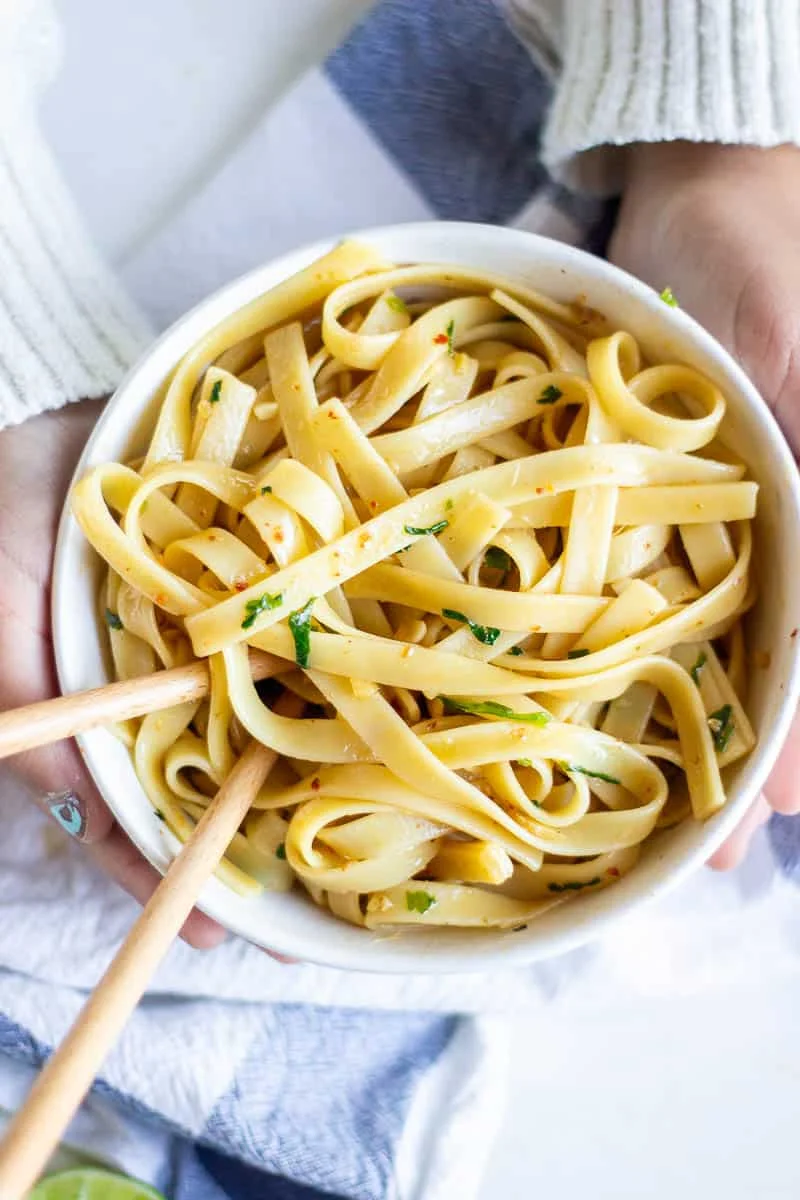
These quick chilli garlic noodles pair wide noodles with a sizzling mix of garlic, ginger, chilli and fresh herbs. They make a fast weeknight meal, with soy sauce and a little noodle water bringing the ingredients together.
Ingredients
- 400 gwide rice noodles or tagliatelle
- 3 tbspolive oil
- 2 tbspgarlic, minced (8 cloves)
- 2 tbspginger, minced (a 5 cm piece)
- 2–3 tbspsoy sauce
- 60 ml (¼ cup)spring onions, green parts, roughly 2
- 60 ml (¼ cup)coriander, chopped
- 1 tbspchilli flakes, or to taste
- to tasteadditional soy sauce or salt for adjusting the seasoning
Instructions
- 1
Boil the noodles
Cook the noodles in salted water according to the packet instructions. Before draining, reserve 120 ml (½ cup) of the cooking water.
- 2
Warm the oil
Heat the olive oil in a pan. Once it shimmers, add the garlic, ginger, chilli flakes, spring onions and coriander.
- 3
Sizzle and season
Cook the mixture over medium heat for 1 minute, then stir in 2 tbsp of soy sauce.
- 4
Toss and serve
Add the noodles and mix well. Add reserved noodle water as needed to form a sauce, then adjust the seasoning with more soy sauce, salt and pepper, and serve.
What are chilli garlic noodles?
Chilli garlic noodles are a quick noodle dish built around a savoury, aromatic oil and a splash of soy sauce. This version uses wide rice noodles or tagliatelle, with fresh ginger, spring onions and coriander for extra fragrance.
The recipe is Chinese-inspired, though it offers a flexible choice of noodle rather than relying on one traditional shape. Its brief cooking time helps keep the garlic and ginger lively and the noodles well coated.
Nutrition and macros by portion
The nutrition label shows one serving as written: 1873 calories, 16g protein, 343g carbs, 45g fat.
| Portion | Adjustment | kcal | Protein | Carbs | Fat |
|---|---|---|---|---|---|
| Lighter | Use less oil | 1311 kcal | 11g | 240g | 31g |
| This serving | As written | 1873 kcal | 16g | 343g | 45g |
| Hungry | Add a larger portion | 2810 kcal | 24g | 515g | 68g |
The noodles provide most of the carbohydrates, while olive oil supplies much of the fat; the recipe's soy sauce contributes saltiness, and the listed ingredients offer relatively little protein. For a more balanced plate, serve a portion with tofu or an egg and a side of vegetables.
Choose your noodles
Wide noodles: Rice noodles give the dish a soft, slurpable texture, while tagliatelle is a convenient alternative. Whichever you use, follow its packet timing and avoid cooking it beyond tender.
Cooking water: Save 120 ml before draining. Its starch helps the oil and soy sauce cling to the noodles, so add it gradually rather than pouring it all in at once.
Make the aromatic oil
Garlic and ginger: Mince them finely so their flavour spreads through the oil quickly. Keep the pan at medium heat; the brief sizzle should release their aroma without browning them heavily.
Chilli and herbs: Add the chilli flakes, spring onions and coriander with the garlic and ginger as directed. Use less chilli for a gentler result, or more to taste.
Get the sauce texture right
Noodle water: Add a small splash at a time while tossing. Stop when the noodles look lightly coated and the sauce gathers at the bottom of the pan rather than pooling there.
Seasoning: Soy sauce brings saltiness, so taste before adding more soy or salt. The recipe also suggests pepper at the final seasoning stage, though it is not listed among the measured ingredients.
Keep the cooking quick
Timing: Prepare the garlic, ginger and herbs while the noodles cook so they can go straight into the pan. The aromatic mixture needs only 1 minute over medium heat before the soy sauce goes in.
Finish: Toss the noodles as soon as they are drained and the oil mixture is ready. This helps them absorb the seasoning while they are still hot.
What to serve with them
Fresh sides: Serve the noodles with steamed greens or a crisp cucumber salad for contrast. Keep any dressing lightly seasoned, as the noodles already contain soy sauce.
Add-ons: A fried egg or tofu can make the plate more substantial, while a squeeze of lime can bring a bright finish. These are serving suggestions rather than ingredients in the recipe.
Recipe notes & tips
- Reserve the noodle water before draining, as it is harder to incorporate plain water into the sauce.
- Taste the soy-seasoned noodles before adding salt.
- Mince the garlic and ginger finely so they distribute evenly.
- Add noodle water in small splashes until the sauce coats the noodles.
- Adjust the chilli flakes to suit your preferred heat level.
Variations
- Milder heat: Use fewer chilli flakes and add more after tasting if you like.
- More greens: Serve with steamed greens alongside the noodles.
- Extra protein: Add cooked tofu or a fried egg at the table.
- Bright finish: Serve with a lime wedge for a fresh, sharp contrast.
- Noodle swap: Use wide rice noodles or tagliatelle, cooked according to their packet instructions.
Common mistakes to avoid
- Burning the garlic: Keep the pan at medium heat and limit the sizzle to 1 minute.
- Skipping the reserved water: Save 120 ml before draining so you can loosen and bind the sauce.
- Adding all the water at once: Pour it in gradually and stop once the noodles are coated.
- Over-salting: Taste after adding soy sauce, then adjust with more soy or salt only if needed.
- Overcooking the noodles: Check the packet timing and drain them when tender.
How to store
Refrigerate leftovers in a covered container and use within 3 days. Reheat in a pan with a small splash of water, stirring until hot.
Frequently asked questions
Can I use a different type of noodle?
Yes. The recipe allows wide rice noodles or tagliatelle; cook whichever you choose according to its packet instructions.
How much pasta water should I save?
Reserve 120 ml (½ cup) before draining. You may not need all of it, so add it gradually.
How can I make the noodles less spicy?
Use fewer than 1 tbsp of chilli flakes, or leave them out and season to taste.
Why add noodle water to the pan?
It helps the oil and soy sauce form a coating on the noodles. Add just enough to bring the sauce together.
Can I prepare the aromatics ahead?
You can mince the garlic and ginger and chop the herbs in advance. Keep them covered in the fridge until you are ready to cook.
Cook it from the original
This recipe comes from flourandspiceblog.com. Their page has the author’s own photos, notes and tips — the best place to cook it from.
Open the recipe on flourandspiceblog.com