
Mini Meat Pies with Ground Beef and Pork
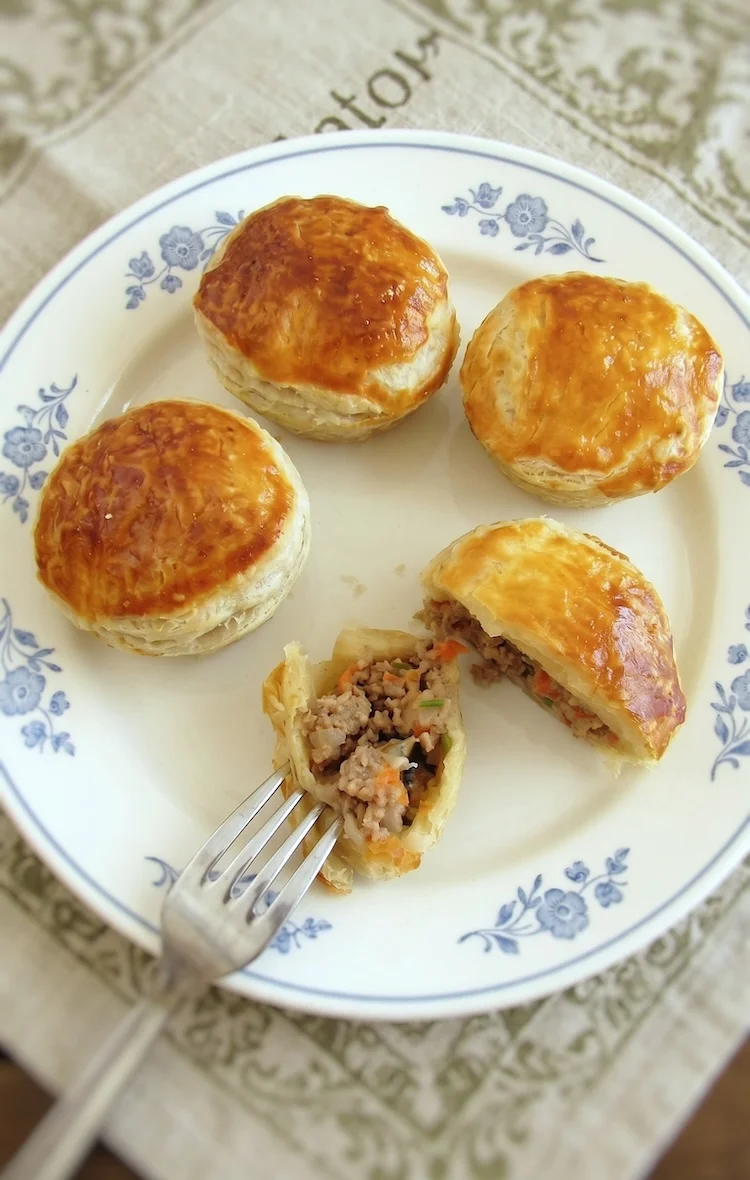
These Portuguese-inspired mini meat pies combine seasoned beef and pork with tomatoes and parsley, all enclosed in flaky puff pastry. Bake a batch for a savoury snack or serve them as party appetisers.
Ingredients
- 200 g (7 oz)minced beef
- 200 g (7 oz)minced pork
- 50 ml (¼ cup)olive oil
- 1 mediumonion
- 3 clovesgarlic
- to tasteparsley
- 1 teaspoonpepper
- 2egg yolks
- 1 teaspoonnutmeg
- 600 g (1⅓ lb)frozen puff pastry
- 3 mediumripe tomatoes
- 1 teaspoonsalt
Instructions
- 1
Season the meat
In a large bowl, combine the beef and pork with the salt, chopped garlic, pepper, nutmeg and one egg yolk. Mix until evenly seasoned, then set aside.
- 2
Cook the filling
Put the olive oil, chopped onion and peeled tomatoes, cut into small pieces, in a large saucepan. Cook over a low heat, stirring occasionally, until the tomatoes begin to break down. Add the meat and mix well. Cook over a low heat for 15–20 minutes, stirring now and then, until the meat is fully cooked and the flavours have combined. Take the pan off the heat and stir in chopped parsley.
- 3
Heat the oven
Preheat the oven to 180°C (350°F). Grease the mini pie pans with butter.
- 4
Roll and cut pastry
Set the puff pastry on a lightly floured surface and gently roll it out. Use a knife to cut small circles of pastry, approximately 3 cm (1¼ inches) in diameter.
- 5
Line the tins
Set the pastry circles into the greased muffin tins and press them gently with your fingers to cover the base and sides. Prick the bottom of each pastry case with a fork.
- 6
Fill and bake
Fill each pie with the meat mixture and cover with smaller pastry circles. Press the edges gently to seal. Beat the remaining egg yolk and brush it over the tops. Bake for 15–20 minutes, until the pastry is golden and crisp.
What are mini meat pies?
These are small savoury pies with a seasoned meat filling enclosed in crisp pastry. They fit the Portuguese tradition of portable savoury pastries and snacks, though recipes and shapes vary.
Here, beef and pork are cooked with tomato, onion, garlic and parsley before being wrapped in puff pastry. The tomato-rich filling and flaky pastry make them suitable for a snack or a spread of appetisers.
Nutrition and macros by portion
The nutrition label shows one serving as written: 395 calories, 12g protein, 25g carbs, 27g fat.
| Portion | Adjustment | kcal | Protein | Carbs | Fat |
|---|---|---|---|---|---|
| Lighter | Smaller pies, more salad | 277 kcal | 8g | 18g | 19g |
| This serving | As written | 395 kcal | 12g | 25g | 27g |
| Hungry | Serve extra pies | 593 kcal | 18g | 38g | 41g |
The pastry and olive oil contribute much of the energy and fat, while the pastry and tomatoes provide most of the carbohydrates. Beef, pork and egg yolks supply the protein, with the salt adding most of the sodium. Pair a pie or two with salad or vegetables for a more balanced plate.
Building flavour in the filling
Meat: Mixing the beef and pork with the seasonings and an egg yolk before cooking distributes the garlic, pepper, nutmeg and salt through the filling.
Tomatoes: Give them time over a low heat to soften before adding the meat. The recipe uses peeled, chopped ripe tomatoes, which break down into the base of the filling.
Parsley: Stir it in after taking the pan off the heat, as directed, so it remains a fresh finishing note.
Getting the pastry ready
Thawing: Frozen puff pastry is easier to roll and cut when pliable but still cool. Follow the packet’s thawing guidance if it is too firm to work with.
Cutting: Roll the pastry gently on a lightly floured surface and cut the circles as specified. The recipe calls for circles approximately 3 cm across, so check that they fit your mini pie or muffin tins before lining them.
Lining: Press the pastry into the base and sides without stretching it, then prick the bottom with a fork as instructed.
Sealing and baking the pies
Filling: Let the cooked mixture stop steaming before filling the pastry cases; this makes it easier to handle. Avoid overfilling so the pastry tops can meet the edges.
Sealing: Press the top and base together gently around the edges. Brush the tops with the remaining beaten yolk for a glossy, browned finish.
Doneness: Bake at 180°C for 15–20 minutes. Look for pastry that is golden and crisp, and make sure the meat filling was fully cooked during the stovetop stage.
Timing the recipe
The filling needs 15–20 minutes of gentle cooking, and the pies need another 15–20 minutes in the oven. Allow extra time to prepare the pastry and assemble the pies within the stated 75-minute total.
If the filling is still very hot when you start assembling, give it a little time to cool so it is easier to portion into the cases.
What to serve alongside
For a snack or appetiser, serve the pies warm with a simple green salad or sliced vegetables. Their rich pastry and meat filling pair well with something crisp and fresh.
For a more substantial meal, add a vegetable side such as a dressed salad or cooked greens. A tomato-based dip is another option if you want to echo the filling’s flavours.
Recipe notes & tips
- Keep the puff pastry cool while you work so it is easier to handle.
- Cut the onion and tomatoes into small pieces so they soften evenly in the pan.
- Stir the filling occasionally as it cooks over a low heat.
- Check that the pastry circles fit your tins before lining them.
- Let the filling cool slightly before spooning it into the pastry cases.
- Start checking the pies at 15 minutes, as ovens can brown pastry at different speeds.
Variations
- Add chilli: Stir a little chilli into the meat mixture for a spicier filling.
- Use fresh herbs: Add chopped thyme alongside the parsley for a different herbal note.
- Make larger pies: Cut larger pastry rounds and bake them in larger tins, checking for golden pastry.
- Add paprika: Mix a little paprika into the meat seasoning for a warmer flavour.
- Serve with a dip: Offer a simple tomato or yoghurt dip alongside the baked pies.
Common mistakes to avoid
- Filling too hot: Very hot filling can soften the pastry; let it cool slightly before assembling.
- Overfilling the cases: Too much filling makes sealing difficult; leave room around the edges.
- Stretching the pastry: Stretched pastry can shrink in the oven; ease it into the tins without pulling.
- Loose edges: Unsealed tops can open during baking; press around the edges to close each pie.
- Baking by time alone: Pastry may need a little more or less time; use a golden, crisp top as the cue.
How to store
Cool the pies, then store them in an airtight container in the fridge for up to 3 days. Reheat in an oven until hot throughout and crisp; microwaving will soften the pastry.
Frequently asked questions
Can I make the filling ahead?
Yes. Cook the filling, cool it, and refrigerate it in a covered container. Use it once chilled or let it lose its chill slightly before filling the pastry cases.
Can I use fresh puff pastry?
Yes. Use the same quantity and keep it cool while rolling and assembling the pies.
How do I know when the pies are done?
The pastry should be golden and crisp after 15–20 minutes at 180°C. The meat should already be fully cooked in the saucepan before the pies go into the oven.
Can I freeze the pies?
The recipe does not specify freezing, but baked pies can generally be cooled and frozen in a sealed container. Thaw them in the fridge and reheat in the oven until hot throughout.
Why prick the pastry bases?
Pricking the bases with a fork is part of the recipe’s method and helps the pastry cases bake more evenly. Avoid piercing right through the pastry into the tins.
Cook it from the original
This recipe comes from foodfromportugal.com. Their page has the author’s own photos, notes and tips — the best place to cook it from.
Open the recipe on foodfromportugal.com