
Roti
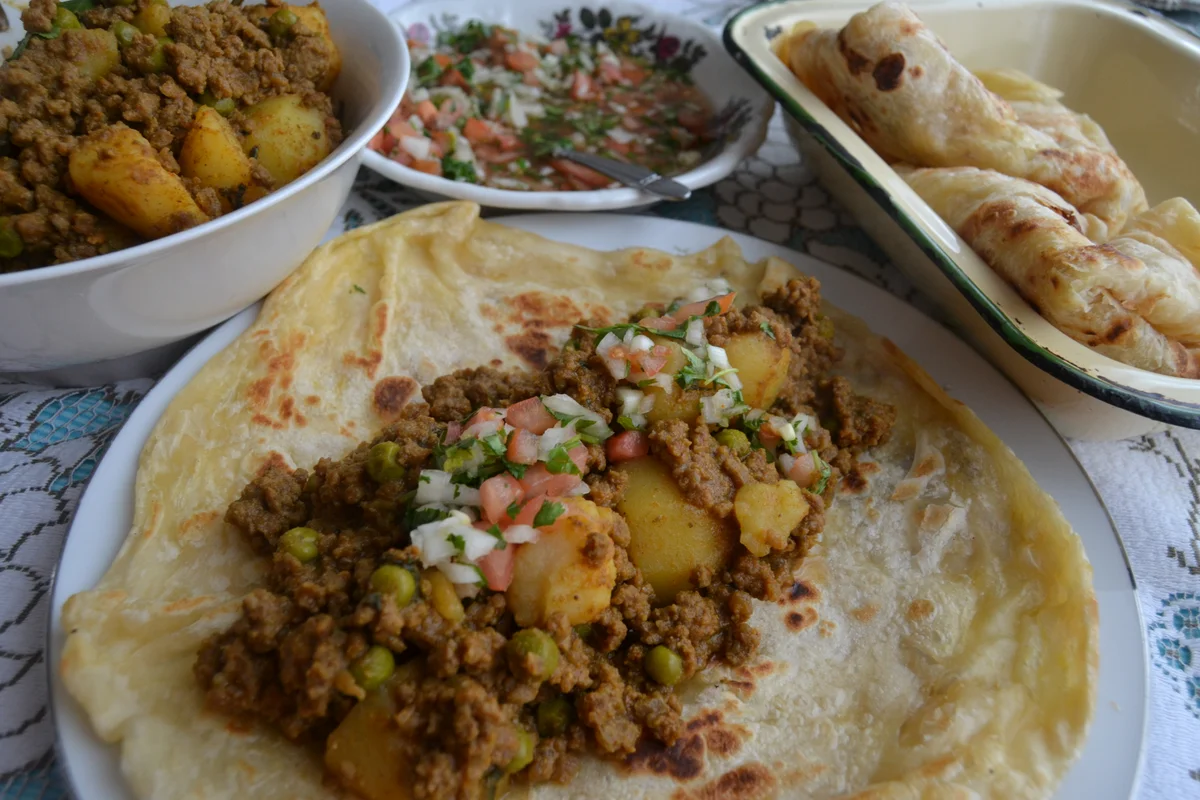
Cape Malay roti is a soft, layered flatbread made by folding butter into a simple dough before rolling and frying it. It takes a little planning for the chilling time, but makes a versatile accompaniment for curries and other saucy dishes.
Ingredients
- 625 g (5 cups)plain flour
- 5 g (1 tsp)salt
- 60 ml (4 tbsp)oil
- 500 ml (2 cups)warm water
- 60 gbutter
Instructions
- 1
Mix and rest
In a large bowl, combine everything except the butter to make a soft dough. Move it to a floured surface and knead until smooth. Cover with a tea towel and leave to rest and cool for 10 minutes.
- 2
Shape the dough
On a floured surface, roll the dough into a long rectangle. Spread the butter over it, then roll the dough into a long log. Cut it into 4–5 cm pieces and turn the exposed rolled sides upwards. Press each piece gently once with your hand, then place them on a floured platter.
- 3
Chill the pieces
Cover the platter with cling film and refrigerate for 1 hour.
- 4
Roll and fry
On a lightly oiled surface, roll each roti piece into a round disc. Fry in a non-stick pan until golden brown on both sides.
- 5
Check the yield
The recipe makes about 12 roti.
What is Cape Malay roti?
Roti is a flatbread with roots across South Asia, and it has a long place in Cape Malay cooking in South Africa. It is often served alongside curry, where its soft texture is useful for scooping up sauce.
This version builds layers by spreading butter over rolled dough, shaping it into a log and chilling the cut pieces before frying. That simple sequence gives the flatbreads a tender, flaky character.
Nutrition and macros by portion
The nutrition label shows one serving as written: 795 calories, 18g protein, 113g carbs, 30g fat.
| Portion | Adjustment | kcal | Protein | Carbs | Fat |
|---|---|---|---|---|---|
| Lighter | Use less butter | 557 kcal | 12g | 79g | 21g |
| This serving | As written | 795 kcal | 18g | 113g | 30g |
| Hungry | Serve two roti | 1193 kcal | 26g | 169g | 45g |
The flour supplies most of the carbohydrates, while the oil and butter contribute most of the fat; the recipe contains only modest protein from the flour. Pair a roti with a protein-rich curry and vegetables to make a more rounded plate.
The dough and its ingredients
Flour and water: the flour forms the structure, while warm water helps bring it together into a soft dough. Add the water as directed and work the dough until it feels smooth.
Butter: spreading it over the rolled rectangle creates the layers that show when the log is cut into pieces. Use softened butter so it is easier to cover the dough evenly.
Shaping the layers
The rectangle: roll the dough into a long, even shape so the butter can cover it from edge to edge. Roll it up firmly enough to hold its shape, without squeezing out the butter.
The cut pieces: keep the visible spiral facing upwards and press each piece gently. A light touch helps flatten it without sealing the layers together.
Why the chilling matters
The hour in the fridge firms the butter and gives the shaped pieces time to settle. This makes them easier to roll into discs without losing their layered shape.
Keep the platter covered while chilling so the dough does not dry out. If the pieces feel very firm when you take them out, let them sit briefly before rolling.
Rolling and frying
Lightly oiled surface: a little oil helps the dough move as you roll it into a disc. Avoid adding so much that the pieces become greasy or difficult to handle.
Golden sides: fry each roti until both sides have an even golden-brown colour. The pan should be hot enough to brown the dough, but not so hot that the outside darkens before the centre cooks.
Serving ideas
Serve the roti warm with Cape Malay curry or another stew with plenty of sauce. It also works alongside dhal, vegetables or a simple savoury filling.
For a balanced plate, pair a roti with a generous portion of vegetables and a protein-rich curry or legume dish. The flatbread is best soon after frying, while its layers are still tender.
Recipe notes & tips
- Use a large bowl so you can bring the dough together without flour spilling over the sides.
- Knead on a lightly floured surface only as needed to keep the dough from sticking.
- Spread the butter as evenly as you can for consistent layers throughout the log.
- Cover the shaped pieces well before refrigerating to prevent a dry surface.
- Roll the pieces on a lightly oiled surface rather than adding extra flour at this stage.
- Fry in batches if needed so each roti has room to brown evenly.
Variations
- Wholemeal flour: replace part of the plain flour, keeping in mind the dough may need a little more water.
- Garlic butter: mix finely crushed garlic into the butter before spreading it over the dough.
- Herb layer: scatter chopped fresh herbs over the butter for a fragrant savoury version.
- Spiced dough: add a pinch of ground cumin or coriander to the flour and salt.
- Sweet finish: serve the cooked roti with a little honey or sugar instead of curry.
Common mistakes to avoid
- Dry dough: work in the warm water as directed and knead until the dough is soft and smooth.
- Uneven buttering: spread the butter over the full rectangle so the layers form consistently.
- Pressing too hard: flatten each cut piece gently to avoid compressing its spiral.
- Skipping the chill: refrigerate the covered pieces for the full hour so they are easier to roll.
- Too much flour while rolling: use a lightly oiled surface as directed to keep the roti tender.
- Overheated pan: lower the heat if the outside browns before the roti cooks through.
How to store
Store cooled roti in an airtight container in the fridge for up to 3 days. Reheat in a dry frying pan over a moderate heat until warmed through; the cooked flatbreads can also be frozen, separated with baking paper, and reheated from thawed.
Frequently asked questions
How many roti does this recipe make?
The method says it makes about 12. The number may vary depending on how large you cut and roll the pieces.
Can I prepare the dough ahead?
Yes. The recipe already includes a 1-hour chill after shaping. Keep the platter covered in the fridge during that time.
How do I know when the roti is cooked?
Fry until both sides are golden brown. If the outside colours too quickly, reduce the heat so the centre has time to cook.
Can I use a different pan?
A non-stick pan is specified, but a well-seasoned frying pan can also work. Use a lightly oiled surface to roll the dough, as directed.
What should I serve with roti?
It is a natural match for curry or stew with sauce. Dhal, vegetables or a savoury filling are other good options.
Cook it from the original
This recipe comes from fatimasydow.co.za. Their page has the author’s own photos, notes and tips — the best place to cook it from.
Open the recipe on fatimasydow.co.za