
Coriander salsa
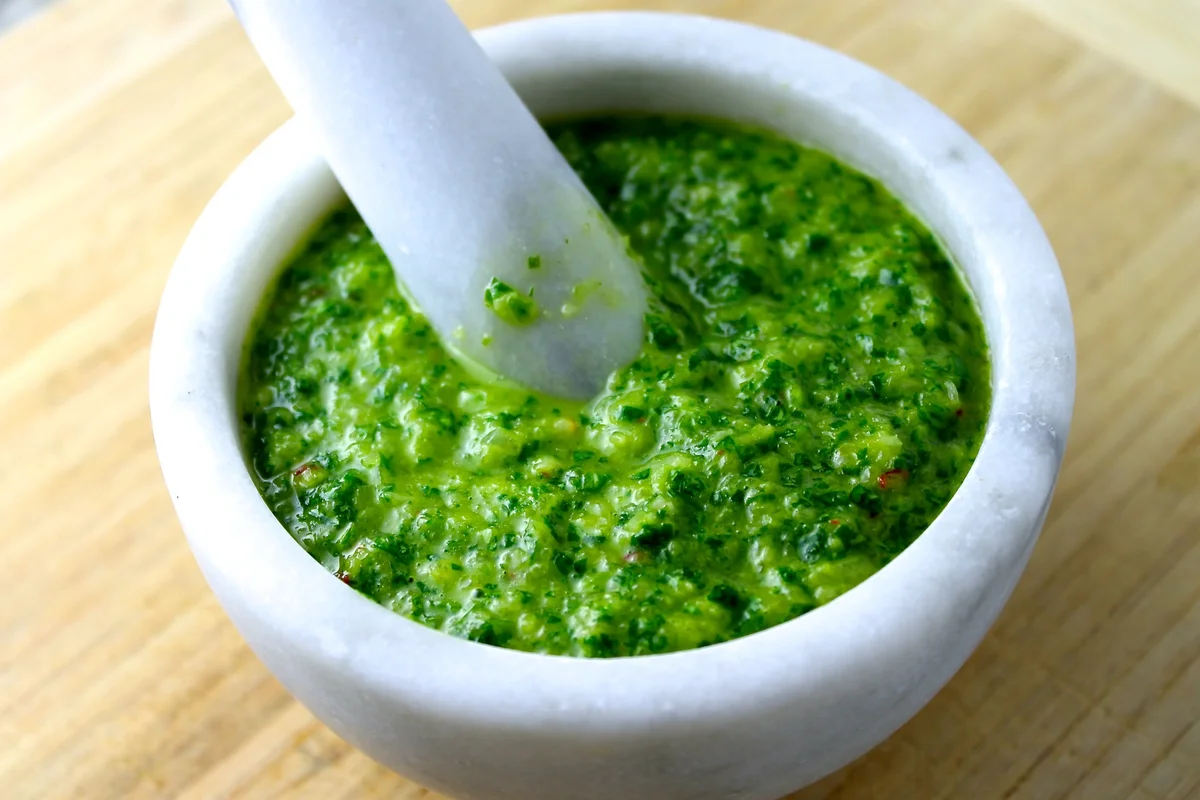
This quick green coriander salsa blends fresh herbs, lime and chilli into a coarse, punchy sauce. Make it in minutes to serve with tortilla chips, tacos, arepas, meat or fish.
Ingredients
- 60 ml (¼ cup)fresh coriander leaves
- 60 ml (¼ cup)vegetable oil
- ½onion, chopped
- 1 clovegarlic
- 60 ml (4 tablespoons)fresh lime juice
- 5 ml (1 teaspoon)chilli
- 1 leaficeberg lettuce
- to tastesalt
Instructions
- 1
Pulse the ingredients
Put all the ingredients in a food processor and pulse several times until they form a coarse, roughly textured salsa.
What is coriander salsa?
This is a fresh, green salsa in the broad Pan-Latin style, built around coriander, citrus and chilli. Its appeal is the contrast between bright lime, aromatic herbs and a little heat.
Here, onion and garlic give it savoury depth, while iceberg lettuce adds another fresh element. A few pulses keep the texture coarse rather than turning it into a smooth purée.
Nutrition and macros by portion
The nutrition label shows one serving as written: 520 calories, 2g protein, 8g carbs, 56g fat.
| Portion | Adjustment | kcal | Protein | Carbs | Fat |
|---|---|---|---|---|---|
| Lighter | Use less vegetable oil | 364 kcal | 1g | 6g | 39g |
| This serving | As written | 520 kcal | 2g | 8g | 56g |
| Hungry | Serve with arepas | 780 kcal | 3g | 12g | 84g |
Most of this serving’s energy and fat come from the vegetable oil; the onion and lime contribute a small amount of carbohydrate, while the coriander, garlic and other ingredients add little protein. Serve a modest spoonful alongside a protein and vegetables or beans to make a more balanced plate.
The ingredients that shape the flavour
Coriander: use fresh leaves for the salsa’s vivid herbal flavour. Remove any tough stems if they are especially woody.
Lime and chilli: fresh lime juice brings sharpness, while the chilli supplies heat. If your chilli is particularly strong, start with less and adjust to taste.
Oil and lettuce: vegetable oil gives the salsa body, and iceberg lettuce contributes a mild, crisp-tasting freshness.
Keep the texture coarse
Pulsing is the key technique: it chops the ingredients without blending them completely. Stop once the mixture looks like a rough salsa, scraping down the sides if ingredients are sticking above the blades.
Avoid running the processor continuously. A smooth, overworked mixture loses the distinct texture this method is aiming for.
Balance the seasoning
Taste the salsa after pulsing and adjust the salt, lime or chilli to suit your ingredients. The lime should taste lively without overwhelming the coriander.
If the flavour seems too sharp, give it a short rest before adding more seasoning; the ingredients will mingle as it stands.
Serve it with
Spoon the salsa alongside tortilla chips, tacos or arepas, or use it as a fresh accompaniment to meat and fish. Its citrusy, herbal character works especially well with simply seasoned dishes.
For a composed plate, pair it with a protein and a filling side such as beans, rice or vegetables.
Recipe notes & tips
- Chop the onion into smaller pieces if your food processor is less powerful.
- Use fresh lime juice for the brightest flavour.
- Pulse in short bursts so you can stop at a coarse texture.
- Taste before adding salt, as the right amount depends on your preference.
- Serve soon after making it for the freshest flavour.
Variations
- More heat: Add extra chilli a little at a time.
- Milder salsa: Reduce the chilli for a gentler finish.
- Herb change: Replace some coriander with fresh parsley for a different herbal note.
- Extra citrus: Add a little more lime juice if you prefer a sharper salsa.
- Chunkier texture: Finely chop some of the onion and stir it in after pulsing.
Common mistakes to avoid
- Over-processing: The salsa becomes smooth; pulse briefly and check the texture often.
- Too much chilli: The heat can dominate; begin with less and add more after tasting.
- Uneven chopping: Large onion pieces may remain; cut them smaller before processing.
- Adding salt too soon: Season at the end so you can judge the finished flavour.
- Letting it stand too long: The fresh flavour fades; serve it soon after blending.
How to store
Keep the salsa in a covered container in the fridge and use it within 2 days. Stir before serving; it is best served cold or at room temperature rather than reheated.
Frequently asked questions
Can I make this salsa without a food processor?
Yes. Finely chop the ingredients by hand and mix them with the oil and lime juice. The texture will be more hand-cut, but it will still work as a salsa.
How can I make it less spicy?
Use less chilli, then taste and add more only if needed. The heat level can vary depending on the chilli.
Can I use bottled lime juice?
You can, but fresh lime juice is preferred for its brighter flavour. Adjust the amount to taste.
Why is my salsa too runny?
The ingredients may have been processed for too long, or the lime juice may be especially abundant. Pulse briefly and stop as soon as the mixture is coarsely chopped.
What can I serve with coriander salsa?
Try it with tortilla chips, tacos or arepas, or alongside meat or fish. It also makes a fresh accompaniment to beans and rice.
Cook it from the original
This recipe comes from enrilemoine.com. Their page has the author’s own photos, notes and tips — the best place to cook it from.
Open the recipe on enrilemoine.com