
Mutton Curry
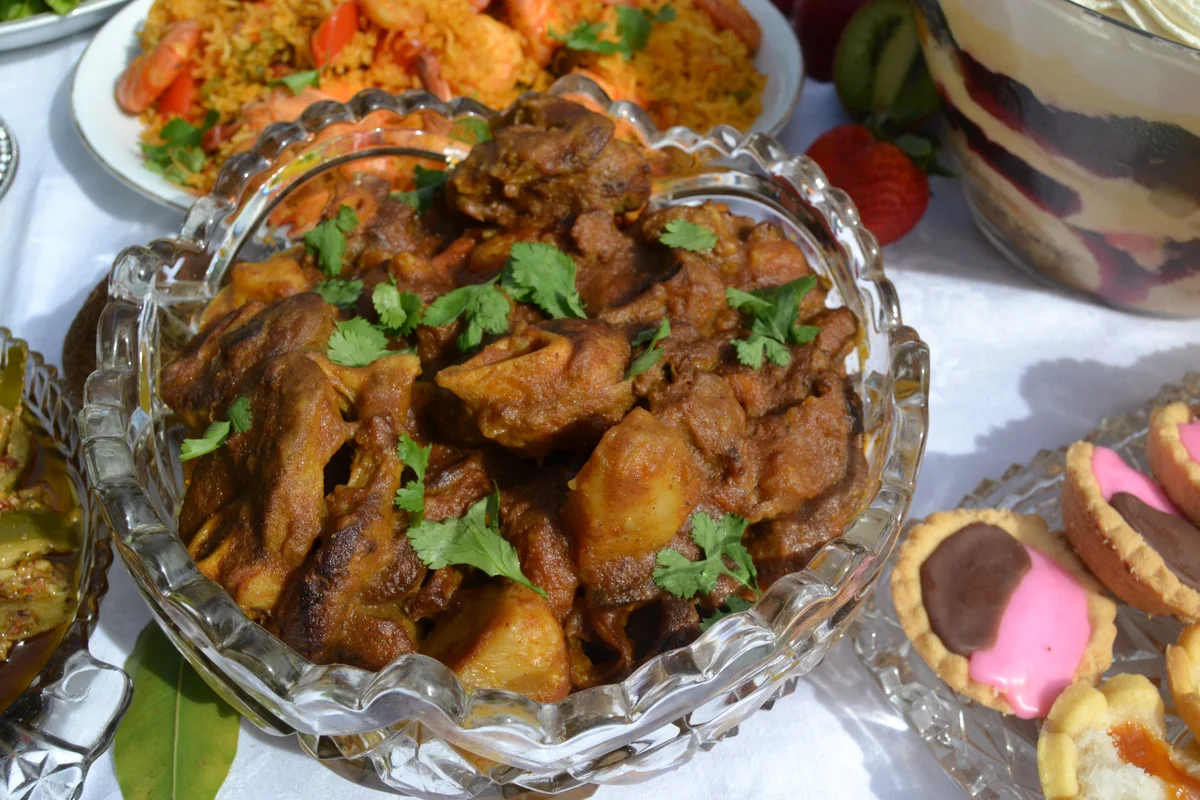
A slow-simmered mutton curry with onions, warming spices and tender potatoes. It is a flexible, family-style dish to serve with rice or roti.
Ingredients
- 1 kgmutton pieces
- 3onions, peeled and finely chopped
- 45 ml (3 tbsp)garlic, peeled and finely chopped
- 15 ml (1 tbsp)ginger, peeled and grated
- to tastesalt
- 4cardamom pods
- 4cinnamon sticks
- 45 ml (3 tbsp)oil
- 5 ml (1 tsp)turmeric
- 45 ml (3 tbsp)roasted masala
- 5 ml (1 tsp)chilli powder
- 10 ml (2 tsp)mother in law masala
- 6potatoes, peeled and cubed
- to tastefresh coriander
- 720 ml (3 cups), plus a little extra warm water as neededwater
Instructions
- 1
Brown the onions
Heat the oil in a large pot. Add the onions, salt, cardamom and cinnamon, and sauté until the onions are golden brown.
- 2
Braise the mutton
Add the mutton, garlic and ginger. Braise for 10 minutes, stirring as needed. Pour in 480 ml (2 cups) hot water and cook over medium heat for 35 minutes.
- 3
Add the spices
Add all the spices and stir well to coat the meat. Braise for 5 minutes, stirring, then add 240 ml (1 cup) water and simmer until the mutton is almost tender.
- 4
Cook the potatoes
Add the cubed potatoes and simmer until they are cooked, stirring occasionally. Add a little warm water if needed.
- 5
Garnish and serve
Finish with fresh coriander and serve with white rice or roti.
What is mutton curry?
Mutton curry is a broad family of spiced, slowly cooked meat dishes, with recipes varying between households and regions. This version layers browned onions, whole spices and masala, then cooks potatoes in the curry alongside the meat.
Its family-recipe approach is part of the appeal: the seasoning can be adjusted to suit the masalas available and the preferred level of heat.
Nutrition and macros by portion
The nutrition label shows one serving as written: 790 calories, 49g protein, 47g carbs, 43g fat.
| Portion | Adjustment | kcal | Protein | Carbs | Fat |
|---|---|---|---|---|---|
| Lighter | Less oil, more vegetables | 553 kcal | 34g | 33g | 30g |
| This serving | As written | 790 kcal | 49g | 47g | 43g |
| Hungry | Larger mutton portion | 1185 kcal | 74g | 71g | 65g |
Mutton supplies most of the protein and a substantial share of the fat, while the potatoes provide much of the carbohydrate. Oil adds further fat, and the salt and masala blends contribute sodium that can vary by brand. Serve a moderate portion with rice or roti and add vegetables on the side to round out the plate.
Build the flavour base
Golden onions: Cook them patiently with the cardamom, cinnamon and salt until well coloured. This gives the pot a savoury base before the meat goes in.
Ginger and garlic: Add these with the mutton and braise together for 10 minutes, stirring now and then so the pieces cook evenly.
Let the mutton turn tender
First simmer: The initial 35-minute cook in hot water starts softening the meat before the powdered spices are added. Keep the pot at a steady medium heat.
Final simmer: After adding the spices and another 240 ml water, cook until the meat is almost tender before adding the potatoes. The recipe gives no fixed time for this stage, so use the texture of the meat as your guide.
Add the potatoes at the right time
Potato pieces: Cut them into reasonably even cubes so they cook at a similar pace. Add them only once the mutton is nearly tender, as they need less time in the pot.
Sauce level: Stir occasionally and add small amounts of warm water if the curry becomes too thick before the potatoes are cooked.
Season to suit your table
Masala blend: Roasted masala and mother in law masala are the recipe's main seasoning blends. Their strength and composition can differ, so taste the curry as it cooks and adjust only if needed.
Heat: Chilli powder contributes warmth, while the other masalas bring their own character. For a gentler curry, use less chilli powder next time rather than changing the cooking process.
Serve it with
Rice: White rice makes a simple base for the curry and its sauce. Roti is another suggested accompaniment for scooping up the meat, potatoes and gravy.
Finish: Add the fresh coriander just before serving so its flavour stays distinct against the cooked spices.
Recipe notes & tips
- Use a large, heavy-based pot so the mutton and onions have room to cook evenly.
- Stir the onions regularly as they colour, especially towards the end of browning.
- Cut the potatoes into similar-sized cubes for more even cooking.
- Add warm water a little at a time if the curry thickens before the meat or potatoes are tender.
- Taste the curry after adding the masalas, since their salt and heat can vary.
Variations
- Adjust the heat: Reduce the chilli powder for a milder curry.
- Change the potatoes: Use fewer potatoes and serve with extra rice or roti.
- Use a different cut: Choose mutton pieces suited to simmering and cook until tender.
- Add vegetables: Stir in a suitable quick-cooking vegetable near the end so it does not overcook.
- Adapt the masala: Use the roasted and mother in law masalas available to you, tasting as you go.
Common mistakes to avoid
- Pale onions: Keep cooking until golden brown, stirring so they colour without catching.
- Rushing the mutton: Let it simmer until nearly tender before adding the potatoes.
- Adding too much water: Pour in extra warm water gradually so the curry does not become thin.
- Uneven potato cubes: Cut them to a similar size so they finish cooking together.
- Overcooking the potatoes: Add them only when the meat is almost tender and check them as the curry simmers.
How to store
Cool leftovers promptly, refrigerate in a covered container and eat within 3 days. Reheat thoroughly in a saucepan, adding a splash of water if the curry has thickened; it can also be frozen for up to 3 months.
Frequently asked questions
How do I know when the mutton is tender?
It should be nearly tender before you add the potatoes and tender by the end of cooking. Check a piece with a fork; simmer longer if it still feels firm.
Can I make this curry less spicy?
Yes. Use less chilli powder, and remember that the heat of the masala blends can vary.
When should I add the potatoes?
Add them once the mutton is almost tender. This helps the potatoes cook through without becoming too soft while the meat simmers.
What can I serve with mutton curry?
The recipe suggests white rice or roti. Either works well with the curry and potatoes.
Why does the curry need extra water sometimes?
The sauce can reduce as the meat and potatoes simmer. Add a little warm water when needed to keep it from becoming too thick before everything is cooked.
Cook it from the original
This recipe comes from fatimasydow.co.za. Their page has the author’s own photos, notes and tips — the best place to cook it from.
Open the recipe on fatimasydow.co.za