
Denningvleis
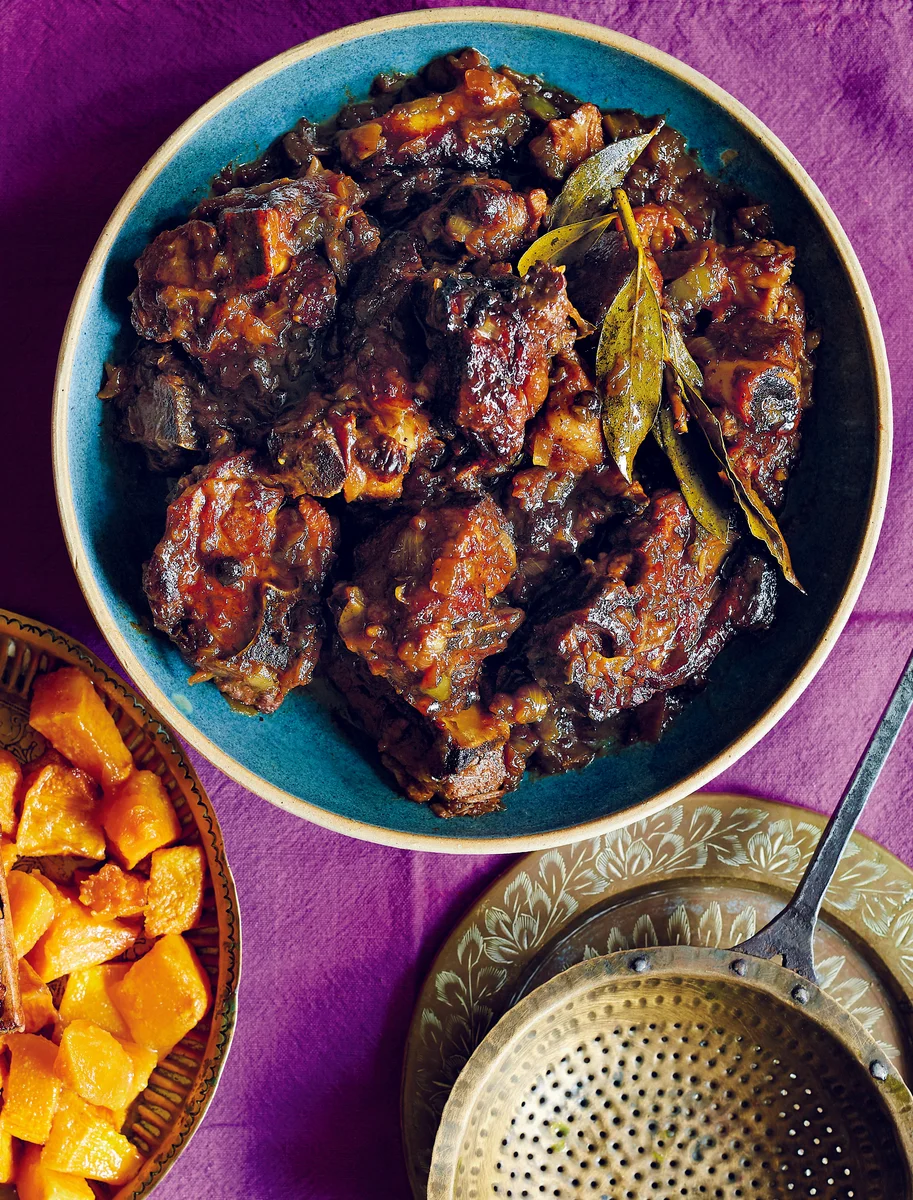
Denningvleis is a Cape Malay lamb or mutton stew with a distinctive sweet-and-sour tamarind sauce. Slow cooking makes the meat tender and gives the browned onions, spices and tangy sauce time to come together.
Ingredients
- 45 ml (3 tbsp)oil
- 4onions, finely chopped
- 1green pepper, finely chopped
- 1.5 kglamb or mutton pieces
- 5bay leaves
- 3 clovesgarlic, finely chopped
- 3whole allspice (pimento)
- to tastesalt and black pepper
- 45 ml (3 tbsp) tamarind paste stirred into 250 ml (1 cup) boiling water, and 45 ml (3 tbsp) sugartamarind mixture
Instructions
- 1
Brown vegetables and meat
Heat the oil in a large pot over medium-high heat. Add the onions and green pepper and brown them well, then add the meat and brown it on all sides.
- 2
Braise and simmer
Add the bay leaves, garlic, allspice, salt and pepper, and braise for 3 minutes. Add 250 ml warm water and cook over medium heat for 30 minutes, stirring occasionally.
- 3
Add tamarind
Pour in the tamarind mixture. Cook over medium heat until the meat is tender and the sauce has thickened: about 1 hour for lamb or 1½ hours for mutton. Serve with mashed potatoes and vegetables.
What is denningvleis?
Denningvleis is a Cape Malay sweet-and-sour meat stew. The name is linked to the Javanese word dendeng, referring to water buffalo meat; in the Cape, lamb or mutton is used instead.
This version builds flavour by browning the onions, pepper and meat before simmering them with bay, garlic and allspice. Tamarind and sugar give the finished sauce its characteristic tangy-sweet balance.
Nutrition and macros by portion
The nutrition label shows one serving as written: 1150 calories, 70g protein, 30g carbs, 85g fat.
| Portion | Adjustment | kcal | Protein | Carbs | Fat |
|---|---|---|---|---|---|
| Lighter | Trim visible meat fat | 805 kcal | 49g | 21g | 59g |
| This serving | As written | 1150 kcal | 70g | 30g | 85g |
| Hungry | Add extra mashed potatoes | 1725 kcal | 105g | 45g | 128g |
Lamb or mutton provides most of the protein and fat, while the onions, pepper and sugar contribute carbohydrates; the oil adds further fat. Serve a moderate portion with plenty of vegetables and mashed potatoes to balance the rich stew.
Build flavour in the pot
Browned onions: give the stew a savoury base, so let them colour well before adding the meat.
Meat: brown the pieces on all sides in the same pot, working in batches if needed to avoid crowding. This recipe uses either lamb or mutton, with a longer simmer for mutton.
Make the tamarind mixture
Tamarind paste: stir it into the boiling water until evenly dispersed, then mix in the sugar. This prepares the sour-and-sweet liquid to add after the meat has had its first simmer.
Balance: the recipe gives a set amount of sugar, but the final taste will also depend on the tartness of the tamarind paste. Taste the sauce once the meat is tender before serving.
Check the meat and sauce
Tenderness: cook until the meat yields easily when tested with a fork. Lamb takes about 1 hour after the tamarind mixture is added; mutton takes about 1½ hours.
Sauce: aim for a thickened, spoonable consistency rather than a watery broth. Keep the pot at a steady medium simmer and stir occasionally so the contents cook evenly.
Keep the simmer gentle
After the initial 30-minute cook with warm water, add the tamarind mixture and continue cooking until tender. The total time can vary with the cut and size of the meat pieces.
If the sauce thickens before the meat is ready, lower the heat and check the pot regularly. A gentle simmer helps the meat soften without the sauce catching on the base.
What to serve with it
Mashed potatoes: are the suggested accompaniment and make a soft base for the tangy sauce. Spoon the stew and sauce over or alongside them.
Vegetables: serve them with the stew for contrast and a more rounded plate. Keep their seasoning simple so the tamarind flavour remains prominent.
Recipe notes & tips
- Pat the meat dry before browning so it colours rather than releasing excess moisture.
- Brown the meat in batches if the pot is crowded.
- Stir the tamarind paste into the boiling water until smooth before adding the sugar.
- Keep the stew at a gentle simmer once the liquid is added.
- Start checking lamb for tenderness at about 1 hour after adding the tamarind mixture.
Variations
- Choose mutton: allow about 1½ hours after adding the tamarind mixture for it to become tender.
- Adjust the tang: add the tamarind mixture as given, then taste the sauce before serving.
- Change the cut: use lamb or mutton pieces, allowing for differences in cooking time.
- Serve with rice: offer rice instead of mashed potatoes to accompany the sauce.
Common mistakes to avoid
- Crowding the pot: the meat may steam instead of browning; brown it in batches.
- Rushing the onions: pale onions give less depth; cook them until well browned before adding the meat.
- Boiling hard: the sauce can catch before the meat softens; reduce the heat to a steady simmer.
- Judging by time alone: cuts vary; check that the meat is tender before serving.
- Adding the tamarind too early: follow the method and add it after the initial 30-minute cook.
How to store
Cool leftovers promptly, then refrigerate in a covered container and use within 3 days. Reheat gently in a saucepan until steaming hot throughout, adding a splash of water if the sauce has become too thick.
Frequently asked questions
Can I use lamb instead of mutton?
Yes. The recipe allows either; lamb takes about 1 hour after the tamarind mixture is added, while mutton takes about 1½ hours.
How do I know when the meat is ready?
It should be tender and yield easily when tested with a fork. If it is still firm, continue simmering and check again.
Can I prepare the stew ahead?
Yes. Refrigerate it once cooled and reheat it gently until steaming hot throughout. The sauce may thicken in storage, so add a little water if needed.
What can I serve with denningvleis?
The recipe suggests mashed potatoes and vegetables. Rice is another option for serving alongside the sauce.
Why is the sauce sweet and sour?
Tamarind paste brings the sour note, while sugar adds sweetness. Together they give denningvleis its distinctive flavour.
Cook it from the original
This recipe comes from fatimasydow.co.za. Their page has the author’s own photos, notes and tips — the best place to cook it from.
Open the recipe on fatimasydow.co.za