
Sago Bredie
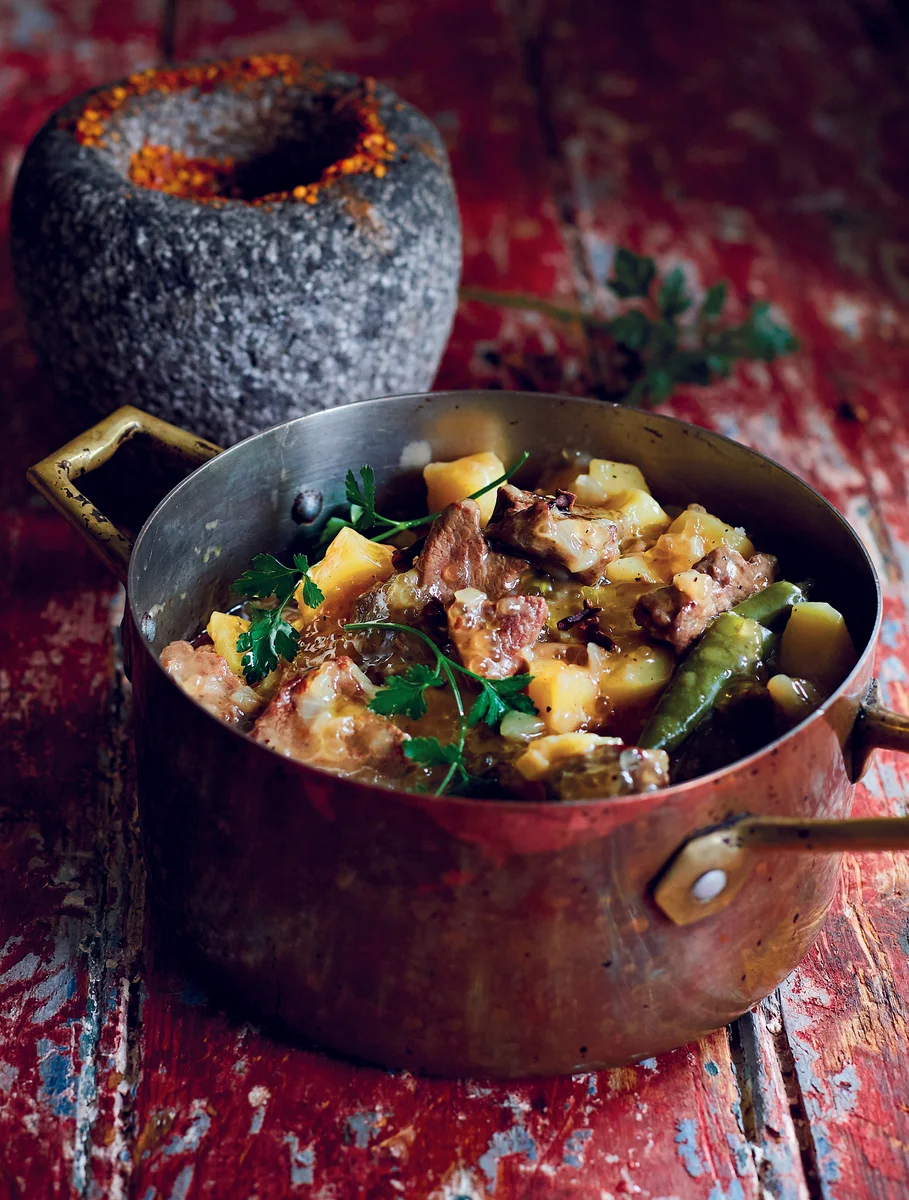
Sago bredie is a Cape Malay meat-and-potato stew with a thick, glossy gravy made by cooking soaked sago until its pearls turn translucent. Cloves and whole chillies flavour the slow-braised meat, making this a warming dish to serve with white rice and condiments.
Ingredients
- 60 mloil
- 2onions, finely chopped
- 10 piecesmutton, lamb or beef
- 2 clovesgarlic, finely chopped
- 2whole cloves
- 3whole green chillies
- to tastesalt and black pepper
- 5potatoes, peeled and cubed
- 125–200 mlsago, soaked in water
- 30 mlchopped fresh flat-leaf parsley
Instructions
- 1
Brown the meat
Heat the oil in a large pot over medium-high heat. Add the onions, meat, garlic, cloves and whole chillies, then braise until the meat is browned; do not add water at this stage.
- 2
Braise until tender
Pour in 250 ml hot water and season with salt and pepper. Cook gently until the meat is nearly tender, stirring as needed; this should take 45–50 minutes, depending on the cut.
- 3
Add potatoes and sago
Add the potatoes and cook until nearly tender. Stir in the soaked sago with 500 ml water, then cook over medium heat for about 10 minutes, until the pearls are translucent and the gravy has thickened.
- 4
Finish and serve
Stir in the chopped parsley and check the seasoning. Serve with white rice and condiments.
What is sago bredie?
Bredie is a South African term for a slow-cooked stew, and this version belongs to the Cape Malay cooking tradition. Meat and potatoes simmer with aromatic spices, while sago thickens the cooking liquid into a sticky gravy.
Sago pearls have little flavour of their own, so they take on the taste of the cloves and braising juices. Adding them near the end lets them become translucent without losing the shape of the potatoes.
Nutrition and macros by portion
The nutrition label shows one serving as written: 790 calories, 35g protein, 77g carbs, 38g fat.
| Portion | Adjustment | kcal | Protein | Carbs | Fat |
|---|---|---|---|---|---|
| Lighter | Use less oil and sago | 553 kcal | 25g | 54g | 27g |
| This serving | As written | 790 kcal | 35g | 77g | 38g |
| Hungry | Add extra rice | 1185 kcal | 53g | 116g | 57g |
The potatoes and sago provide most of the carbohydrate, while the oil and meat contribute much of the fat; the meat is also the main source of protein. Serve with a moderate portion of rice and add vegetables alongside to make the plate more balanced.
Choosing the ingredients
Meat: The recipe allows mutton, lamb or beef, cut into 10 pieces. Choose pieces suited to slow cooking so they have time to become tender during the covered braise.
Sago: Use 125–200 ml according to how thick you like the gravy, and soak it before adding. The pearls swell as they cook, so the lower quantity gives a looser finish.
Aromatics: Whole cloves bring a warm, distinctive note, while whole green chillies flavour the pot without needing to be chopped. Keep them whole if you want to make them easy to pick out.
Browning before braising
Let the meat brown with the onions and aromatics before adding any water. This first stage builds savoury flavour in the pot and follows the recipe's instruction not to add water while browning.
Once the hot water goes in, keep the simmer gentle and stir when needed. A hard boil can make the liquid reduce too quickly before the meat is tender.
Getting the texture right
Potatoes: Add them after the meat has had its initial braise, and cook until they are nearly tender. They will continue cooking while the sago thickens the gravy.
Sago: Stir it in with 500 ml water and cook for about 10 minutes over medium heat. Look for translucent pearls and a gravy that coats the ingredients; cook a little longer if the pearls are still opaque.
Timing the stew
The meat stage takes 45–50 minutes, with the exact time depending on the cut. Check tenderness before moving on, rather than relying on the clock alone.
The potatoes and sago cook in separate stages after that, so allow for their doneness as well. The recipe does not give a total cooking time.
Serving the bredie
Serve the stew with white rice, as suggested in the recipe, to accompany its thick gravy. Condiments can be set out alongside so everyone can season their serving to taste.
Add the parsley at the end to bring a fresh herbal note to the rich, warmly spiced pot.
Recipe notes & tips
- Brown the meat without water, as directed, before starting the braise.
- Use hot water for the first addition to keep the cooking process moving.
- Stir during the slow braise as needed to prevent sticking.
- Choose the sago amount based on whether you prefer a looser or thicker gravy.
- Check that the sago pearls have turned translucent before serving.
Variations
- Choose lamb: use lamb pieces in place of mutton or beef as the recipe allows.
- Choose beef: make the stew with beef pieces and allow for the cut's tenderness when braising.
- Adjust the thickness: use 125 ml sago for a looser gravy or up to 200 ml for a thicker one.
- Keep it mild: remove the whole chillies before serving for less heat at the table.
- Serve with condiments: offer them alongside so diners can customise their plates.
Common mistakes to avoid
- Adding water too soon: brown the meat and aromatics first, without water.
- Boiling too vigorously: keep the meat at a gentle simmer so the liquid does not reduce too quickly.
- Adding sago before the potatoes: cook the potatoes until nearly tender first, then add the sago.
- Judging sago by time alone: check that the pearls are translucent and the gravy has thickened.
- Skipping the final seasoning check: taste after adding the parsley and adjust salt and pepper.
How to store
Cool leftovers promptly and refrigerate in a covered container for up to 3 days. Reheat gently in a saucepan, adding a splash of water if the sago-thickened gravy has become too firm.
Frequently asked questions
Do I need to soak the sago first?
Yes. The ingredient list specifies sago soaked in water; drain it before adding it with the 500 ml water in the method.
How much sago should I use?
Use 125–200 ml, depending on how thick you want the gravy. The higher amount produces a thicker finish.
Can I use lamb or beef instead of mutton?
Yes. The recipe lists mutton, lamb or beef, and the braising time may vary with the cut.
How do I know when the meat is ready for the potatoes?
After 45–50 minutes of gentle cooking, check that the meat is almost tender. The recipe notes that the precise time depends on the cut.
Why is the sago still opaque?
It may need more cooking; the recipe allows about 10 minutes over medium heat and says to cook until the pearls are translucent. Keep cooking and check again.
What should I serve with sago bredie?
Serve it with white rice and condiments, as suggested in the recipe.
Cook it from the original
This recipe comes from fatimasydow.co.za. Their page has the author’s own photos, notes and tips — the best place to cook it from.
Open the recipe on fatimasydow.co.za