
Mediterranean Couscous Salad
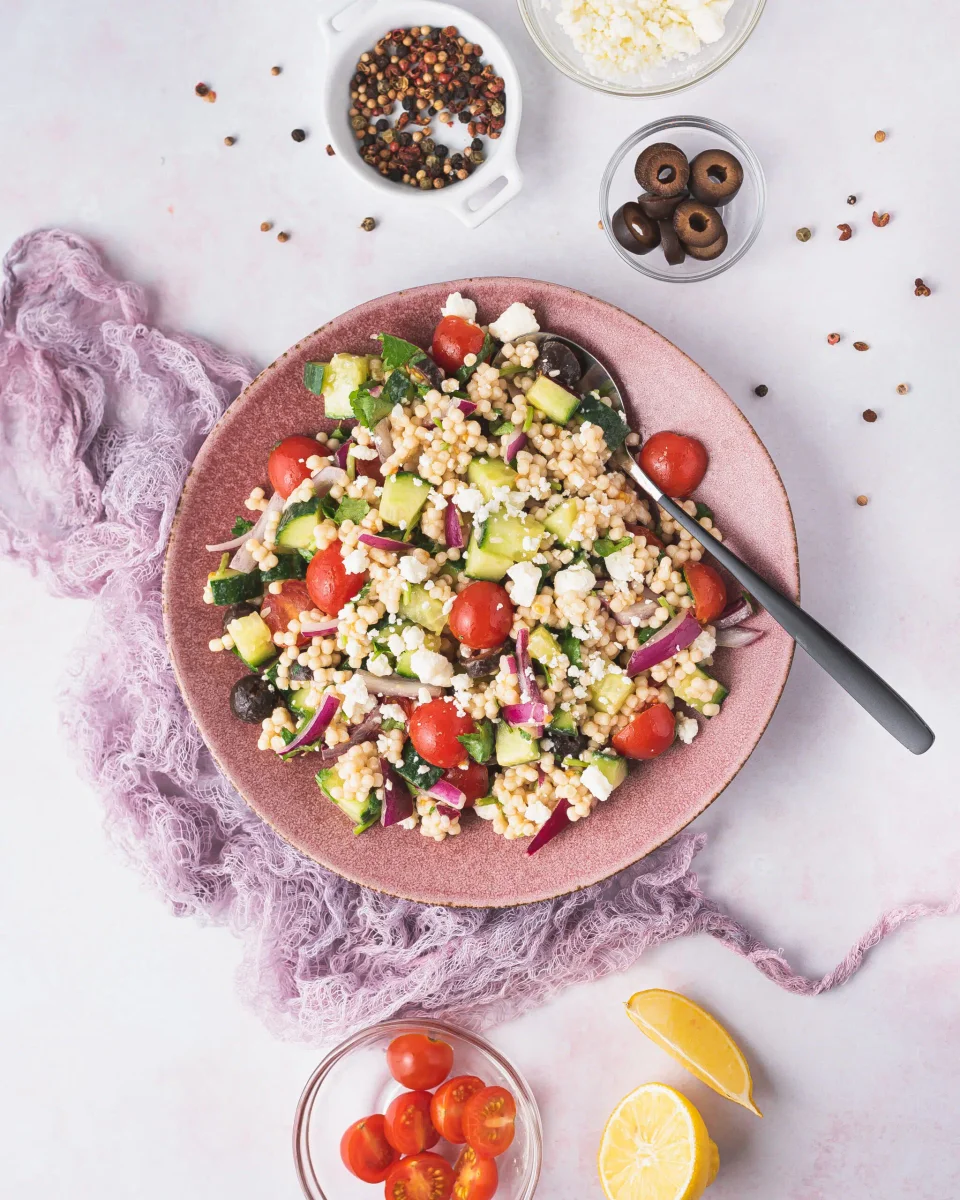
This Mediterranean-inspired couscous salad combines chewy Israeli couscous with crisp vegetables, olives, herbs and feta. It comes together quickly and works well as a fresh side or a light lunch.
Ingredients
- 85 g (½ cup)Israeli couscous
- 180 ml (¾ cup)hot water
- 40 g (¼ cup)onion, sliced
- 75 g (½ cup)English cucumber, diced
- 10cherry tomatoes, halved
- 5black olives, sliced
- 38 g (¼ cup)feta cheese
- 2 sprigsfresh coriander, chopped
- 15 ml (1 tablespoon)olive oil
- 15 ml (1 tablespoon)lemon juice
- 2.5 ml (½ teaspoon)salt
- 1.25 ml (¼ teaspoon)ground pepper
Instructions
- 1
Cook the couscous
Cook the Israeli couscous according to the instructions on its packet.
- 2
Combine the ingredients
Put the sliced onion, halved cherry tomatoes, diced cucumber, sliced black olives, chopped coriander and cooked couscous in a large bowl.
- 3
Season the salad
Drizzle over the lemon juice and olive oil, then sprinkle with the salt and ground pepper.
- 4
Mix and serve
Use a large spoon to mix the ingredients or fluff them together. Serve in a bowl with the feta cheese on top.
- 5
Store leftovers
Refrigerate any leftovers for up to 2 days.
What is Mediterranean couscous salad?
Couscous salad is a dish of cooked couscous mixed with vegetables, herbs and a dressing. Couscous is associated with North African cooking, while this version takes a Mediterranean-inspired direction with olives, lemon and feta.
Israeli couscous, also known as pearl couscous, has larger, rounder pieces than fine couscous. Its chewy texture pairs nicely with crisp cucumber and juicy tomatoes.
Nutrition and macros by portion
The nutrition label shows one serving as written: 158 calories, 5g protein, 21g carbs, 6g fat.
| Portion | Adjustment | kcal | Protein | Carbs | Fat |
|---|---|---|---|---|---|
| Lighter | Use less olive oil | 111 kcal | 4g | 15g | 4g |
| This serving | As written | 158 kcal | 5g | 21g | 6g |
| Hungry | Serve a larger portion | 237 kcal | 8g | 32g | 9g |
The couscous supplies most of the carbohydrates, while olive oil and feta contribute much of the fat; the feta also adds some protein. Pair a serving with a protein-rich main and extra vegetables for a more substantial plate.
The couscous and vegetables
Pearl couscous: follow the packet instructions, as cooking times and liquid amounts can vary between brands. Cook it before adding it to the salad.
Fresh vegetables: cucumber, onion and tomatoes provide contrasting crisp and juicy textures. Cutting them into manageable pieces helps distribute them throughout the bowl.
Building the dressing
Lemon and oil: lemon juice gives the salad a bright, tart note, while olive oil brings the ingredients together. Drizzle both over the mixture before seasoning.
Seasoning: olives and feta already contribute salty flavours, so taste a small bite before adding extra salt beyond the recipe amount.
Getting the texture right
Fluff gently: use a large spoon to mix without crushing the tomatoes. The aim is to coat the couscous and vegetables evenly while keeping the pieces distinct.
Feta topping: add the feta just before serving, as directed. This keeps it visible on top and lets each portion include some of its creamy, tangy flavour.
Timing and serving
Cook first: the recipe takes 20 minutes in total, with the couscous cooked according to its packet instructions. Prepare the vegetables while it cooks if you want to make the most of that time.
Serve it as a side with grilled vegetables, fish or chicken, or offer it as part of a spread of salads and dips. It can also make a simple lunch on its own.
Make-ahead and leftovers
For a head start, chop the vegetables shortly before serving and keep them chilled until you are ready to combine the salad. Add the feta as a topping when serving.
Store leftovers in the refrigerator for up to 2 days. The vegetables may soften as they sit, so a gentle stir before serving helps redistribute the dressing.
Recipe notes & tips
- Check the couscous packet for its specific cooking instructions.
- Dice the cucumber into pieces similar in size to the halved tomatoes.
- Slice the olives thinly so their flavour is spread through the salad.
- Add the feta on top just before serving.
- Taste before adding more salt, since the olives and feta are salty.
Variations
- Add parsley: replace the coriander with chopped parsley for a different herbal note.
- Use green olives: swap them for the black olives for a sharper, brinier flavour.
- Add roasted pepper: fold in chopped roasted pepper for extra sweetness.
- Include chickpeas: stir in drained chickpeas for a heartier salad.
- Change the cheese: use crumbled goat’s cheese in place of the feta.
Common mistakes to avoid
- Guessing the couscous cooking time: follow the packet instructions so it cooks as intended.
- Adding feta too early: keep it as a topping so it remains distinct in the finished salad.
- Overmixing: stir gently to avoid crushing the tomatoes.
- Oversalting: taste first because the olives and feta already bring saltiness.
- Leaving leftovers at room temperature: refrigerate them and use within 2 days.
How to store
Refrigerate leftovers in a covered container and eat them within 2 days. Serve chilled or let the salad sit briefly at room temperature; the recipe does not specify reheating.
Frequently asked questions
Is Israeli couscous the same as regular couscous?
No. Israeli couscous, or pearl couscous, has larger, rounder pieces. Cook it according to its own packet instructions.
Can I make this salad ahead?
You can prepare the vegetables in advance and keep them chilled. Combine the ingredients and add the feta topping closer to serving.
Can I use another type of couscous?
The recipe is written for Israeli couscous. A different type has a different texture and may need a different cooking method, so follow its packet instructions.
How long does the salad keep?
Keep leftovers refrigerated and use them within 2 days.
Can I serve it warm?
The recipe does not specify a serving temperature. It can be served once mixed and topped with feta, or chilled after preparation.
Cook it from the original
This recipe comes from deliciousmeetshealthy.com. Their page has the author’s own photos, notes and tips — the best place to cook it from.
Open the recipe on deliciousmeetshealthy.com