
Spiced Grain Porridge
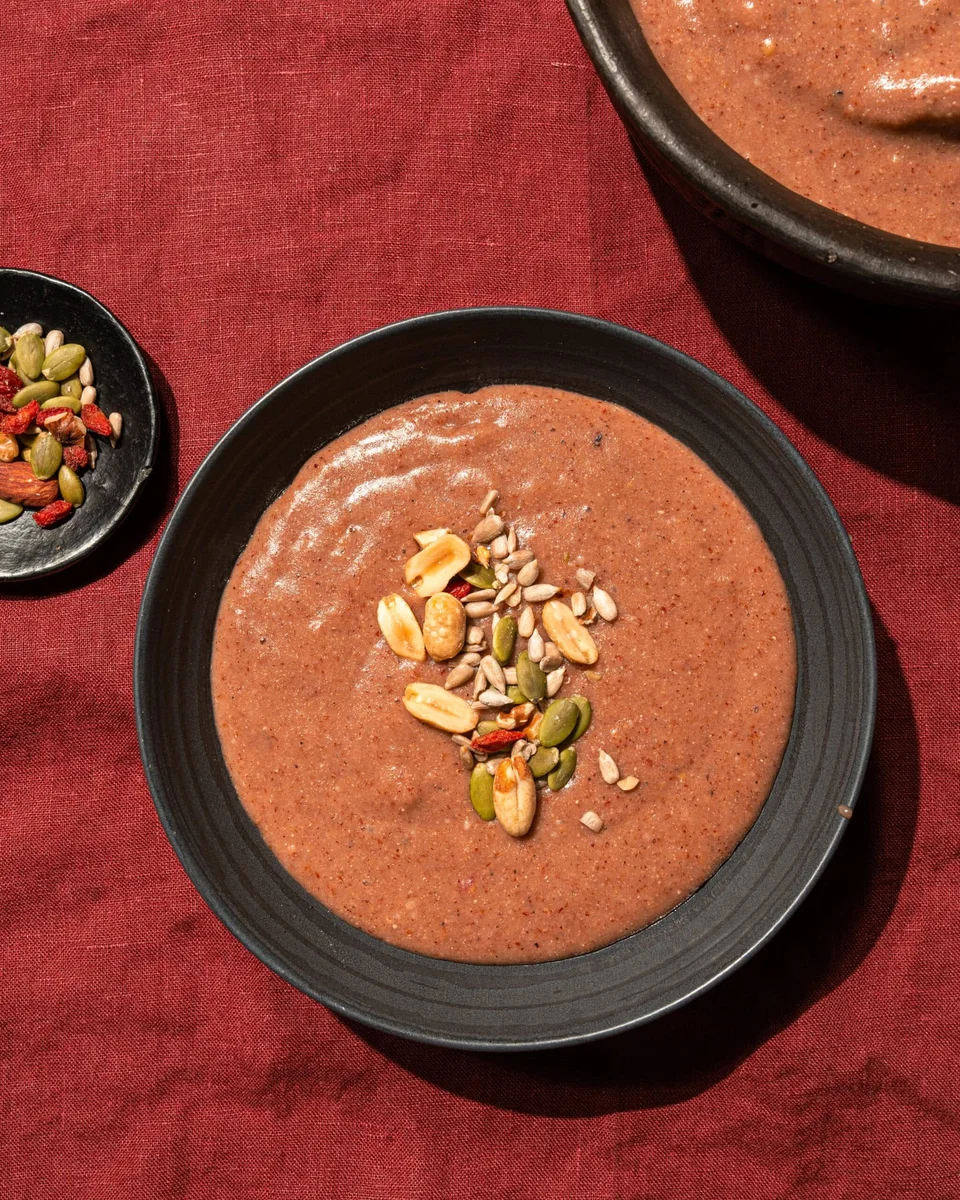
This African-inspired porridge blends millet and sorghum into a warm, softly spiced breakfast. Soaking the grains overnight helps them blend smoothly, while dates add natural sweetness.
Ingredients
- 100 g (½ cup)dry millet
- 100 g (½ cup)dry sorghum
- 2Medjool dates
- 960–1,200 ml (4–5 cups)water
- 2.5 ml (½ teaspoon)cinnamon
- 1.25 ml (¼ teaspoon)ground cloves
- 0.6 ml (⅛ teaspoon)salt
- 15 ml (1 tablespoon)baobab powder (optional)
Instructions
- 1
Soak the grains
Put the millet and sorghum in plenty of water and leave them to soak overnight.
- 2
Rinse the grains
Drain the soaked grains, then rinse them well.
- 3
Blend the grains
Blend the soaked millet and sorghum with 480 ml (2 cups) of water.
- 4
Add water
Pour the blended mixture into a pot and stir in another 480 ml (2 cups) of water.
- 5
Simmer the porridge
Cover the pot and bring the porridge to a boil. Reduce the heat and simmer for 10 minutes, stirring occasionally.
- 6
Season and thicken
Stir in the cinnamon, ground cloves, salt and baobab powder, if using. Cook for a further 5 minutes, until thick and darker in colour. If it becomes too thick, add up to 240 ml (1 cup) more water.
- 7
Serve the porridge
Serve with your preferred nuts and seeds on top, and add a sweetener if you like.
What is spiced grain porridge?
Porridges made from grains such as millet and sorghum are enjoyed in different parts of Africa, with ingredients and methods varying from place to place. This version combines the two grains and cooks them into a thick, warmly spiced bowl.
Blending the soaked grains gives the porridge a smoother texture than cooking them whole. Dates and optional baobab powder bring their own flavour, while cinnamon and cloves provide gentle warmth.
Nutrition and macros by portion
The nutrition label shows one serving as written: 210 calories, 6g protein, 44g carbs, 2g fat.
| Portion | Adjustment | kcal | Protein | Carbs | Fat |
|---|---|---|---|---|---|
| Lighter | Skip added sweetener | 147 kcal | 4g | 31g | 1g |
| This serving | As written | 210 kcal | 6g | 44g | 2g |
| Hungry | Add nuts and seeds | 315 kcal | 9g | 66g | 3g |
Millet, sorghum and dates provide most of the carbohydrates, while the grains contribute some protein and a small amount of fat. Serve a bowl with a source of protein, such as plain yoghurt, and add nuts or seeds for extra substance; toppings and sweetener are not included in the estimate.
Why soak and blend the grains?
Overnight soaking softens the millet and sorghum, making them easier to blend. Drain and rinse them before blending to clear away the soaking water.
Blend with the specified 480 ml water until the mixture is as smooth as your blender allows. A little grain texture is fine; the porridge will continue to soften as it simmers.
Building the flavour
Dates: The recipe lists two Medjool dates, but does not specify when to add them. For a more evenly sweetened porridge, blend them with the soaked grains and the first 480 ml of water.
Spices: Add the cinnamon and cloves after the initial simmer, as directed. Cloves are potent, so keep to the listed amount for a balanced result.
Baobab: This is optional and is stirred in with the spices. Leave it out if you do not have it; the porridge will still cook without it.
Getting the consistency right
Stir occasionally during the first 10-minute simmer so the grain mixture does not settle and catch on the bottom of the pot. Keep the pot covered between stirs.
After the additional 5 minutes, look for a thick, cohesive porridge and a darker colour. If it is thicker than you want, add water gradually, up to 240 ml (1 cup), until it loosens.
Timing and preparation
The stated 25 minutes covers the cooking time, but the grains need to soak overnight beforehand. Start the soak the evening before you plan to serve breakfast.
Rinsing and blending take a few extra minutes, so have the pot and remaining water ready before you start cooking. The recipe makes four servings.
Topping and serving ideas
Nuts and seeds are suggested as toppings, but the recipe does not specify types or quantities. Add them at the table so they keep their crunch.
The method also suggests adding a sweetener, without naming one or giving an amount. Taste the porridge first, especially if you blended in the dates, then sweeten as you prefer.
Recipe notes & tips
- Soak the grains overnight, as the recipe directs, before blending.
- Rinse the grains well after draining them.
- Stir occasionally during simmering to help prevent the mixture from sticking.
- Add any extra water a little at a time so you can stop at your preferred thickness.
- Taste before adding a sweetener, particularly if you include the dates.
- Add nuts and seeds just before serving to keep their texture.
Variations
- Date-sweetened: Blend the two dates with the grains and first portion of water for sweetness throughout.
- Baobab-free: Leave out the optional baobab powder without changing the cooking steps.
- Extra-spiced: Add a little more cinnamon to suit your taste while keeping the cloves measured.
- Crunchy topping: Finish each bowl with your choice of chopped nuts and seeds.
- Looser porridge: Stir in some of the reserved extra water until it reaches your preferred consistency.
Common mistakes to avoid
- Skipping the soak: The grains will be harder to blend smoothly; soak them overnight as directed.
- Forgetting to rinse: Drain and wash the grains well after soaking.
- Leaving it unstirred: The mixture can settle while simmering; stir it occasionally.
- Adding all the spare water: The porridge may become too thin; add extra water gradually, up to 240 ml.
- Over-seasoning with cloves: Their flavour can dominate; measure the stated 1.25 ml.
- Sweetening without tasting: Dates and toppings affect the final flavour; taste the porridge before adding sweetener.
How to store
Cool leftovers promptly, transfer them to a covered container and refrigerate for up to 3 days. Reheat gently in a saucepan or microwave, stirring in a little water to loosen the porridge as needed.
Frequently asked questions
Do I really need to soak the grains overnight?
Yes, overnight soaking is part of the method and helps soften the grains before blending. Allow for this preparation time in addition to the 25-minute cook.
Can I use only millet or only sorghum?
The recipe specifies equal amounts of both grains. Using just one would change the flavour and texture, so the result may differ.
When should I add the dates?
The method does not give a point for adding them. To distribute their sweetness through the porridge, blend them with the soaked grains and the first 480 ml of water.
How do I know when the porridge is ready?
After the 5-minute final cook, it should be thick and darker in colour. Add some of the extra water if it is thicker than you like.
Is baobab powder necessary?
No, it is marked optional. You can leave it out and follow the rest of the method as written.
What can I use as a topping?
The recipe suggests your preferred nuts and seeds, without specifying a type or amount. It also suggests a sweetener, which you can add to taste.
Cook it from the original
This recipe comes from eatwithafia.com. Their page has the author’s own photos, notes and tips — the best place to cook it from.
Open the recipe on eatwithafia.com