
Vegan Pea-Spinach Pesto
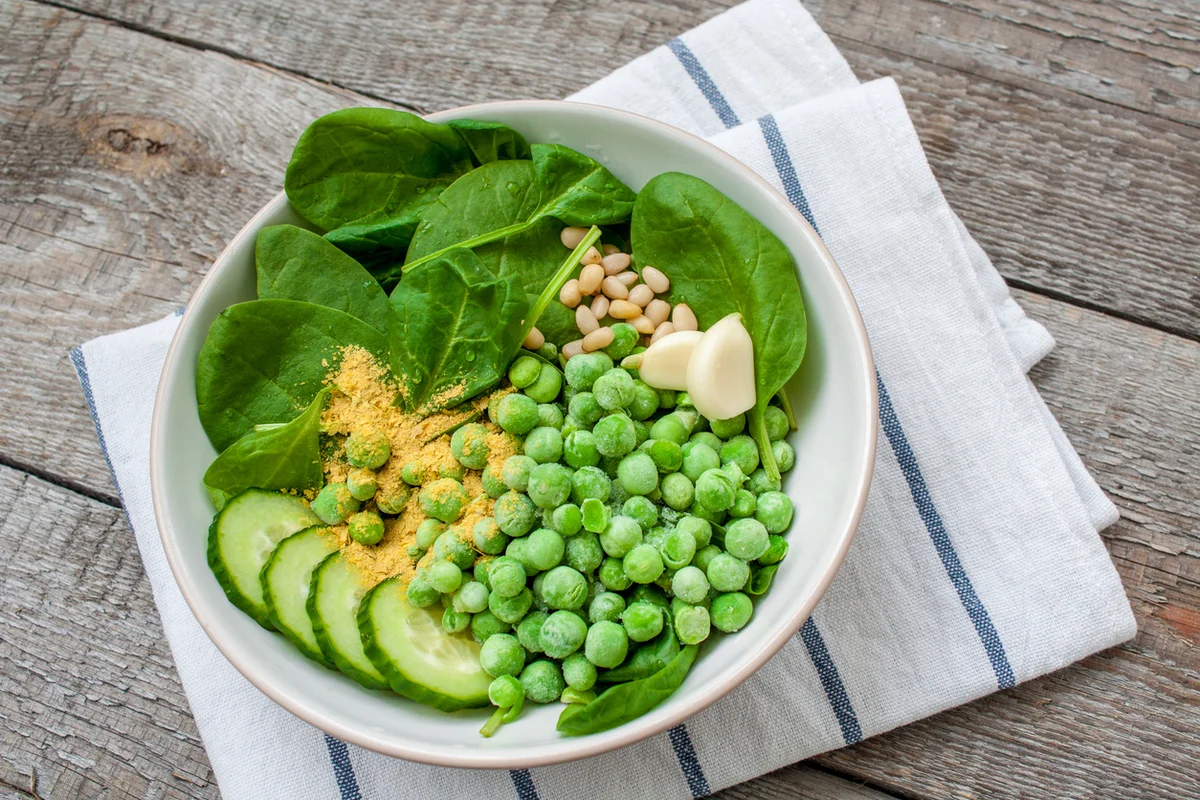
This Mediterranean-style vegan pesto blends peas, spinach and basil with pine nuts, garlic, olive oil and nutritional yeast. Ready in about 15 minutes, it works as a pasta sauce or a fresh dip.
Ingredients
- 145 g (1 cup)fresh or frozen shelled peas
- 90 g (3 cups)fresh spinach, preferably baby spinach
- 24 g (1 cup)fresh basil leaves
- about 34 g (4 tablespoons)pine nuts
- 3 large clovesgarlic, minced
- 30 ml (2 tablespoons)freshly squeezed lemon juice
- 60 ml (1/4 cup)extra virgin Greek olive oil
- to tastesea salt
- about 16 g (4 tablespoons)nutritional yeast
Instructions
- 1
Prepare the greens
Trim the spinach stems, wash the leaves and spin them dry. Coarsely chop the spinach and basil.
- 2
Blend the pesto
Put the pine nuts, garlic and half the olive oil in a food processor and blend into a paste. Add the spinach, peas and basil in batches, seasoning each with a little salt, and pulse until puréed. Once the final batch is incorporated, add the lemon juice, remaining olive oil and nutritional yeast. Pulse until combined and creamy. Serve as a dip or pasta sauce. The pesto can be kept sealed in the refrigerator for up to three days.
What is pea-spinach pesto?
Pesto is associated with Liguria in north-west Italy, where the classic version combines basil, garlic, pine nuts, cheese and olive oil. This plant-based variation keeps the fragrant herbs and nuts but uses peas and spinach for a softer, greener base.
Nutritional yeast brings a savoury, cheese-like note without dairy. Peas lend sweetness and body, while lemon juice lifts the flavour.
Nutrition and macros by portion
The nutrition label shows one serving as written: 117 calories, 4g protein, 7g carbs, 11g fat.
| Portion | Adjustment | kcal | Protein | Carbs | Fat |
|---|---|---|---|---|---|
| Lighter | Use less olive oil | 82 kcal | 3g | 5g | 7g |
| This serving | As written | 117 kcal | 4g | 7g | 11g |
| Hungry | Serve with extra pasta | 176 kcal | 6g | 10g | 16g |
The peas provide much of the carbohydrate, while the olive oil and pine nuts contribute most of the fat; the peas, spinach, pine nuts and nutritional yeast all add some protein. Serve a measured portion with plenty of vegetables and a protein-rich side such as beans or lentils for a more balanced plate.
Choosing the ingredients
Fresh or frozen peas: Either works here. If using frozen peas, thaw them first so they blend evenly with the leaves.
Nutritional yeast: This deactivated yeast is distinct from the yeast used for bread-making. Its savoury flavour is a useful stand-in for grated cheese in this pesto.
Olive oil: Extra virgin Greek olive oil gives the sauce much of its aroma and richness. Use an oil whose flavour you enjoy, as it is not cooked.
Build a smooth base
Pine nuts and garlic: Blend these with half the oil first, until they form a paste. Starting with this smaller, denser mixture helps break down the nuts and garlic before the leafy ingredients go in.
Greens and peas: Add them in batches rather than all at once. This gives the blades room to work and helps the mixture become more uniform.
Control the texture
Pulse the food processor rather than running it continuously, checking the texture as you go. Stop when the pesto is creamy but still has some texture; blend longer if you prefer it smoother.
Add the lemon juice, remaining oil and nutritional yeast at the end, then pulse just until combined. If the pesto seems too thick for pasta, loosen it when serving with a little pasta cooking water.
Keep the greens fresh
Dry spinach thoroughly after washing so excess water does not dilute the pesto. Coarsely chopping the leaves also makes it easier for the processor to incorporate them in batches.
Taste after blending and adjust the salt if needed. The lemon, garlic and nutritional yeast each contribute a distinct flavour, so add any extra seasoning gradually.
Serving ideas
Toss the pesto through pasta, adding a splash of cooking water to help it coat the noodles. It also makes a colourful dip for bread or crunchy vegetables.
For a more complete plate, serve it with pasta or another grain and add a source of protein, such as beans or lentils. A side salad or extra vegetables can round out a smaller portion.
Recipe notes & tips
- Thaw frozen peas before blending for a more even texture.
- Spin the washed spinach completely dry to avoid watery pesto.
- Add the leafy ingredients in batches so the processor can blend them properly.
- Use short pulses and check the consistency often to keep some texture.
- Taste for salt after blending, since the other ingredients already bring plenty of flavour.
- For pasta, loosen the pesto with a little cooking water just before tossing.
Variations
- Walnut swap: Replace the pine nuts with walnuts for a deeper, earthier flavour.
- Herb balance: Use a little less basil and more spinach for a milder herbal taste.
- Extra lemon: Add a little more lemon juice for a brighter, tangier pesto.
- Chilli heat: Pulse in a pinch of chilli flakes for gentle warmth.
- Chunky dip: Blend briefly and stop while small pieces of peas and nuts remain.
Common mistakes to avoid
- Wet spinach: Excess water can thin the pesto; spin the leaves dry before chopping.
- Overfilling the processor: Crowded blades may leave uneven pieces; add the greens and peas in batches.
- Blending without pauses: Continuous blending can make it difficult to judge texture; pulse and check frequently.
- Adding all the oil at once: Begin with half to form the nut paste, then add the rest with the final ingredients.
- Over-seasoning early: Salt in small amounts as you blend, then taste and adjust at the end.
How to store
Transfer the pesto to a sealed container and refrigerate for up to three days. Stir before serving; for pasta, warm it gently with a splash of pasta cooking water rather than heating it for a long time.
Frequently asked questions
Can I use frozen peas?
Yes. Thaw them before adding them to the processor so they blend smoothly with the spinach and basil.
Can I make this without a food processor?
A small blender may work, though you may need to stop and scrape down the sides. Add the greens in small batches and avoid adding extra liquid unless needed.
What can I use instead of pine nuts?
Walnuts are a suitable alternative, or try another mild-flavoured nut. The taste and texture will vary slightly.
Is nutritional yeast the same as baking yeast?
No. Nutritional yeast is deactivated, so it does not make dough rise. Its savoury flavour is used here in place of a cheesy note.
How do I use it with pasta?
Toss the pesto with cooked pasta and a splash of pasta cooking water to help it coat the noodles. Add the pesto off the heat or warm it gently.
How long does the pesto keep?
Keep it sealed and refrigerated for up to three days, as specified in the recipe.
Cook it from the original
This recipe comes from dianekochilas.com. Their page has the author’s own photos, notes and tips — the best place to cook it from.
Open the recipe on dianekochilas.com