
Mango Sorbet (Mango Ice)
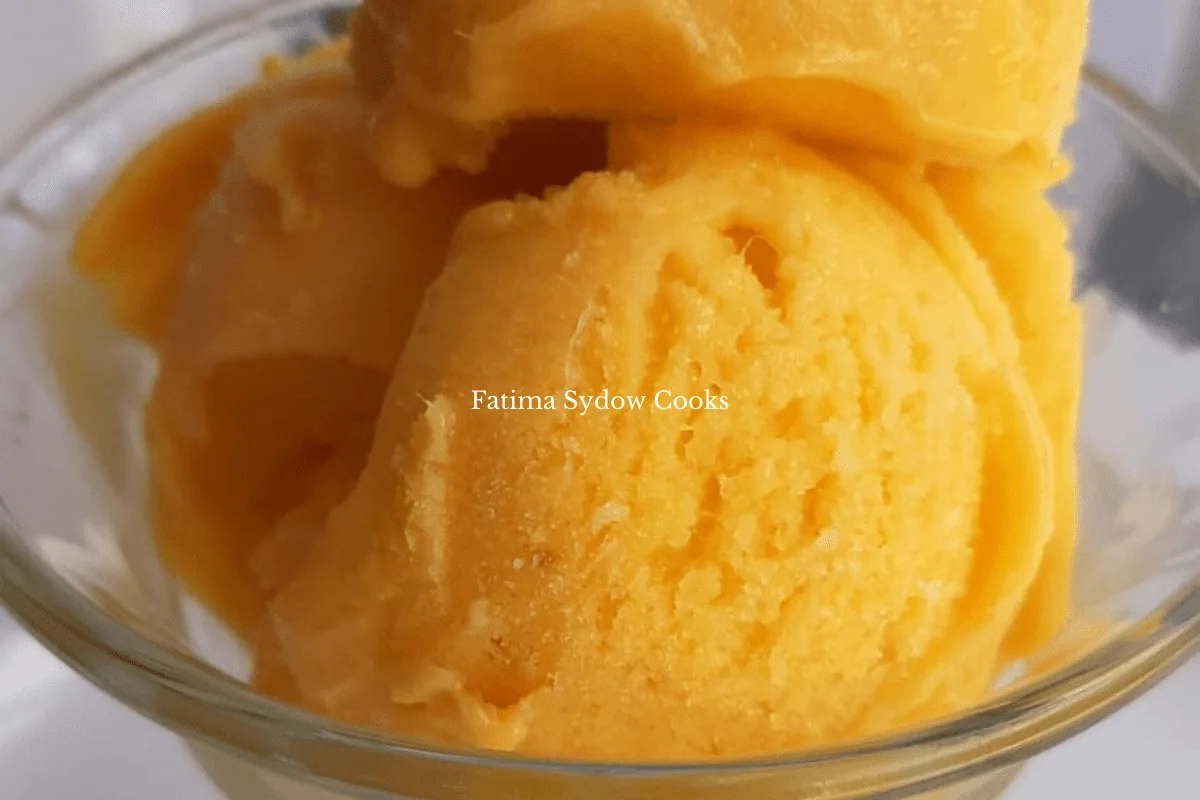
This mango sorbet, also called mango ice, blends frozen mango with condensed milk, lemon juice and a pinch of salt for a smooth, refreshing dessert. It takes very little hands-on work and is ready to serve after an overnight freeze.
Ingredients
- 600 g (4 cups)frozen mango pieces
- 60 ml (1/4 cup)condensed milk
- a pinchsalt
- 15 ml (1 tablespoon)fresh lemon juice
Instructions
- 1
Blend until smooth
Put the frozen mango, condensed milk, salt and fresh lemon juice in a food processor. Blend until the mixture is smooth and creamy.
- 2
Freeze overnight
Spoon the mixture into a container with a lid, cover it and freeze overnight.
- 3
Serve the sorbet
Serve in a bowl or on a cone.
What is mango sorbet?
Mango sorbet is a frozen fruit dessert, and this version is also called mango ice. The recipe does not specify a particular regional origin; it relies on ripe mango for its flavour rather than a long list of additions.
Blending the frozen fruit with condensed milk makes a creamy mixture, while lemon juice and a little salt round out the sweetness.
Nutrition and macros by portion
The nutrition label shows one serving as written: 138 calories, 1g protein, 31g carbs, 2g fat.
| Portion | Adjustment | kcal | Protein | Carbs | Fat |
|---|---|---|---|---|---|
| Lighter | Less condensed milk | 97 kcal | 1g | 22g | 1g |
| This serving | As written | 138 kcal | 1g | 31g | 2g |
| Hungry | Larger scoop | 207 kcal | 1g | 47g | 2g |
Most of the carbohydrates come from the mango and condensed milk, while condensed milk supplies most of the fat and a little protein. Serve a modest scoop alongside fresh fruit or after a meal with a source of protein to make the plate more balanced.
Choosing the ingredients
Mango: Use pieces that are fully frozen so the mixture is cold and thick when blended. If freezing fresh mango, cut it into small pieces first so it is easier for the food processor to handle.
Condensed milk: This sweetens the sorbet and contributes to its creamy texture. Add the measured amount rather than pouring freely, so the mango remains the main flavour.
Lemon and salt: Fresh lemon juice brings a tart note, and a pinch of salt helps balance the fruit's sweetness.
Getting a smooth blend
Blend until the mixture looks smooth and creamy, stopping to scrape down the sides if needed. If the processor struggles, pause briefly rather than adding extra liquid, which would change the recipe's proportions.
A powerful food processor makes the job easier, but smaller batches can help if your machine has a modest bowl.
Freezing and texture
Transfer the blended mixture to a lidded container and freeze it overnight as directed. A shallow container can make the mixture easier to scoop, while a well-fitting lid helps protect it in the freezer.
The sorbet will firm up as it freezes. If it is too hard to scoop straight from the freezer, leave it at room temperature briefly until it softens enough to serve.
How to serve it
Serve the mango ice in a bowl or on a cone. For easier scooping, use a scoop warmed under hot water and wiped dry.
Its sweet-tart fruit flavour also works well after a rich meal or alongside a simple biscuit.
Recipe notes & tips
- Cut fresh mango into small pieces before freezing so it blends more easily.
- Scrape down the food processor bowl if fruit sticks to the sides.
- Use a lidded container to keep the sorbet covered in the freezer.
- Let a very firm batch soften briefly before scooping.
- Taste the mixture after blending if you want to check the balance of sweet mango and lemon.
Variations
- More lemon: Add a little extra fresh lemon juice for a sharper finish.
- Lime swap: Use fresh lime juice instead of lemon for a different citrus note.
- Coconut note: Replace some of the condensed milk with coconut milk for a coconut flavour and a less sweet result.
- Mango and berry: Blend in a handful of frozen berries for a mixed-fruit version.
- Spiced mango: Add a small pinch of ground cardamom before blending.
Common mistakes to avoid
- Using partly thawed mango: The mixture may turn loose; use fully frozen pieces for blending.
- Overfilling the processor: The fruit may not blend evenly; work in batches if needed.
- Stopping while chunks remain: Continue blending until the mixture is smooth and creamy.
- Adding extra liquid too quickly: It can make the sorbet softer; pause and scrape the bowl before deciding whether it needs help.
- Serving straight from a very cold freezer: It may be difficult to scoop; leave it out briefly to soften.
How to store
Keep the sorbet covered in an airtight container in the freezer and use it within about a month for the best texture. It does not need reheating; let it soften briefly at room temperature before serving.
Frequently asked questions
Can I use fresh mango instead of frozen?
Yes. Cut it into pieces and freeze them solid before blending, so the mixture is cold and thick.
Can I make this without a food processor?
A high-powered blender may work, though you may need to stop and scrape down the sides. Blend in small batches if the fruit is not moving freely.
Why is my sorbet hard to scoop?
It firms up during the overnight freeze. Leave it at room temperature briefly before serving.
Can I serve it as soon as it is blended?
The method calls for freezing it overnight first. Serve it in a bowl or on a cone once it has frozen.
How long does mango sorbet keep?
Keep it covered in the freezer and aim to eat it within about a month for the best texture.
Cook it from the original
This recipe comes from fatimasydow.co.za. Their page has the author’s own photos, notes and tips — the best place to cook it from.
Open the recipe on fatimasydow.co.za