
Pretzel rolls
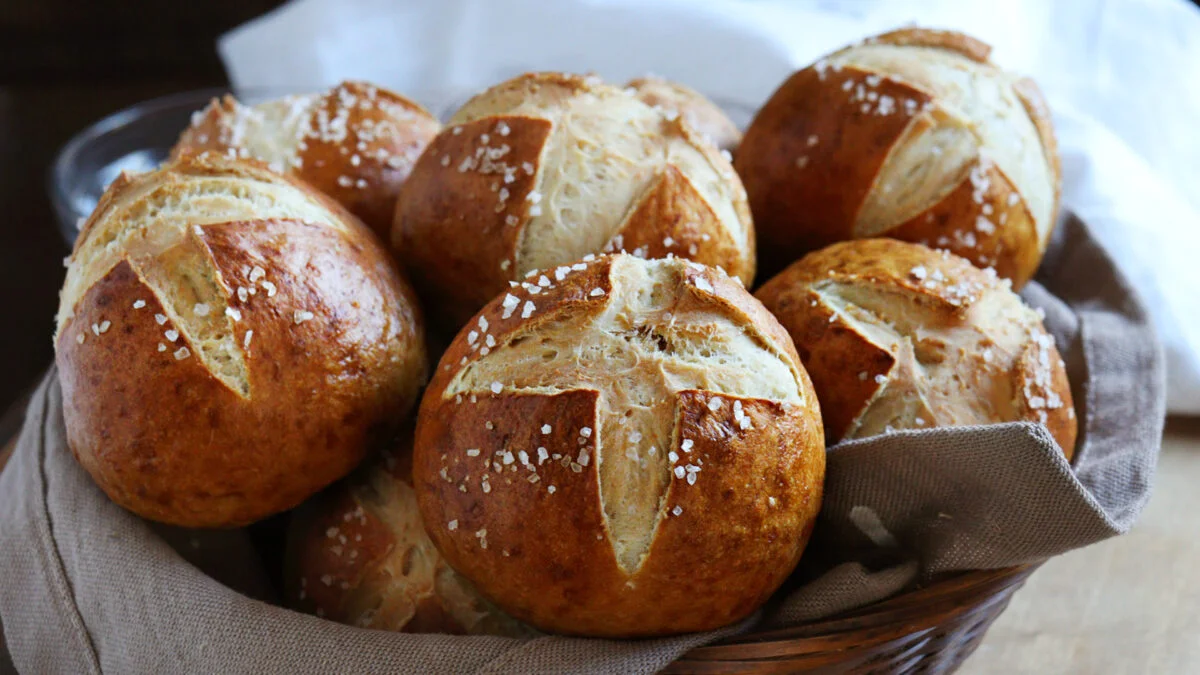
Pretzel rolls are soft bread rolls with a distinctive, shiny golden crust created by briefly boiling the shaped dough in bicarbonate of soda. Make them for sandwiches or serve them warm alongside a meal.
Ingredients
- 500 gplain or strong wheat flour
- 270 mlwater
- 5 g dried yeast (or 25 g fresh yeast)yeast
- 7 gsalt
- 5 ml (1 tsp), optionalmalt extract
- 20 gsoft butter
- 1.5 litreswater
- 30 gbicarbonate of soda
- to taste, optionalcoarse salt
Instructions
- 1
Mix the dough
Combine the flour and 7 g salt in a bowl. Add the yeast, 270 ml room-temperature water and malt extract, if using. Mix first with a spoon and then with your hands until almost no dry flour remains.
- 2
Knead the dough
Work the soft butter into the dough in the bowl, then turn it out onto a work surface. Knead firmly with both hands until the dough becomes cohesive and taut; it may feel sticky at first, so do not add extra flour.
- 3
Let it rest
Shape the dough into a ball, put it in a bowl, cover it and leave it to rest for about 45 minutes.
- 4
Shape the rolls
Press the dough gently to deflate it, then divide it into 8 equal pieces of about 100 g each. Fold the edges of each piece towards the centre, turn it over and shape it into a ball with circular movements on the work surface.
- 5
Proof briefly
Dust a board or tray with flour, arrange the rolls on it and cover with a cloth. Leave them for 20–30 minutes; they should rise a little but not double in size.
- 6
Prepare the bath
Bring 1.5 litres of water to the boil over high heat. Reduce the heat, then add 30 g bicarbonate of soda carefully, as it will fizz and foam up.
- 7
Boil the rolls
Lower the rolls into the water carefully with a slotted spoon. Boil each one for 30 seconds per side, working one at a time until you are comfortable with the process; you can then boil up to 3 at once.
- 8
Drain and score
Lift the rolls out and leave them on a rack or cloth for 1–2 minutes, just long enough for excess water to drain. Transfer them to a greased or oiled baking tray, a silicone mat or baking paper. Cut a cross into the top of each roll with a sharp or serrated knife and add coarse salt if desired.
- 9
Bake until golden
Bake at 200°C for about 25 minutes, or until the rolls are golden.
- 10
Cool the rolls
Remove the rolls from the oven and leave them to cool before serving.
What are pretzel rolls?
Pretzel rolls take their name from pretzels, the European bread known for its distinctive browned crust. Like bagels, these rolls are briefly boiled before baking, but here the bath uses bicarbonate of soda.
That short dip helps create a firm, glossy exterior while the inside stays soft. This version shapes the dough into simple rounds, making them handy for sandwiches.
Nutrition and macros by portion
The nutrition label shows one serving as written: 245 calories, 7g protein, 48g carbs, 3g fat.
| Portion | Adjustment | kcal | Protein | Carbs | Fat |
|---|---|---|---|---|---|
| Lighter | Skip the coarse salt | 172 kcal | 5g | 34g | 2g |
| This serving | As written | 245 kcal | 7g | 48g | 3g |
| Hungry | Serve two rolls | 368 kcal | 10g | 72g | 4g |
Most of the carbohydrates come from the wheat flour, which also provides most of the protein. Butter contributes most of the fat, while the flour and added salt account for much of the sodium; some of the bicarbonate bath may also remain on the rolls. Pair a roll with a protein-rich filling and vegetables for a more balanced meal.
Flour and malt
Flour: Strong flour gives the dough more structure, while plain flour also works. The recipe uses 500 g, so weigh it for a consistent dough.
Malt extract: It is optional and can be replaced with the same amount of honey. It adds a little sweetness and helps the rolls brown.
Knead without adding flour
Butter: Work the soft butter into the dough before kneading it on the work surface. The dough may feel sticky at first, but continued kneading should make it smoother and more unified.
Texture: Look for a cohesive ball that feels increasingly taut. Adding extra flour to counter the initial stickiness can make the baked rolls denser.
Keep the second rise short
First rest: Give the covered dough about 45 minutes to relax and rise. The method does not specify a temperature, so use a draught-free spot.
Shaped rest: After forming the rolls, leave them covered for 20–30 minutes, just until they have puffed slightly. They should not double before the bicarbonate bath.
Handle the bicarbonate bath carefully
Foaming: Add the bicarbonate of soda after reducing the heat, and take care as it can make the water foam up considerably. Use a roomy pan to leave space for the bubbling liquid.
Boiling: Lower the rolls in with a slotted spoon and give each side 30 seconds. Lift them out gently and drain for 1–2 minutes so they are not carrying excess water onto the tray.
Score and bake
Scoring: Cut a cross into each roll after boiling, using a sharp or serrated knife. The rolls may look a little deflated at this point; they should puff up again as they bake.
Doneness: Bake at 200°C for about 25 minutes, checking for an evenly golden surface. The recipe gives colour as the main cue rather than a precise internal temperature.
Serve as rolls or sandwiches
These rolls work well split and filled with cheese, sliced vegetables or cooked meats. Their firm outer crust also makes them a good companion to soup.
Coarse salt on top is optional and gives the rolls a more recognisable pretzel-style finish. Leave it off if you prefer a milder crust or plan to use a salty filling.
Recipe notes & tips
- Weigh the dough pieces so the 8 rolls bake at a similar rate.
- Use room-temperature water for mixing, as specified in the method.
- Keep the pan roomy because the bicarbonate bath foams when the soda is added.
- Boil the rolls in batches that leave enough space to turn them safely.
- Drain each roll briefly before transferring it to the baking tray.
- Let the baked rolls cool before slicing them for sandwiches.
Variations
- Use honey: Replace the optional malt extract with the same amount of honey.
- Add coarse salt: Sprinkle a few grains over the scored rolls before baking.
- Make smaller rolls: Divide the dough into more pieces and keep an eye on them as they bake.
- Serve with cheese: Split a cooled roll and fill it with cheese and sliced vegetables.
- Make a savoury filling: Use cooked meat and salad leaves for a more substantial sandwich.
Common mistakes to avoid
- Adding flour too soon: The butter can make the dough briefly sticky; keep kneading rather than adding more flour.
- Overproofing the shaped rolls: Leave them only 20–30 minutes so they do not double before boiling.
- Adding soda at a strong boil: Reduce the heat first, as the water can foam up when the bicarbonate goes in.
- Crowding the pan: Boil fewer rolls at a time so they are easier to turn and lift out.
- Skipping the drain: Let each roll drain for 1–2 minutes to remove excess water before baking.
- Worrying about deflated rolls: A slight collapse after boiling and scoring is expected; bake them until golden.
How to store
Once cool, store the rolls in an airtight container at room temperature and use within 2 days. Rewarm briefly in a low oven to refresh the crust; freeze for longer storage and thaw before reheating.
Frequently asked questions
Can I use fresh yeast instead of dried yeast?
Yes. Use 25 g fresh yeast in place of 5 g dried yeast, as listed in the ingredients.
Can I use plain flour?
Yes. The recipe allows either strong or plain wheat flour; strong flour may give the dough a little more structure.
Can I leave out the malt extract?
Yes, it is optional. You can also replace it with the same amount of honey.
Why do the rolls go into bicarbonate water?
The brief boil helps create the characteristic pretzel-style crust. It sets the outside before the rolls finish baking.
How long should I boil each roll?
Boil each roll for 30 seconds on each side, then drain it for 1–2 minutes.
Can I skip the coarse salt?
Yes. The coarse salt is optional and can be left off to suit your taste.
Cook it from the original
This recipe comes from cuk-it.com. Their page has the author’s own photos, notes and tips — the best place to cook it from.
Open the recipe on cuk-it.com