
British Steak and Kidney Pudding
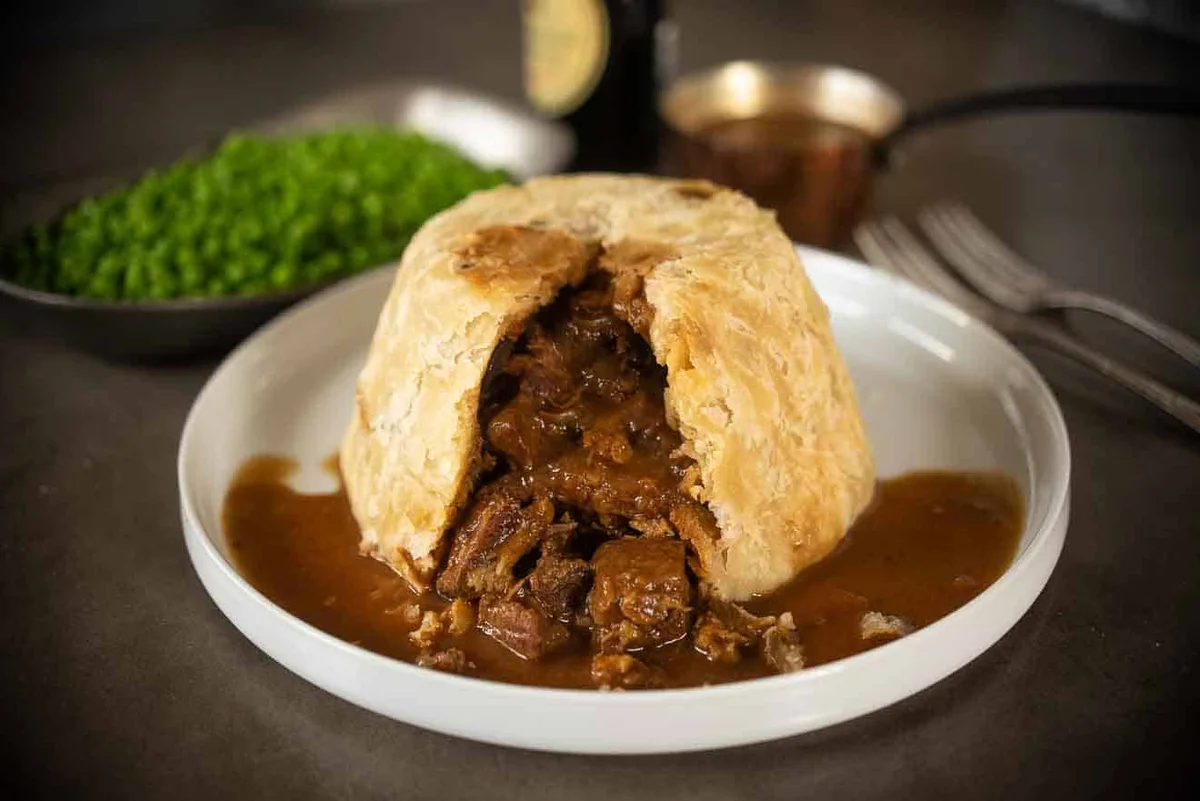
British steak and kidney pudding pairs tender beef and kidney in a rich ale gravy with a soft suet pastry casing, steamed until cooked through. It is a warming, substantial dish for a leisurely meal, with the gravy and pastry making it especially satisfying.
Ingredients
- 1 tablespoonoil or beef dripping
- 1 tablespoonunsalted butter
- 800 g (1 3/4 pounds)beef chuck roast, shoulder or stewing beef, cut into 1/2-inch (1 3/4 cm) cubes
- 57 g (1/2 cup)carrot, finely chopped
- 128 g (1 cup)yellow onion, chopped
- 70 g (1/3 cup)beef kidney, chopped
- 1/2 teaspoongarlic, chopped or grated
- 3/4 teaspoonmustard powder
- 1 tablespoontomato paste, purée or concentrate
- 1 teaspoonWorcestershire sauce
- 1 1/2 tablespoonsplain flour
- 60 ml (1/4 cup)dark English ale
- 78 ml (1/3 cup)beef stock or broth, preferably low-sodium
- 1/2 teaspoonfresh rosemary or thyme, chopped
- to tastesalt
- to tasteground pepper
- 300 g (2 1/3 cups)plain flour
- 1/4 teaspoonsalt
- 1 teaspoonbaking powder
- 150 g (1 cup) beef suet or lard, plus 2 tablespoonsbeef suet or lard
- as neededsoftened butter, for greasing
- as neededwater, for the pastry and sealing
Instructions
- 1
Brown the beef
Heat the oil and butter in a large, heavy, ovenproof saucepan or braising pan over medium-high heat. Season the beef with a little salt and pepper, then brown it on all sides, turning the pieces as needed. Remove the beef and set it aside.
- 2
Cook the vegetables
Add the carrot and onion to the same pan and cook for about 5 minutes, until the onion softens. Add the kidney and garlic, stir and cook for 1 minute, taking care not to burn the garlic. Stir in the tomato paste and Worcestershire sauce and cook for 1 minute.
- 3
Build the gravy
Add the flour, mustard powder and rosemary or thyme, stirring until the flour is mixed in. Cook for 2 minutes, then pour in the ale and stir until it begins to thicken. Add the beef stock and beef, season with a little salt and pepper, and stir.
- 4
Simmer the filling
Cover the pan and bring the filling to a low simmer for 35–45 minutes. Remove the lid and simmer for a further 15 minutes to reduce and thicken the gravy; it should not be runny. The meat should be fairly tender, though it will cook further in the oven. Taste, adjust the salt and pepper if needed, and set the filling aside while you make the pastry.
- 5
Make the pastry
Put the flour, baking powder, salt and suet in a large bowl. Drizzle in water and mix with a fork until the dough begins to come together and holds when pressed; you may not need all the water. If using lard or shortening, rub it into the flour mixture between your fingers until it resembles breadcrumbs before adding the water. Turn the dough onto a lightly floured surface and knead until smooth. Cut off a quarter and set it aside.
- 6
Grease the basin
Grease the inside of a 1.2-litre (2.5-pint), 15 × 10 cm (6 × 4-inch) ceramic pudding basin well with softened butter.
- 7
Line and fill
Roll the larger piece of dough into a 38 cm (15-inch) round, large enough to hang over the edge of the basin. Transfer it to the basin and press it evenly against the inside, leaving the excess overhanging. Add the steak and kidney filling, reserving some gravy for serving, and level the top; avoid adding too much gravy or the pastry may become soggy. Roll out the remaining quarter of dough into a circle to cover the pudding. Fold the overhanging pastry over the top, dampen your fingers with water and smooth the edges to seal.
- 8
Cover the pudding
Cut two circles of parchment paper to fit inside the basin and a larger circle of foil that will cover it and extend down the sides. Butter both pieces of parchment and place them on the pudding, buttered side down. Cover with the foil and seal it firmly. Tie string around the rim to secure the foil; you can tie on another length of string to make a handle.
- 9
Steam for two hours
Make a ring-shaped riser from rolled foil, or use a small ceramic ramekin, and place it in the bottom of a large lidded pan so the basin will not touch the pan's base. Set the basin on the riser and add water until it reaches three-quarters of the way up the basin. Cover the pan, bring the water to a boil and simmer for 2 hours. Keep an eye on the water level and top it up if needed.
- 10
Unwrap and serve
After 2 hours, lift the basin out of the pan and let it cool slightly before removing the foil and parchment. Put a large plate over the pudding and turn it out. Slice and serve with the reserved gravy.
What is steak and kidney pudding?
Steak and kidney pudding is a traditional British steamed savoury pudding, with beef and kidney cooked in gravy inside a suet pastry case. It is distinct from a baked pie: the pastry is enclosed in a basin and steamed rather than baked in an oven.
This version uses dark English ale, stock and a little tomato paste for a savoury, full-bodied filling. Browning the beef and reducing the gravy before assembling helps build flavour and keeps the pastry from becoming waterlogged.
Nutrition and macros by portion
The nutrition label shows one serving as written: 827 calories, 63g protein, 70g carbs, 43g fat.
| Portion | Adjustment | kcal | Protein | Carbs | Fat |
|---|---|---|---|---|---|
| Lighter | Smaller slice, extra greens | 579 kcal | 44g | 49g | 30g |
| This serving | As written | 827 kcal | 63g | 70g | 43g |
| Hungry | Larger pudding portion | 1241 kcal | 95g | 105g | 65g |
The beef and kidney provide most of the protein, while the flour in the pastry and gravy supplies much of the carbohydrate. Suet or lard, plus the cooking fat and butter, contribute a substantial share of the fat. Serve a moderate slice with green vegetables to add freshness and balance the rich pudding.
Choosing the filling ingredients
Beef chuck: Chuck, shoulder or stewing beef suits the long cooking time and becomes tender as it simmers and steams. Cut the pieces evenly so they cook at a similar rate.
Kidney and ale: Chopped beef kidney adds the characteristic savoury flavour, while dark ale gives the gravy depth. If your stock is salty, season cautiously and taste the filling before assembling.
Getting the gravy right
Flour first: Stir the flour thoroughly into the vegetables and seasonings, then cook it for 2 minutes before adding the ale. This helps it blend into the gravy without leaving a raw flour taste.
Reduce: Simmer uncovered for the final 15 minutes so excess liquid evaporates. Aim for a thick, spoonable filling rather than a loose sauce, and reserve some gravy to serve separately.
Handling the suet pastry
Add water gradually: The pastry needs enough water to hold together when pressed, but may not need the full amount you pour in. A dough that is too wet can be difficult to shape and may turn heavy.
If using lard: Rub it into the flour mixture until it looks like breadcrumbs before adding water. With suet, mix it with the dry ingredients as directed, then knead the dough on a lightly floured surface until smooth.
Lining and sealing the basin
Line evenly: Roll the larger piece of dough into a wide round and press it evenly into the greased basin, leaving a generous overhang. An even pastry layer helps the pudding hold its shape.
Seal carefully: Add the filling without excess gravy, cover it with the smaller pastry round and fold the overhang over the top. Dampen the edges with water and press them together to make a neat seal before covering.
Steaming and checking doneness
Keep it raised: The basin should sit on a foil ring or small ramekin, not directly on the base of the pan. Water should come three-quarters of the way up the basin, and the pan should stay covered during the 2-hour simmer.
Watch the water: Check the level during cooking and top it up if needed. Once the pudding has steamed for 2 hours, let it cool slightly before removing the coverings and turning it out.
Serving the pudding
Turn the pudding onto a large plate and slice it while warm. Spoon over the gravy you saved from the filling for a more generous sauce on each portion.
A simple accompaniment such as peas, green beans or steamed cabbage brings freshness to the plate. These also work well alongside the rich pastry and beef filling.
Recipe notes & tips
- Brown the beef in batches if needed so the pieces colour rather than crowd and steam.
- Keep the garlic moving in the pan so it does not catch while the kidney cooks.
- Taste the filling before assembling, especially if your stock is already salty.
- Add pastry water a little at a time and stop once the dough holds together when pressed.
- Reserve some of the thicker gravy before filling the basin so it is ready to serve.
- Check the steaming water level during the 2-hour cook and top it up if it drops.
Variations
- Herb swap: Use either chopped rosemary or thyme, as suggested, to change the herbal note.
- Stock choice: Use low-sodium beef stock if you want more control over the seasoning.
- Ale alternative: If dark English ale is unavailable, use another dark ale with a savoury profile.
- Lard pastry: Replace the suet with lard and rub it into the dry ingredients until they resemble breadcrumbs.
- Vegetable side: Serve with peas, green beans or cabbage for a fresh contrast to the pudding.
Common mistakes to avoid
- Runny filling: Simmer uncovered for the full 15 minutes, or longer as needed, until the gravy is thick.
- Soggy pastry: Avoid adding too much gravy to the basin; save some for serving instead.
- Dry pastry dough: Add water gradually and stop once the mixture holds together when pressed.
- Loose pastry seal: Dampen the edges with water and press them together firmly before covering.
- Basin touching the pan: Set it on a foil ring or ramekin to keep it raised above the base.
- Low steaming water: Check the pan as it cooks and top up the water if necessary.
How to store
Cool leftovers, cover and refrigerate promptly; eat within 3 days. Reheat slices until piping hot throughout, using a covered pan or microwave, and warm the reserved gravy separately.
Frequently asked questions
Can I make the filling ahead?
Yes. Cook the filling, let it cool and refrigerate it in a covered container, then assemble the pudding when ready. Keep it chilled until you are ready to steam.
Can I make the pudding without kidney?
You can leave the kidney out, though the result will no longer have the classic steak-and-kidney flavour. Keep the rest of the filling method the same.
What can I use instead of suet?
The recipe allows lard or shortening. Rub it into the flour mixture until it resembles breadcrumbs before adding water.
How thick should the filling gravy be?
It should be thick and spoonable rather than runny. Simmer the filling uncovered until excess liquid has reduced, then reserve some gravy for serving.
How do I know the pudding is ready?
Steam it for the stated 2 hours, keeping the pan covered and the water at the right level. The beef should already be fairly tender after its first simmer and will continue cooking in the pudding.
Can I steam it without a pudding basin?
The method is designed for a 1.2-litre ceramic pudding basin. Use a basin that fits inside your lidded pan with room for water around it, and raise it above the pan's base.
Cook it from the original
This recipe comes from culinaryginger.com. Their page has the author’s own photos, notes and tips — the best place to cook it from.
Open the recipe on culinaryginger.com