
Shrimp Scampi
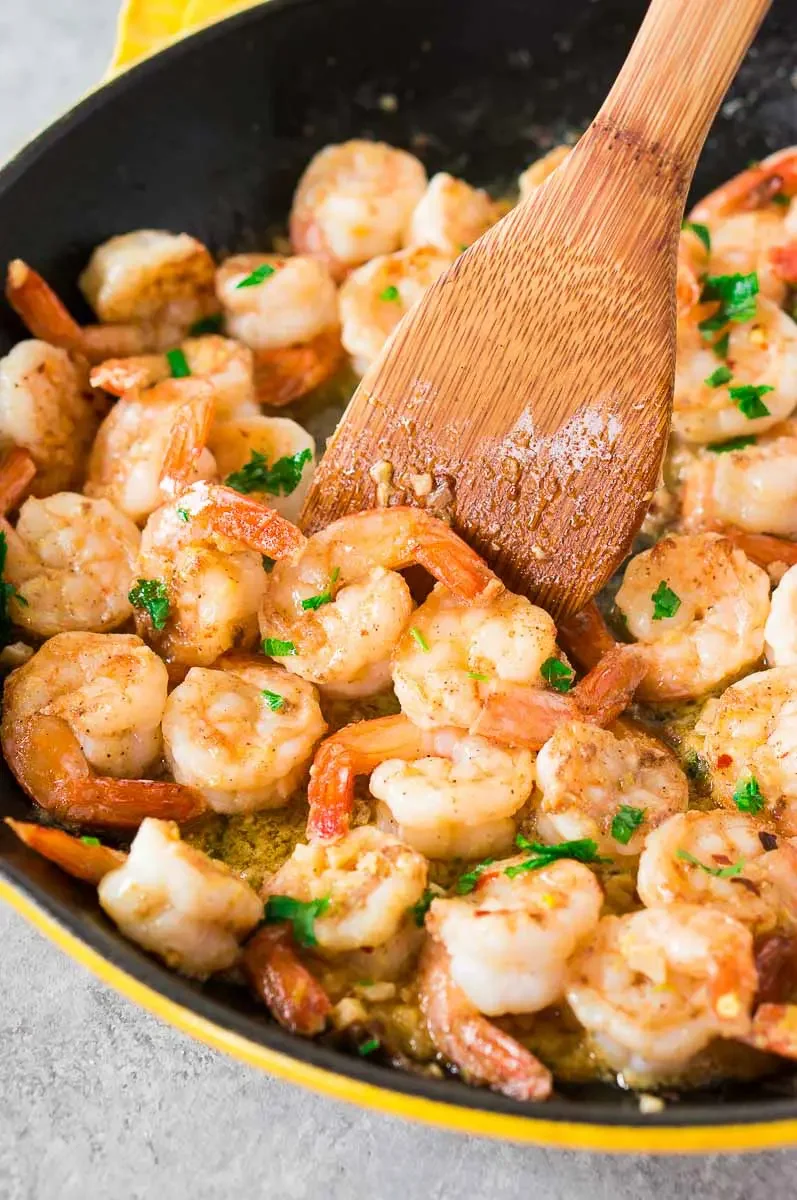
Shrimp scampi is a quick one-pan dish of prawns cooked with garlic, butter, white wine and lemon. It makes a fresh, savoury supper in about 10 minutes and can be served with rice, pasta or vegetables.
Ingredients
- 30 ml (2 tablespoons)olive oil
- 57 g (4 tablespoons), divided into 28 g (2 tablespoons) portionsbutter
- 454 g (1 lb)prawns, peeled and deveined, with tails on or off
- to tastesalt and black pepper
- 4 large clovesgarlic, minced
- 60 ml (¼ cup)dry white wine, such as Pinot Grigio
- 30 ml (2 tablespoons)lemon juice
- zest of 1 lemonlemon
- 2.5 ml (½ teaspoon), or to taste; optionalred pepper flakes
- 15 g (¼ cup), optionalfresh parsley, chopped
Instructions
- 1
Heat the pan
Warm the olive oil and half of the butter in a large frying pan over medium-high heat.
- 2
Season the prawns
Season the prawns with salt and pepper. Add them to the hot pan and sear for about 1 minute on each side.
- 3
Add garlic and wine
Before the prawns are fully cooked, stir in the minced garlic and sauté for about 30 seconds. Pour in the white wine and cook for 1–2 minutes, until it has reduced by about half; meanwhile, turn the prawns and cook the other side.
- 4
Finish and serve
Add the remaining butter, lemon juice and lemon zest. Remove the pan from the heat, stir in the chopped parsley and serve over rice, pasta, courgette noodles or spaghetti squash.
What is shrimp scampi?
Shrimp scampi is an American-style preparation of prawns in a garlicky butter and wine sauce. The name is associated with scampi, a type of small lobster-like shellfish, while this version uses prawns.
Its appeal is the contrast of rich butter with bright lemon and fresh parsley. Cooking everything in one pan keeps the sauce close at hand for spooning over a side.
Nutrition and macros by portion
The nutrition label shows one serving as written: 298 calories, 24g protein, 3g carbs, 20g fat.
| Portion | Adjustment | kcal | Protein | Carbs | Fat |
|---|---|---|---|---|---|
| Lighter | Use less butter | 209 kcal | 17g | 2g | 14g |
| This serving | As written | 298 kcal | 24g | 3g | 20g |
| Hungry | Add pasta or rice | 447 kcal | 36g | 5g | 30g |
The prawns provide most of the protein, while the butter and olive oil account for much of the fat; the prawns and wine contribute only a little carbohydrate. Serve with a generous portion of vegetables, or choose a measured amount of rice or pasta to make it a more complete meal.
Choosing the prawns
Prawns: Use peeled and deveined prawns so they cook quickly and are easy to eat. Tails can be left on or removed, according to preference.
Size: If the prawns vary in size, watch the smaller ones closely and remove them as soon as they are opaque and cooked through.
Building the garlic butter sauce
Garlic: Add it after the prawns have started cooking, then sauté for about 30 seconds. This brief cooking releases its aroma without giving it time to burn.
Wine: Let the wine simmer for 1–2 minutes, reducing by about half before adding the final butter and lemon. This concentrates the sauce while leaving enough liquid to coat the prawns.
Getting the prawns just right
Searing: Start with a hot pan and leave the prawns undisturbed for about 1 minute per side so they can colour. Avoid crowding them; cook in batches if your pan is too small.
Doneness: The prawns should be opaque and firm, not tightly curled or rubbery. They continue to cook briefly as the hot pan and sauce finish the dish.
Balancing the flavours
Lemon: Juice and zest bring acidity and fragrance to balance the butter. Add the zest with the juice at the end to keep its flavour fresh.
Heat: Red pepper flakes are optional, so adjust them to your taste. Parsley adds a fresh finish, but the dish works without it too.
What to serve with it
Rice or pasta: Either makes a useful base for catching the buttery sauce. Spoon the prawns and sauce over the cooked grains or pasta just before serving.
Vegetables: Courgette noodles or spaghetti squash are lighter alternatives mentioned for serving. A simple green vegetable alongside also works well.
Recipe notes & tips
- Pat the prawns dry before cooking to help them sear rather than steam.
- Have the garlic, wine and lemon ready before heating the pan; the cooking moves quickly.
- Use a large pan so the prawns can sit in a single layer.
- Keep the heat at medium-high for the initial sear, then let the wine simmer steadily.
- Taste the sauce before serving and adjust the salt, pepper or lemon to suit.
- Serve promptly while the prawns are tender and the sauce is warm.
Variations
- More heat: Add extra red pepper flakes to the sauce.
- Herby finish: Stir in additional chopped parsley just before serving.
- Extra lemon: Add a little more zest for a brighter citrus flavour.
- No wine: Use a splash of water or stock instead, though the flavour will differ.
- With pasta: Toss cooked pasta through the sauce so it is coated before serving.
Common mistakes to avoid
- Crowded pan: The prawns can steam instead of sear; use a larger pan or cook in batches.
- Burnt garlic: It turns bitter quickly; add it only after the prawns have begun cooking and sauté briefly.
- Overcooked prawns: They become firm and rubbery; take them off the heat once opaque and cooked through.
- Unreduced wine: The sauce can taste thin; simmer until the wine has reduced by about half.
- Adding parsley too early: Its fresh flavour fades with prolonged cooking; stir it in after removing the pan from the heat.
How to store
Refrigerate leftovers in a covered container and eat within 2 days. Reheat gently in a frying pan until piping hot, taking care not to cook the prawns for too long; the sauce may separate slightly.
Frequently asked questions
Can I use frozen prawns?
Yes. Thaw them fully and pat them dry before cooking so they can sear properly.
How do I know when the prawns are cooked?
They should turn opaque and feel firm. Remove them from the heat promptly to help prevent a rubbery texture.
Can I leave out the white wine?
Yes. Replace it with a small splash of water or stock, keeping in mind that the finished sauce will taste different.
What can I serve with shrimp scampi?
Serve it over rice, pasta, courgette noodles or spaghetti squash. These all pair well with the buttery sauce.
Can I make it without red pepper flakes?
Yes. They are optional, so leave them out for a milder dish.
Cook it from the original
This recipe comes from deliciousmeetshealthy.com. Their page has the author’s own photos, notes and tips — the best place to cook it from.
Open the recipe on deliciousmeetshealthy.com