
Roasted Savoy or Green Cabbage with Pomegranate and Herbs
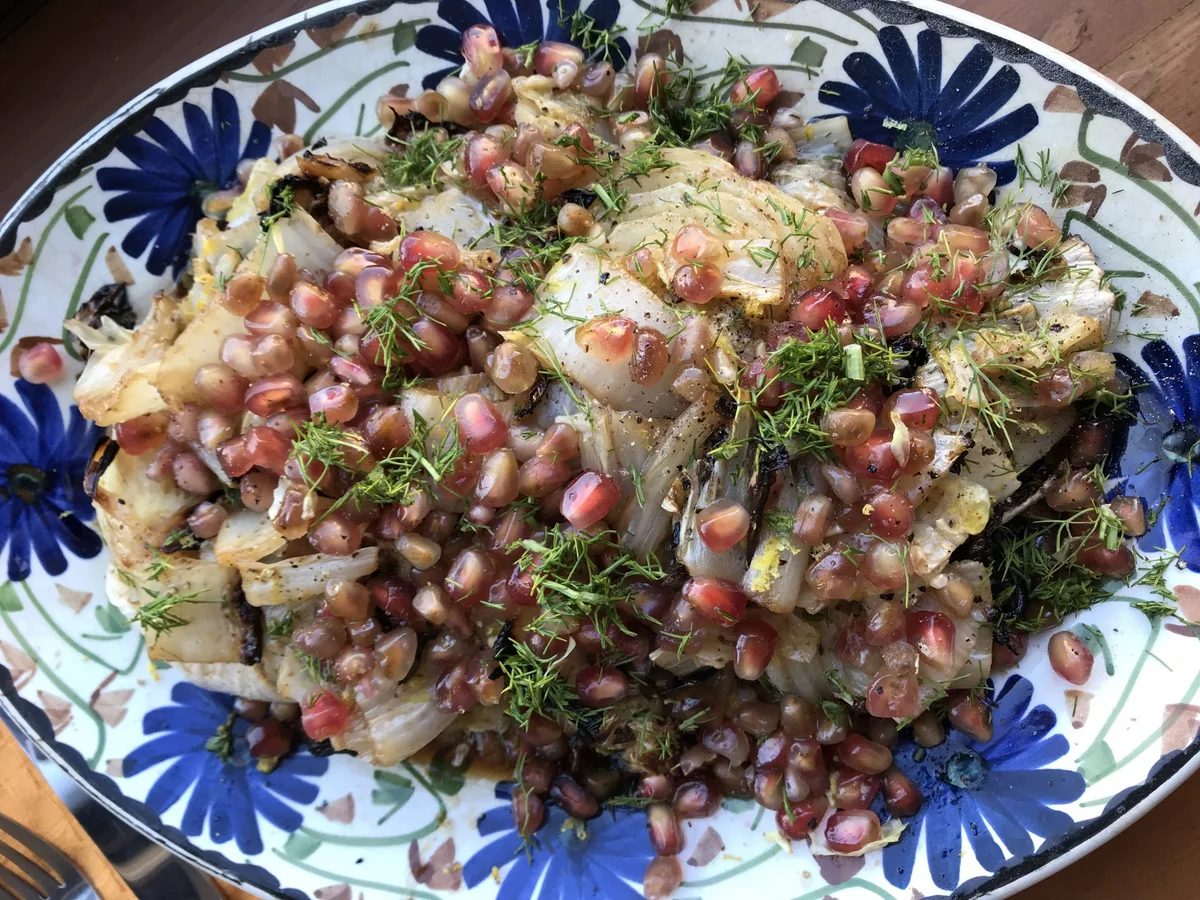
Cabbage wedges are grilled until tender inside and charred at the edges, then finished with pomegranate, lemon, herbs and balsamic vinegar. This Greek-inspired side is a colourful way to bring sweet, tart and smoky flavours to the table.
Ingredients
- 1 headSavoy cabbage (or 1 medium cabbage)
- 60–90 ml (4–6 tablespoons)extra-virgin olive oil
- to tastesea salt and black pepper
- zest of 1lemon
- to tastesmoked sea salt
- seeds of 1pomegranate
- to tastebalsamic vinegar
- 30 ml (2 tablespoons)finely chopped dill
- 15 ml (1 tablespoon)finely chopped fennel fronds
Instructions
- 1
Preheat the grill
Preheat the grill.
- 2
Grill the cabbage
Cut the cabbage into large wedges. Toss with 60 ml (4 tablespoons) of olive oil, salt and pepper, then arrange in a baking tray or shallow roasting tin. Grill, turning the wedges occasionally, until the cabbage is soft and its edges are crisp and charred.
- 3
Finish and serve
Transfer the cabbage to a serving bowl or platter. Grate the lemon zest over it and release the pomegranate seeds onto the cabbage. Drizzle with the remaining olive oil and balsamic vinegar, then finish with a little smoked sea salt and the herbs. Serve.
What is grilled cabbage?
Cabbage is a familiar vegetable across many cuisines, and this preparation gives it the treatment of a warm salad or side dish. The Greek-inspired finishing ingredients bring together pomegranate, lemon and fresh herbs.
The grill concentrates the cabbage’s sweetness while charring its edges. Tart fruit, fragrant herbs and balsamic balance that savoury, slightly bitter flavour.
Nutrition and macros by portion
The nutrition label shows one serving as written: 490 calories, 8g protein, 46g carbs, 40g fat.
| Portion | Adjustment | kcal | Protein | Carbs | Fat |
|---|---|---|---|---|---|
| Lighter | Use less olive oil | 343 kcal | 6g | 32g | 28g |
| This serving | As written | 490 kcal | 8g | 46g | 40g |
| Hungry | Serve larger wedges | 735 kcal | 12g | 69g | 60g |
Most of the fat comes from the olive oil, while cabbage and pomegranate provide carbohydrates and fibre; the dish contains only modest protein. Pair a serving with beans, lentils or another protein-rich main and a grain if you want a more substantial plate.
Choosing the cabbage
Savoy cabbage: Its crinkled leaves soften readily and catch a little char at the edges. A medium green cabbage works too; cut it into wedges that stay together around the core.
Getting the char
Oil and seasoning: Coat the wedges with the first 60 ml (4 tablespoons) of oil, salt and pepper before grilling. Keep the remaining oil for the finishing drizzle.
Turning: Turn the wedges occasionally so they colour on more than one side. The recipe gives no set grilling time, so use tenderness and browned, crisp edges as your cues.
Finishing with fresh flavours
Lemon and pomegranate: Add the zest and seeds after grilling to preserve their fresh, bright character. Let the pomegranate seeds fall over the cabbage rather than crushing them.
Herbs and vinegar: Dill and fennel fronds provide a delicate anise-like lift, while balsamic adds sweet acidity. Add both to taste so they complement, rather than cover, the charred cabbage.
Serving the dish
Serve the cabbage warm on a platter, with the pomegranate and herbs scattered across the wedges. It works as a side alongside grilled fish, beans or a simple grain dish.
Adjusting the seasoning
Smoked salt: Use a light hand at first, since it can quickly dominate the cabbage’s gentler flavours. Taste a finished wedge before adding more.
Balsamic: Drizzle gradually and taste as you go. The pomegranate already brings tart sweetness, so the amount you need can vary.
Recipe notes & tips
- Cut the wedges thick enough to hold together while turning.
- Leave some of the core attached to help keep each wedge intact.
- Arrange the wedges with space between them so their edges can char.
- Keep the pomegranate, herbs and finishing oil ready before the cabbage comes off the grill.
- Taste before adding smoked salt, as the other toppings already bring plenty of flavour.
Variations
- Add chilli: Scatter over a little chilli for a gentle heat.
- Use orange: Replace the lemon zest with finely grated orange zest.
- Swap the herbs: Use chopped parsley in place of dill or fennel fronds.
- Add toasted nuts: Scatter chopped toasted walnuts over the finished cabbage for crunch.
- Make it tangier: Add a little more balsamic vinegar to taste.
Common mistakes to avoid
- Crowding the tray: The wedges may soften without charring; arrange them with space around each piece.
- Cutting wedges too small: They can fall apart as you turn them; keep them large and retain some core.
- Skipping the turn: One side may char before the cabbage softens; turn the wedges occasionally.
- Adding all the oil at once: You lose the fresh finishing drizzle; reserve some for serving.
- Overdoing smoked salt: Its flavour can overwhelm the herbs and fruit; start with a small pinch.
How to store
Store leftovers in a covered container in the fridge for up to 3 days. Reheat in a hot oven or under the grill until warmed through; the cabbage will be softer than when freshly cooked.
Frequently asked questions
Can I use green cabbage instead of Savoy?
Yes. The recipe allows a medium cabbage as an alternative. Cut it into large wedges and grill until tender with charred edges.
How do I know when the cabbage is done?
It should be soft when pierced, with crisp, browned or charred edges. Turn the wedges occasionally as they cook.
Can I prepare the cabbage ahead?
You can cut the cabbage into wedges ahead of time and refrigerate them. Grill and add the pomegranate, herbs and finishing seasonings just before serving for the freshest result.
What can I use instead of fennel fronds?
Use extra dill or chopped parsley if fennel fronds are unavailable. The flavour will differ slightly, but the cabbage will still pair well with the pomegranate and lemon.
Can I cook this without a grill?
The recipe specifies grilling. If using an oven grill, place the wedges in a suitable tray and turn them occasionally, watching for tender leaves and charred edges.
Cook it from the original
This recipe comes from dianekochilas.com. Their page has the author’s own photos, notes and tips — the best place to cook it from.
Open the recipe on dianekochilas.com