
Lemon pie with lemon curd
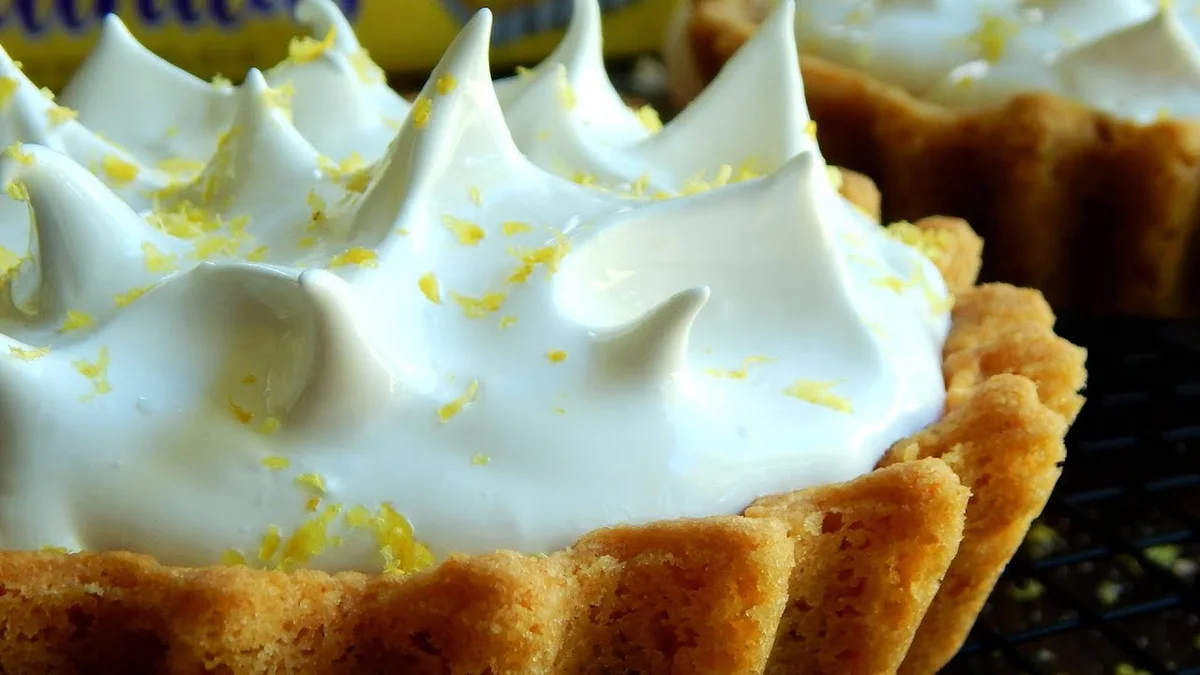
This lemon pie pairs a crisp biscuit base with tangy lemon curd and a billowy Swiss meringue. The recipe makes two small pies and brings together three distinct textures for a bright, celebratory dessert.
Ingredients
- 3egg yolks
- 1egg
- 120 gbutter
- 120 gsugar
- Zest of 1lemon
- 60 mllemon juice
- 165 gegg whites
- 300 gsugar
- 1 tsplemon juice
- Not specifiedbiscuits for the base
- Not specifiedsoft butter for the base
- Not specifiedlimoncello
- Not specifiedicing sugar
Instructions
- 1
Prepare the base
Put the biscuits, softened butter, limoncello and icing sugar in a food processor. Blitz until the biscuits are crushed and the mixture is evenly combined.
- 2
Mix by hand
If you do not have a food processor, crush the biscuits by hand, then combine everything in a bowl with a spoon or spatula.
- 3
Press into tins
Tip the mixture into the tins and press it firmly over the base. The recipe uses two 12 cm tins.
- 4
Bake the bases
Bake for 10 minutes at 180°C, then remove from the oven and leave to cool.
- 5
Cook the curd
Put the lemon zest, egg, yolks, 120 g sugar and 60 ml lemon juice in a bowl. Whisk over a bain-marie until the mixture thickens.
- 6
Chill the curd
Take the bowl off the heat, add the butter and mix until incorporated. Cover the surface directly with cling film to prevent a skin forming, then chill in the fridge.
- 7
Make the meringue
Put the 300 g sugar and egg whites in a bowl and whisk over a bain-marie until the sugar has dissolved. Remove from the heat, add 1 tsp lemon juice and continue whisking until the whites look paler and firm peaks form. Set aside.
- 8
Fill and top
Divide the lemon curd between the cooled bases, then cover it with the meringue. If you like, finish with extra lemon zest.
What is lemon pie?
Lemon pie is a dessert built around a sharp, citrus filling set inside a pastry or biscuit crust, often finished with meringue. This version follows a familiar layered style: a baked biscuit base, stovetop lemon curd and Swiss meringue.
The method suits small pies because each layer can be prepared separately and assembled once cool. The buttery base and sweet meringue balance the tartness of the lemon filling.
Nutrition and macros by portion
The nutrition label shows one serving as written: 1460 calories, 15g protein, 210g carbs, 50g fat.
| Portion | Adjustment | kcal | Protein | Carbs | Fat |
|---|---|---|---|---|---|
| Lighter | Smaller slice, less meringue | 1022 kcal | 11g | 147g | 35g |
| This serving | As written | 1460 kcal | 15g | 210g | 50g |
| Hungry | Larger slice | 2190 kcal | 23g | 315g | 75g |
The listed sugars provide most of the carbohydrates, while the butter contributes much of the fat; the egg yolks, whole egg and egg whites provide the protein. A small slice alongside fresh berries can round out the plate, but nutrition estimates here exclude the base ingredients because their quantities are not given.
The biscuit base
Biscuit crumb: the recipe calls for biscuits, softened butter, limoncello and icing sugar, but gives no quantities for these base ingredients. Add enough butter to make the crumbs hold together when pressed, bearing in mind this is a practical cue rather than a measured recipe ratio.
Pressing: pack the mixture firmly across the bottoms of two 12 cm tins so the bases hold their shape. The brief bake at 180°C helps set them before filling.
A smooth lemon curd
Gentle heat: whisk the egg, yolks, sugar, zest and lemon juice over a bain-marie. Keep the bowl above, rather than touching, the simmering water and stir steadily as the mixture thickens.
Butter and chilling: take the curd off the heat before mixing in the butter. Press cling film onto its surface while it chills to help prevent a dry skin from forming.
Getting the meringue right
Dissolved sugar: warm the egg whites and sugar together over a bain-marie, whisking until the sugar has dissolved. This recipe does not specify a temperature, so use the stated visual cue rather than an invented target.
Firm peaks: after adding the lemon juice, keep whisking until the mixture is paler and holds peaks when the whisk is lifted. Stop once the peaks are firm so the meringue remains suitable for topping.
Layering and serving
Assembly: make sure the bases and curd are cool before layering, then divide the curd between the two shells and spread the meringue over it. Extra lemon zest is an optional finish mentioned in the method.
To serve: cut into wedges with a sharp knife, wiping the blade between cuts for neater layers. The lemon flavour also works well after a meal with tea or coffee.
Timing and planning
The recipe gives 10 minutes for baking the bases, but does not state the total preparation time or the chilling time for the curd. Allow time for the bases and filling to cool before assembling.
You can prepare the curd ahead and keep it covered in the fridge while the bases cool. Make the meringue closer to assembly so it is ready to spread over the filling.
Recipe notes & tips
- Use softened butter for the base so it combines readily with the biscuit crumbs.
- Press the base firmly into the tins to help it stay together after baking.
- Whisk the curd continuously over gentle bain-marie heat as it thickens.
- Cover the curd with cling film in direct contact with its surface before chilling.
- Wait for the bases and curd to cool before assembling the pies.
- Whisk the meringue until it holds firm peaks when the whisk is lifted.
Variations
- Citrus zest: finish with extra lemon zest as suggested in the recipe.
- Lime twist: replace some of the lemon zest and juice with lime for a different citrus note.
- Orange note: add a little orange zest to the curd for a softer citrus flavour.
- Plain topping: leave the meringue unadorned for a simple finish.
- Individual portions: serve the pies in their two 12 cm tins and cut each into small wedges.
Common mistakes to avoid
- Loose biscuit crumbs: press the mixture firmly into the tin so the base holds together.
- Overheated curd: use gentle bain-marie heat and keep whisking as it thickens.
- Skin on the curd: press cling film directly onto its surface before chilling.
- Warm filling: let the bases and curd cool before adding the meringue.
- Soft meringue: continue whisking until the mixture forms firm peaks.
- Missing base quantities: check the source recipe for the amounts of biscuits, butter, limoncello and icing sugar before making the crust.
How to store
Keep leftover pie covered in the fridge and eat within 2 days for the best texture. The biscuit base may soften over time, and the meringue can lose some of its volume; serve chilled.
Frequently asked questions
How many pies does this recipe make?
The method says to use two 12 cm tins, and the recipe lists two servings. The base ingredient quantities are not supplied, so check the original recipe for the amounts needed.
Can I make the lemon curd ahead?
Yes. Chill it with cling film pressed directly onto the surface, then use it once the bases are cool.
How do I know when the curd is thick enough?
The method says to cook it over a bain-marie until it thickens. Keep whisking and remove it from the heat once it has a noticeably thicker consistency.
How do I know when the meringue is ready?
It should look paler and form firm peaks when you lift the whisk. The recipe does not give a specific whipping time.
Can I make the base without a food processor?
Yes. Crush the biscuits by hand, then mix the ingredients in a bowl with a spoon or spatula.
Can I leave off the lemon zest garnish?
Yes. The method describes the extra zest as optional, so the pie can be served without it.
Cook it from the original
This recipe comes from cuk-it.com. Their page has the author’s own photos, notes and tips — the best place to cook it from.
Open the recipe on cuk-it.com