
Waakye
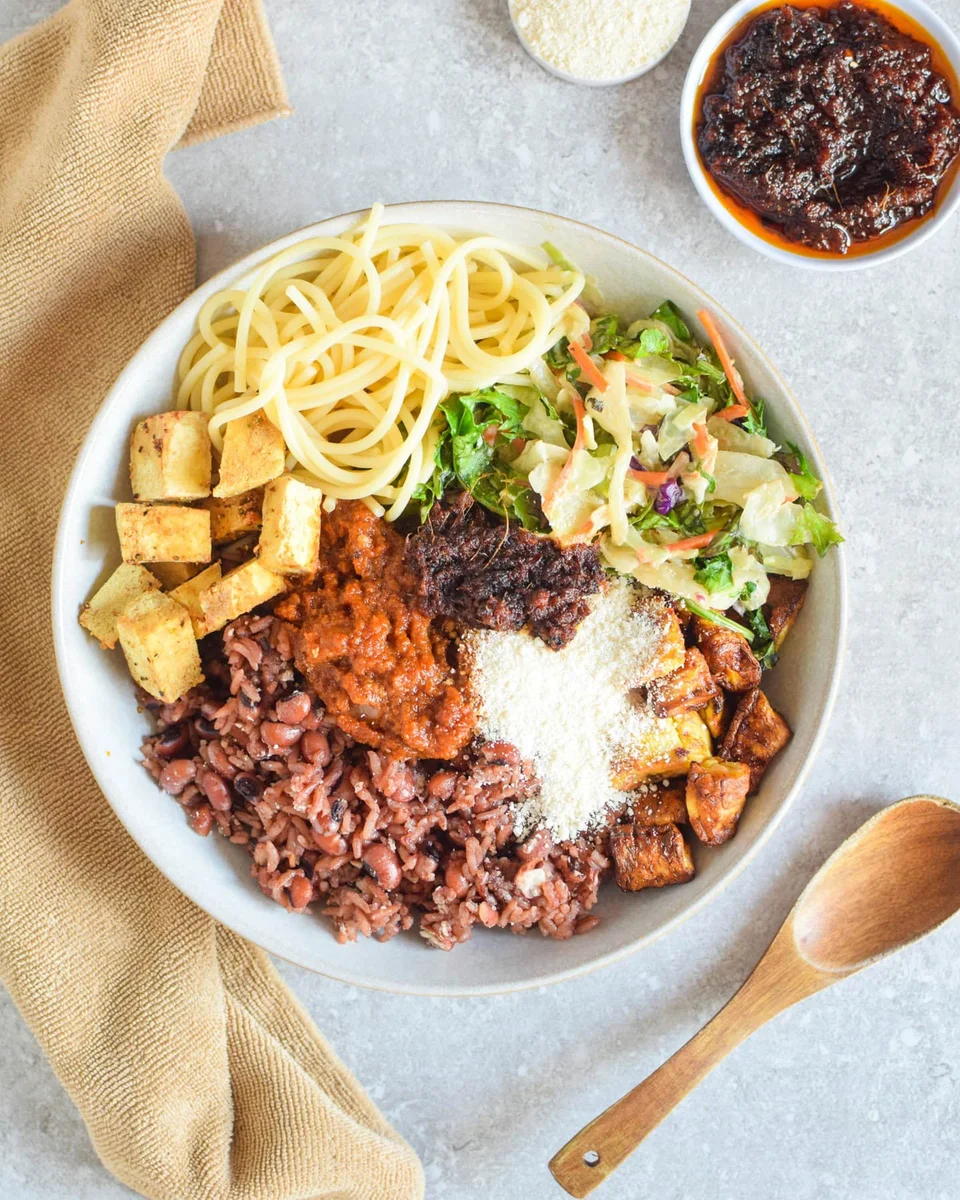
Waakye is a Ghanaian one-pot dish of rice and beans, cooked with sorghum stems for its characteristic colour. It makes a filling base for a meal and is practical to prepare in a large batch.
Ingredients
- 1 cup (about 170 g)dried black-eyed peas
- 3 cups (about 555 g)uncooked white rice
- 1.48 litres (6 1/4 cups)water, divided
- A pinchsalt
- 1/2 tsp with sorghum stems, or about 2 tsp without thembicarbonate of soda
- 6sorghum stems
- 2 tbsp, optionalcoconut oil
Instructions
- 1
Soak the beans
Soak the black-eyed peas overnight.
- 2
Rinse the beans
The next day, wash and drain the soaked beans.
- 3
Start with stems
For waakye with sorghum stems, put the beans and stems in a large pot with 4 cups of water. Cook over medium-low heat, leaving the lid slightly ajar to help prevent the water boiling over.
- 4
Add bicarbonate
After about 10 minutes, add 1/2 tsp of bicarbonate of soda. Cook the beans for a further 10 minutes.
- 5
Add the rice
Add the rice and the remaining 2 1/4 cups of water, then mix evenly.
- 6
Bring to boil
Let the pot come to a boil.
- 7
Cook gently
Once boiling, turn the heat to low, cover the pot with aluminium foil and cook for about 30 minutes.
- 8
Check the rice
Check how well the rice has cooked. Add the coconut oil if you like, then cover the pot again and cook until the rice is done, about 15–20 minutes more.
- 9
Cook without stems
For waakye without sorghum stems, cook the soaked beans over medium-low heat with 4 cups of water for 10 minutes.
- 10
Use more bicarbonate
Add 2 tsp of bicarbonate of soda and cook the beans for a further 10 minutes.
- 11
Add rice and water
Add the rice and the remaining 2 1/4 cups of water, then mix evenly.
- 12
Bring to boil
Let the pot come to a boil.
- 13
Cook gently
Once boiling, turn the heat to low, cover the pot with aluminium foil and cook for about 30 minutes.
- 14
Check the rice
Check how well the rice has cooked. Add the coconut oil if you like, then cover the pot again and cook until the rice is done, about 15–20 minutes more.
What is waakye?
Waakye is a Ghanaian dish of rice and beans cooked together, commonly served as the hearty base of a larger meal. Its name is associated with the Hausa word for beans, and it is widely enjoyed in Ghana.
This version uses black-eyed peas and offers two methods: sorghum stems lend colour as the beans cook, while bicarbonate of soda is increased in the stem-free method.
Nutrition and macros by portion
The nutrition label shows one serving as written: 370 calories, 10g protein, 68g carbs, 4g fat.
| Portion | Adjustment | kcal | Protein | Carbs | Fat |
|---|---|---|---|---|---|
| Lighter | Skip the coconut oil | 259 kcal | 7g | 48g | 3g |
| This serving | As written | 370 kcal | 10g | 68g | 4g |
| Hungry | Serve a larger portion | 555 kcal | 15g | 102g | 6g |
Most of the carbohydrates come from the rice, with the black-eyed peas contributing both carbohydrates and plant protein. Coconut oil, if used, adds most of the extra fat; serve a portion with vegetables and a protein-rich accompaniment for a more rounded plate.
The beans and rice
Dried beans: soaking them overnight gives them a head start and helps them cook alongside the rice.
White rice: add it only after the beans have had their first 20 minutes of cooking, so the two ingredients do not begin at the same stage.
Choosing a method
With sorghum stems: cook the beans with the stems and use 1/2 tsp of bicarbonate of soda. The stems are the traditional source of waakye’s distinctive colour.
Without stems: leave them out and use about 2 tsp of bicarbonate of soda, as specified in the recipe. Keep the two quantities matched to their respective methods.
Manage the simmer
First simmer: leave a small gap under the lid while the beans cook with 4 cups of water. This gives steam an opening and helps reduce the chance of the pot boiling over.
Rice stage: once the rice and remaining water are added, bring the pot to a boil before turning the heat down to low.
Check for doneness
After 30 minutes on low, check the rice rather than relying on the clock alone. It should be tender; if it needs longer, cover the pot and continue cooking for the suggested 15–20 minutes.
Keep the heat low during this final stage so the bottom is less likely to catch while the rice finishes.
Serve it as a meal
Waakye can be served as a substantial rice-and-bean base alongside vegetables and a protein of your choice. The recipe itself is simply seasoned, so toppings and accompaniments can bring extra freshness, spice or richness.
For a balanced plate, add a generous serving of vegetables and choose an accompaniment that suits your meal.
Recipe notes & tips
- Soak the black-eyed peas overnight so they are ready to cook the next day.
- Keep the first simmer at medium-low and leave the lid slightly ajar.
- Measure the bicarbonate of soda according to whether you are using sorghum stems.
- Mix the rice and water evenly through the beans before bringing the pot to a boil.
- Check the rice after 30 minutes on low, then allow the additional 15–20 minutes if needed.
- Add the coconut oil only if you want it; the recipe makes it optional.
Variations
- Stem-free method: omit the sorghum stems and use about 2 tsp of bicarbonate of soda.
- With sorghum stems: use the six stems and the smaller 1/2 tsp quantity of bicarbonate of soda.
- Oil-free: leave out the optional coconut oil.
- More vegetables: serve the cooked waakye with a vegetable side.
- Spiced accompaniment: pair it with a spicy sauce at the table.
Common mistakes to avoid
- Lid fully closed at first: leave a small gap while the beans simmer to help avoid a boil-over.
- Wrong bicarbonate quantity: use 1/2 tsp with sorghum stems and about 2 tsp without them.
- Rice added too early: wait until the beans have cooked for 20 minutes before adding the rice.
- Heat too high after boiling: reduce to low for the covered cooking stage.
- Stopping at 30 minutes: check the rice and continue for 15–20 minutes if it is not yet done.
How to store
Cool leftovers promptly and store them in a covered container in the fridge for up to 3 days. Reheat until steaming hot, adding a small splash of water if the rice has dried out.
Frequently asked questions
Do I need to soak the black-eyed peas overnight?
Yes. The method begins with an overnight soak, followed by washing and draining the beans the next day.
Can I make waakye without sorghum stems?
Yes. Omit the stems and use about 2 tsp of bicarbonate of soda instead of 1/2 tsp.
Why does the recipe use different amounts of bicarbonate of soda?
The recipe specifies 1/2 tsp when cooking with sorghum stems and about 2 tsp when cooking without them. Follow the quantity for the method you choose.
How can I tell when the waakye is done?
Check the rice after the first 30 minutes on low. If it is not tender, cover the pot and cook for another 15–20 minutes, checking again.
Is the coconut oil essential?
No, it is optional. Add it after checking the rice if you want to use it.
What should I serve with waakye?
Serve it with vegetables and an accompaniment of your choice, such as a protein or a spicy sauce.
Cook it from the original
This recipe comes from eatwithafia.com. Their page has the author’s own photos, notes and tips — the best place to cook it from.
Open the recipe on eatwithafia.com