
Beef Stock
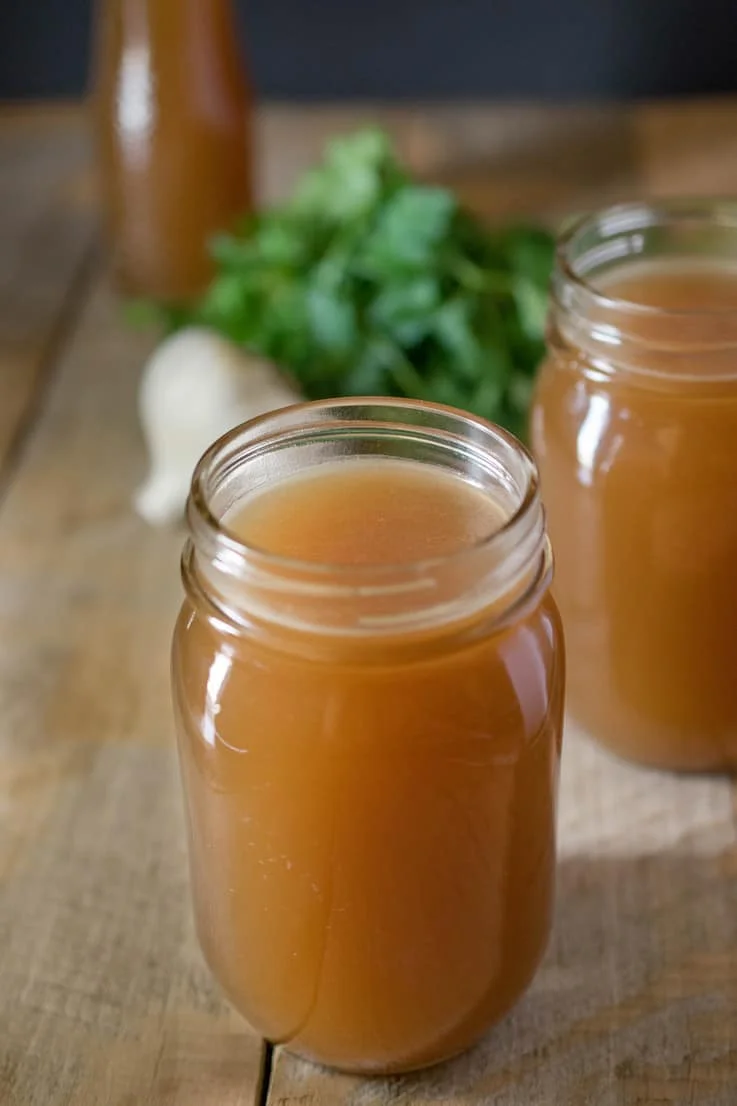
This slow-cooked beef stock starts with roasted marrow bones, beef and vegetables for a deep, savoury base. Make a batch to enrich soups, gravy or mashed potatoes.
Ingredients
- 1.1 kg (2 1/2 pounds)beef marrow bones
- 453 g (1 pound)beef chuck or other stewing beef, cut into 2.5 cm (1 inch) cubes
- 2 largecarrots, peeled and cut into thirds
- 2 ribscelery, cut into thirds
- 2 largeonions, peeled and quartered
- 30 ml (2 tablespoons)vegetable oil
- 6chives
- 6 sprigsparsley
- 6 sprigsthyme
- 3 clovesgarlic, peeled
- 12black peppercorns
- 1.9 litres (8 cups)cold water
Instructions
- 1
Heat the oven
Preheat the oven to 230°C (450°F).
- 2
Roast the ingredients
Arrange the bones, beef, carrots, celery and onions in an even layer on a large baking sheet. Drizzle with the oil and toss to coat. Roast for 15 minutes, turn the ingredients, then roast for another 15 minutes.
- 3
Tie the herbs
Tie the chives, parsley and thyme together in a bundle with kitchen string.
- 4
Fill the slow cooker
When the bones and vegetables have finished roasting, transfer them to a slow cooker. Add the herb bundle, garlic and peppercorns, then cover with 1.9 litres (8 cups) of cold water.
- 5
Cook the stock
Cook on high for 5 to 6 hours.
- 6
Strain and separate
Strain the stock to remove the bones and vegetables, then use a fat separator.
- 7
Use or store
Use the stock straight away, refrigerate it for up to 5 days or freeze it for up to 3 months.
What is beef stock?
Beef stock is a savoury cooking liquid made by simmering bones, meat and aromatic ingredients in water. It is widely used in American home cooking as a base for soups and gravies or as a flavourful addition to other dishes.
This version roasts the bones, beef and vegetables before slow cooking them with herbs and peppercorns. Roasting develops a deeper flavour, while the marrow bones help give the finished stock body.
Nutrition and macros by portion
The nutrition label shows one serving as written: 136 calories, 8g protein, 8g carbs, 9g fat.
| Portion | Adjustment | kcal | Protein | Carbs | Fat |
|---|---|---|---|---|---|
| Lighter | Skim more surface fat | 95 kcal | 6g | 6g | 6g |
| This serving | As written | 136 kcal | 8g | 8g | 9g |
| Hungry | Serve a larger bowl | 204 kcal | 12g | 12g | 14g |
The beef and marrow bones contribute most of the protein and fat, while the vegetables contribute a smaller amount of carbohydrate. To balance a serving of stock-based soup or gravy, pair it with vegetables and a filling side such as potatoes or bread.
Why roast the ingredients first?
Bones and beef: roasting them at 230°C (450°F) gives the stock a more developed, savoury flavour. Keep the ingredients in a single layer so they roast rather than steam.
Vegetables: carrots, celery and onions roast alongside the meat, adding sweetness and aromatic depth. Turn everything after the first 15 minutes so it roasts more evenly.
Choosing the beef and bones
Marrow bones: these are the main source of richness and body in the stock. Ask a butcher to cut large bones into manageable pieces if needed.
Stewing beef: chuck or another stewing cut brings additional beef flavour. The recipe cuts it into 2.5 cm (1 inch) cubes so it can roast alongside the bones.
Keeping the flavours balanced
Herbs: tying the chives, parsley and thyme into a bundle makes them easier to remove when straining. Kitchen string should be suitable for cooking and tied securely around the stems.
Pepper and garlic: whole peppercorns and peeled garlic add savoury notes as the stock cooks. The recipe uses no added salt, so you can season the finished dish in which you use the stock.
Slow-cooker timing and cues
Timing: cook the stock on high for 5 to 6 hours after adding the cold water. The recipe does not specify a shorter cooking option.
Finished stock: strain it once the cooking time is complete, removing all the bones and vegetables. A fat separator helps separate the fat from the liquid before serving or storing.
How to use the stock
Soups and gravy: use the stock as a savoury base, adjusting the seasoning in the finished recipe. Its roasted flavour also works well in sauces and stews.
Mashed potatoes: stir in a little stock to add moisture and beef flavour. Add it gradually so the potatoes do not become too loose.
Recipe notes & tips
- Spread the roasting ingredients out on the baking sheet for more even browning.
- Turn the bones and vegetables after the first 15 minutes of roasting.
- Tie the herbs firmly so the bundle stays together in the slow cooker.
- Use cold water to cover the roasted ingredients as directed.
- Strain carefully to remove small bone fragments before using the stock.
- Run the stock through a fat separator before adding it to a dish.
Variations
- Deeper roast: roast the bones and vegetables until browned, keeping to the recipe's stated roasting time.
- Different herbs: swap in other fresh herbs if you do not have the listed bundle.
- Soup base: use the strained stock in place of water in a soup recipe.
- Gravy base: reduce some stock in a saucepan as part of your usual gravy method.
- Potato addition: mix a small amount into mashed potatoes for extra moisture and savoury flavour.
Common mistakes to avoid
- Crowded baking sheet: the ingredients may steam instead of roast; arrange them in an even layer.
- Skipping the turn: one side may brown more than the other; turn everything after 15 minutes.
- Loose herb bundle: the herbs can spread through the stock; secure them with kitchen string.
- Insufficient cooking time: the stock may not develop as much flavour; allow the full 5 to 6 hours on high.
- Skipping the straining: bones and vegetables remain in the liquid; strain before using or storing.
- Leaving excess fat: the stock can taste greasy; use a fat separator after straining.
How to store
Refrigerate the stock for up to 5 days or freeze it for up to 3 months. Reheat the amount you need before adding it to a dish.
Frequently asked questions
Can I use another cut instead of beef chuck?
Yes. The recipe allows another stewing cut of beef, cut into 2.5 cm (1 inch) cubes.
Do I need to roast the bones and vegetables?
Roasting is part of this method and builds flavour before the slow cooking. Roast them for 15 minutes, turn them, then roast for another 15 minutes.
Can I cook the stock on low?
The method specifies cooking on high for 5 to 6 hours and does not give a low-setting time.
Should I add salt?
Salt is not listed in the ingredients. Season the stock or the dish you use it in to taste.
How do I remove the fat?
After straining, use a fat separator as directed. This separates the fat from the stock.
How long does homemade beef stock keep?
Keep it refrigerated for up to 5 days or frozen for up to 3 months.
Cook it from the original
This recipe comes from culinaryginger.com. Their page has the author’s own photos, notes and tips — the best place to cook it from.
Open the recipe on culinaryginger.com