
Swiss meringue
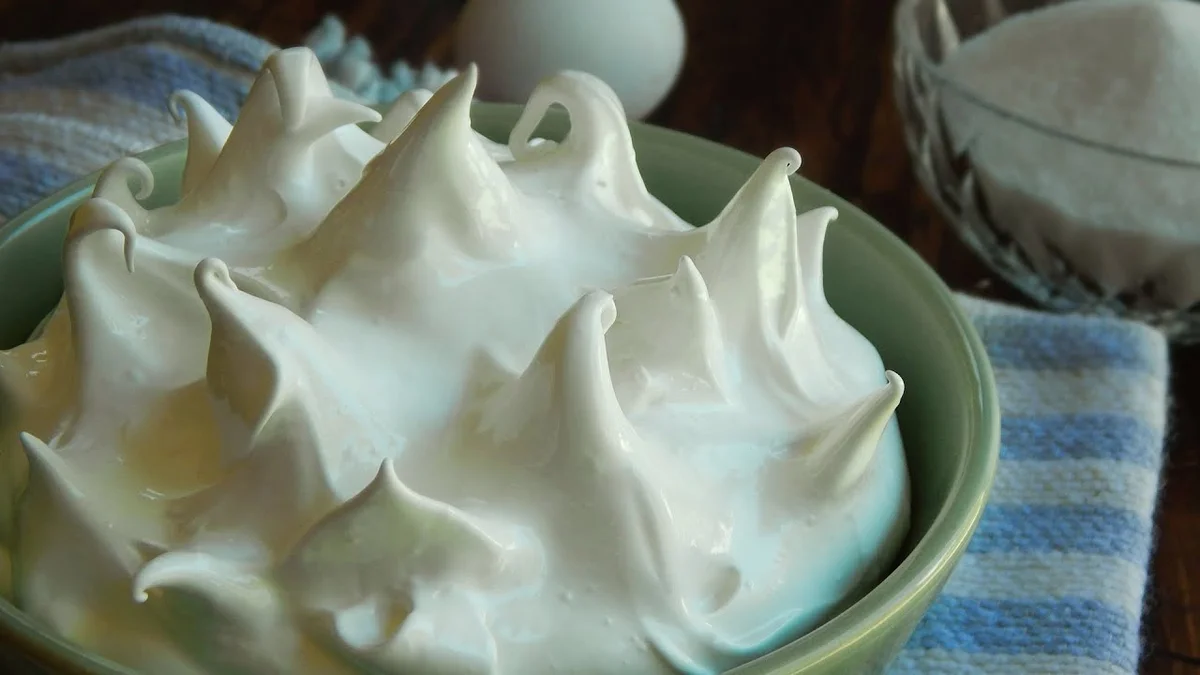
Swiss meringue is a glossy, stable mixture of egg whites and sugar, gently heated before whipping. It is useful for topping desserts or shaping into crisp meringues, and this version needs just three ingredients.
Ingredients
- 300 gcaster sugar
- 160 gegg whites
- 1 tsp (5 ml)lemon juice
Instructions
- 1
Combine sugar and whites
Put the sugar and egg whites in a heatproof bowl.
- 2
Heat and whip
Whisk the mixture over a bain-marie until the sugar has dissolved. Take it off the heat, add the lemon juice and keep whisking until the whites look paler and firmer.
- 3
Check the peaks
Lift the whisk: the meringue is ready when it holds formed peaks.
What is Swiss meringue?
Swiss meringue is made by warming egg whites and sugar together over a bain-marie, then whipping them until thick and glossy. The name distinguishes this method from meringues made by whisking sugar into uncooked whites or cooking sugar syrup separately.
This simple version relies on dissolving the sugar before whipping, which helps create a smooth mixture. Lemon juice adds a little acidity as the whites are beaten.
Nutrition and macros by portion
The nutrition label shows one serving as written: 321 calories, 4g protein, 75g carbs, 0g fat.
| Portion | Adjustment | kcal | Protein | Carbs | Fat |
|---|---|---|---|---|---|
| Lighter | Use a smaller serving | 225 kcal | 3g | 53g | 0g |
| This serving | As written | 321 kcal | 4g | 75g | 0g |
| Hungry | Serve a larger portion | 482 kcal | 7g | 113g | 0g |
Most of the energy and carbohydrate in each serving comes from the sugar; the egg whites contribute most of the protein, while fat is negligible. Serve a smaller amount alongside fruit or a less-sweet dessert to balance its sweetness.
Choosing the ingredients
Sugar: The full 300 g sweetens and gives structure to the meringue. Fine sugar dissolves more readily, so check the mixture carefully while it warms.
Egg whites: Weigh out 160 g and take care that no yolk gets into them. Even a little yolk can make it harder to whip the whites to firm peaks.
Lemon juice: Add the 1 tsp after taking the bowl off the heat, as directed. It brings a slight tang to an otherwise very sweet mixture.
Dissolving the sugar
Gentle heat: Set the bowl over simmering water without letting its base touch the water. Whisk as the mixture warms so the whites heat evenly.
Sugar check: Rub a small amount between your fingers to see whether it feels smooth, taking care because the mixture is hot. Continue heating and whisking if you can still feel grains.
Whipping to the right texture
Colour: After adding the lemon juice, keep beating until the whites look paler and have thickened. The mixture should become more substantial as air is incorporated.
Peaks: Lift the whisk and look for peaks that hold their shape. Stop once they form; the recipe gives this as the sign that the meringue is ready.
Ways to use it
Topping: Spread the meringue over a pie or another dessert that needs a soft, lofty finish. Shape the surface with the back of a spoon or a spatula.
Shaping: Pipe or spoon it into mounds for baking as separate meringues. This recipe provides the mixture; follow the baking instructions for the dessert you are making.
Recipe notes & tips
- Use a clean, dry heatproof bowl for whipping the whites.
- Keep the bowl above, rather than in contact with, the simmering water.
- Whisk while the mixture heats to help the sugar dissolve evenly.
- Add the lemon juice after removing the bowl from the heat, as instructed.
- Use the formed peaks as the doneness cue rather than relying on a set whipping time.
Variations
- Vanilla: Add a little vanilla extract after removing the mixture from the heat.
- Citrus: Swap the lemon juice for the same amount of another citrus juice.
- Coloured meringue: Fold in a small amount of food colouring once the meringue is whipped.
- Dessert topping: Spread it over a tart or pie instead of piping individual mounds.
Common mistakes to avoid
- Sugar still grainy: Keep whisking over the bain-marie until the mixture feels smooth.
- Water touching the bowl: Lower the heat or use a smaller amount of water to keep the bowl above it.
- Yolk in the whites: Remove any yolk before whipping, since it can interfere with the whites becoming firm.
- Stopping too early: Continue beating until the mixture is paler, firmer and holds peaks.
- Overheating the mixture: Use gentle heat and whisk continuously while the sugar dissolves.
How to store
Keep Swiss meringue covered in the refrigerator and use it within 1 day for the best texture. Rewhisk briefly if it has softened before using; once baked into a dessert, store according to that dessert's requirements.
Frequently asked questions
How can I tell when the sugar has dissolved?
The mixture should feel smooth rather than grainy when a little is rubbed carefully between your fingers. Take care because it will be hot.
Can I make Swiss meringue without a bain-marie?
This recipe uses a bain-marie to warm the sugar and egg whites together. Use a heatproof bowl set over simmering water, with its base above the water.
Why is my meringue not forming peaks?
Keep beating until the mixture looks paler and firmer, then check again by lifting the whisk. Make sure the bowl and whisk are clean and free of grease.
Can I use granulated sugar?
Yes, but allow it time to dissolve fully over the bain-marie before whipping. Check that the mixture feels smooth before taking it off the heat.
Can I bake this meringue?
You can shape it for baking, but this recipe does not specify an oven temperature or baking time. Use the directions for the dessert or meringue shape you are making.
Cook it from the original
This recipe comes from cuk-it.com. Their page has the author’s own photos, notes and tips — the best place to cook it from.
Open the recipe on cuk-it.com