
Spiced Layered Ratatouille With Homemade Harissa
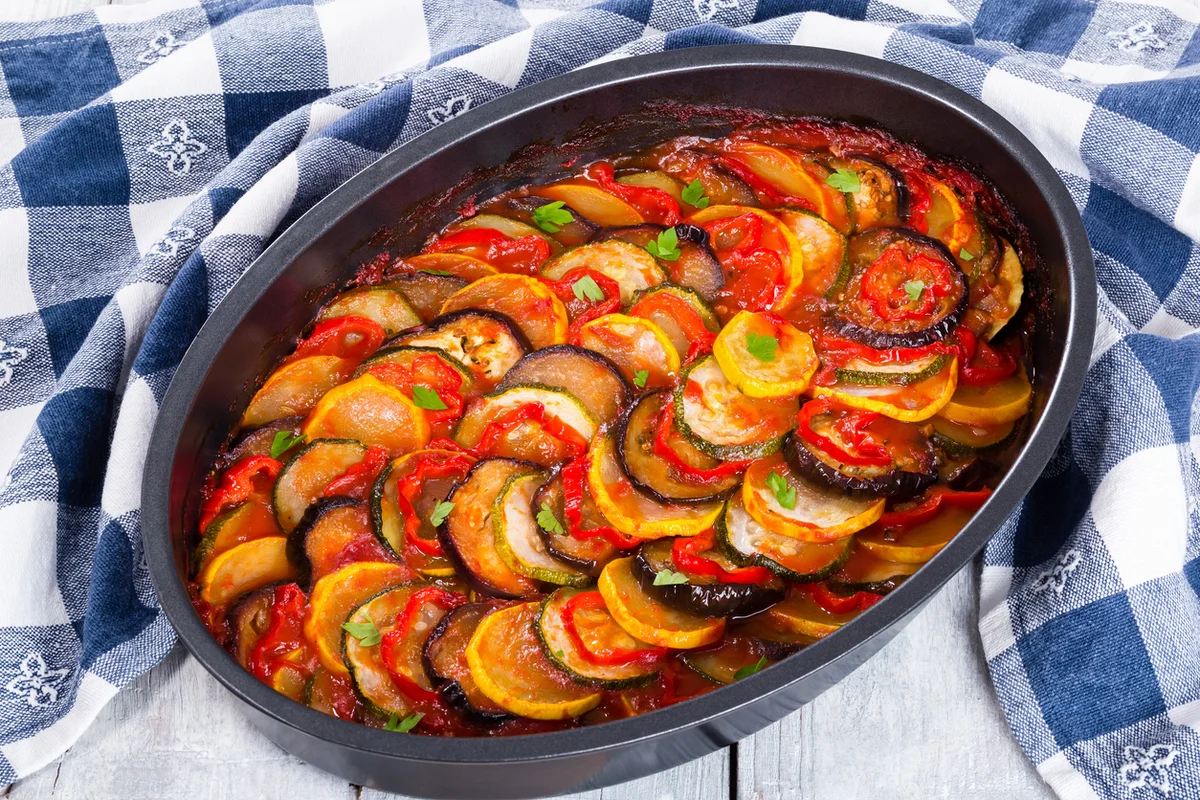
This Greek-inspired layered ratatouille pairs tender courgettes and aubergines with a homemade harissa-style paste made from roasted peppers, herbs, garlic and olive oil. Bake it until soft and lightly caramelised, then serve warm or at room temperature; it is especially good the next day.
Ingredients
- 2yellow courgettes
- 2green courgettes
- 2Japanese aubergines
- 2sweet long red peppers
- 2roasted red peppers in brine or olive oil
- 1 smallred onion, chopped
- 1 teaspoonground cumin
- ½ teaspoonground coriander
- 1 teaspoondried Greek oregano
- 4garlic cloves
- 120 g (½ cup)good-quality tomato purée
- 120 ml (½ cup), or more to tasteGreek extra-virgin olive oil
- to tasteGreek sea salt
- to tastepepper
- 1 small bunchparsley, leaves only, chopped
Instructions
- 1
Preheat the oven
Heat the oven to 170°C (350°F).
- 2
Slice the vegetables
Trim the courgettes and aubergines, then cut all of them into rounds about 3 mm (⅛ inch) thick. Put the slices in a large mixing bowl.
- 3
Prepare the peppers
Remove the stems and seeds from the sweet red peppers, then slice them into thin rings.
- 4
Blend the paste
Drain the roasted red peppers and pulse them in a food processor with the onion, parsley, cumin, coriander, oregano and garlic. Add the tomato purée and olive oil, then pulse until the mixture forms a smooth, loose paste. Spoon it over the sliced courgettes and aubergines.
- 5
Layer the vegetables
Oil an oval, round or rectangular baking dish generously. Arrange the vegetables in alternating slices, working in concentric circles inside the dish. Season well with salt and pepper, scatter the sweet pepper rings over the top and drizzle with more olive oil.
- 6
Bake until tender
Bake in the preheated oven for about 1 to 1½ hours, until the vegetables are tender, lightly charred and a little caramelised. Remove from the oven, cool, and serve.
What is layered ratatouille?
Ratatouille is a vegetable dish associated with Provence in southern France, while this version takes a Greek-inspired route with oregano, parsley and Greek olive oil. Its concentric layers make the vegetables part of the presentation as well as the meal.
The homemade pepper paste coats the courgettes and aubergines with a savoury, aromatic base. Roasted peppers, tomato purée and garlic bring depth without obscuring the vegetables.
Nutrition and macros by portion
The nutrition label shows one serving as written: 340 calories, 5g protein, 23g carbs, 29g fat.
| Portion | Adjustment | kcal | Protein | Carbs | Fat |
|---|---|---|---|---|---|
| Lighter | Use less olive oil | 238 kcal | 4g | 16g | 20g |
| This serving | As written | 340 kcal | 5g | 23g | 29g |
| Hungry | Add bread or beans | 510 kcal | 8g | 35g | 44g |
The courgettes, aubergines and tomato purée provide most of the carbohydrates and fibre, while olive oil supplies most of the fat. The vegetables and herbs contribute a little protein, but this is not a protein-rich main on its own. Pair a portion with beans or lentils and bread or grains for a more filling, balanced plate.
Choosing the vegetables
Courgettes: yellow and green slices give the dish contrasting colours, while Japanese aubergines add tender, neat rounds. Try to cut the vegetables to a similar thickness so they soften at much the same pace.
Peppers: the roasted red peppers go into the paste, while the sweet fresh peppers are sliced for the topping. Drain the roasted peppers first so their liquid does not make the paste too loose.
Making the pepper paste
Blend the herbs, onion, garlic and roasted peppers before adding the tomato purée and olive oil. Pulse until smooth but still loose enough to spoon over the vegetable slices.
Coat the courgette and aubergine rounds before arranging them. This spreads the seasoning through the layers rather than leaving it only on the surface.
Building the layers
Alternating slices: stand the rounds on their edges and alternate the different vegetables as you arrange them in concentric circles. A snug fit helps the layers keep their shape as they soften.
Even slices: aim for rounds around 3 mm thick. If some pieces are much thicker than others, the thinner ones may collapse before the thicker ones are tender.
Judging when it is ready
The recipe gives a baking time of about 1 to 1½ hours, but the vegetables are the best guide. They should be tender when pierced, with a little colour and caramelisation around the edges.
If the top colours before the vegetables soften, loosely cover the dish with foil for the remainder of the cooking time. Let it cool before serving, as directed.
Serving and making ahead
This dish can be served warm or at room temperature, and its flavours have time to mingle if you make it a day ahead. Keep it covered in the fridge after it has cooled.
Serve it with crusty bread, rice or another simple accompaniment to catch the oily, herby juices. A crisp salad can bring a fresh contrast to the soft baked vegetables.
Recipe notes & tips
- Slice the vegetables evenly so they cook at a similar rate.
- Drain the roasted peppers well before blending the paste.
- Oil the baking dish thoroughly to help prevent sticking.
- Arrange the rounds snugly so the layered pattern holds together.
- Check for tenderness near the one-hour mark, then continue baking if needed.
- Allow the dish to cool before serving it at room temperature.
Variations
- Add chilli: blend a little fresh chilli into the pepper paste for extra heat.
- Use fresh oregano: replace the dried oregano with fresh leaves and adjust to taste.
- Add courgette flowers: tuck a few cleaned flowers between the vegetable rounds before baking.
- Include tomatoes: layer in thin tomato slices for a juicier variation.
- Serve with pulses: add cooked butter beans or lentils alongside the finished dish.
Common mistakes to avoid
- Uneven slices: thick rounds take longer to soften; cut the vegetables to a similar thickness.
- Wet pepper paste: excess brine can thin the mixture; drain the roasted peppers before blending.
- Loose arrangement: widely spaced slices can slump as they bake; nestle the rounds close together.
- Under-seasoning: the vegetables need seasoning throughout; salt and pepper the arranged layers generously.
- Rushing the bake: firm vegetables are not ready; continue cooking until they are tender when pierced.
How to store
Once cool, cover and refrigerate for up to 3 days. Reheat in an oven until warmed through, or bring to room temperature before serving. The dish is also good cold or at room temperature the next day.
Frequently asked questions
Can I make this ratatouille the day before?
Yes. The serving tip recommends making it ahead, and it can be served at room temperature the next day. Cool it, cover it and store it in the fridge.
Is the homemade harissa very spicy?
This recipe uses cumin, coriander, oregano, garlic and roasted peppers, but no chilli. The paste is aromatic rather than hot.
How thin should I slice the vegetables?
Aim for rounds about 3 mm (⅛ inch) thick. Keeping them similar in thickness helps them cook evenly.
How do I know when the vegetables are done?
They should be tender when pierced, with some caramelisation and light charring. The stated baking time is about 1 to 1½ hours.
Can I serve this dish at room temperature?
Yes. The recipe specifically suggests serving it after cooling, and it is also enjoyable warm.
What can I serve alongside it?
Try crusty bread, rice or a fresh salad. Beans or lentils make a useful addition if you want a more substantial meal.
Cook it from the original
This recipe comes from dianekochilas.com. Their page has the author’s own photos, notes and tips — the best place to cook it from.
Open the recipe on dianekochilas.com