
Stuffed and glazed pork tenderloin
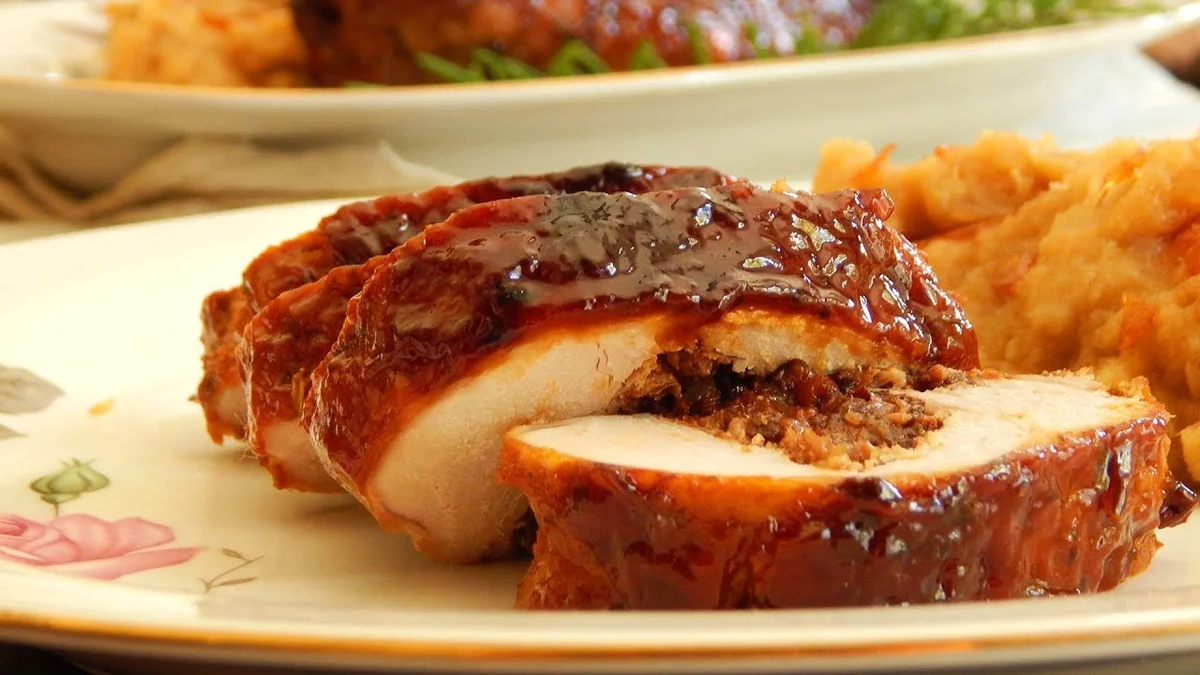
Pork tenderloins are filled with a prune-and-walnut mixture, then brushed with a wine, honey and barbecue sauce glaze as they roast. It makes a flavourful centrepiece for a family meal, with sweet, savoury and gently fruity notes in every slice.
Ingredients
- 1 kg (2 pieces)pork tenderloin
- 120 gprunes
- 100 mlred wine
- 50 gwalnuts
- as neededsalt
- as neededblack pepper
- 60 mlred wine
- 2 tbsp (about 30 ml)honey
- 100 gbarbecue sauce
- as neededherbs and spices, such as thyme, rosemary or dill
- as neededsalt
- as neededolive oil
Instructions
- 1
Cook the prunes
Put the prunes, 100 ml red wine, salt and pepper in a frying pan over very low heat. Cook until the prunes have absorbed almost all the liquid, then take the pan off the heat and leave to cool. Transfer the prunes to a food processor, add the walnuts and process; set the filling aside.
- 2
Mix the glaze
In a glass or small jug, combine the remaining 60 ml red wine with the honey, barbecue sauce, herbs and spices, salt and olive oil. Mix well and set aside.
- 3
Fill and roast
Using a sharp knife, cut a pocket lengthways into each tenderloin. Spoon in the filling gradually, using your hands to help distribute it, then secure the openings with cocktail sticks. Place the tenderloins in an oiled baking dish and coat them well with the sauce. Roast at 180°C for 40 minutes, taking the dish out every 10 minutes to coat the meat again before returning it to the oven.
- 4
Serve the pork
When cooked, serve the tenderloins with sweet potato purée or a side dish of your choice.
What is stuffed pork tenderloin?
Pork tenderloin is a lean, tender cut that can be opened up and filled before roasting. Stuffing meat in this way is a familiar home-cooking technique in many places, and this version pairs pork with a sweet, fruity filling and a savoury glaze.
Prunes soften in red wine before being combined with walnuts, giving the filling both a mellow fruitiness and a little crunch. The glaze layers on honey and barbecue sauce, so the finished pork balances sweet, tangy and savoury flavours.
Nutrition and macros by portion
The nutrition label shows one serving as written: 600 calories, 48g protein, 42g carbs, 22g fat.
| Portion | Adjustment | kcal | Protein | Carbs | Fat |
|---|---|---|---|---|---|
| Lighter | More vegetables, less purée | 420 kcal | 34g | 29g | 15g |
| This serving | As written | 600 kcal | 48g | 42g | 22g |
| Hungry | Larger pork portion | 900 kcal | 72g | 63g | 33g |
The pork provides most of the protein, while the prunes and honey contribute carbohydrates and the walnuts and olive oil add fat. Barbecue sauce and added salt can contribute sodium, so balance a portion with vegetables or salad and a modest serving of sweet potato purée.
The prune and walnut filling
Cook the prunes gently: the low heat gives them time to absorb most of the wine without quickly scorching. Let them cool before processing, so the filling is easier to handle.
Keep some texture: process the walnuts with the prunes until the mixture holds together, but stop before it becomes completely smooth. That makes it easier to spoon into the tenderloin.
Making the glaze
Wine and honey: the wine loosens the barbecue sauce, while honey adds sweetness and helps the coating cling to the meat. Mix the ingredients thoroughly so the glaze is even.
Choose your herbs: thyme, rosemary or dill are suggested options, but the recipe leaves the choice open. Use a measured hand with strongly flavoured herbs so they do not overwhelm the fruit filling.
Filling the tenderloins
Cut a pocket: make a lengthways opening with a sharp knife, taking care not to cut right through the tenderloin. A pocket with an intact outer side helps keep the filling in place.
Fill gradually: add the prune mixture a little at a time rather than packing it tightly. Secure the opening with cocktail sticks and remember to remove them before serving.
Roasting and checking for doneness
Baste regularly: roast at 180°C for 40 minutes, coating the meat again every 10 minutes as directed. Use oven gloves when removing the hot dish, and close the oven promptly to limit heat loss.
Check the thickest part before serving, particularly if the tenderloins differ in size. A food thermometer is a useful way to check pork is safely cooked; allow the meat to rest briefly before slicing so the juices settle.
What to serve alongside
Sweet potato purée is the suggested accompaniment, and its soft texture works well with the nutty filling and sticky glaze. Roasted vegetables or a crisp green salad are also useful options if you want contrast on the plate.
Slice the tenderloin across the grain and spoon any glaze from the baking dish over the portions. Remove all cocktail sticks first.
Recipe notes & tips
- Use a sharp knife to make the lengthways pocket neatly without cutting through the tenderloin.
- Let the prune mixture cool before processing and filling the meat.
- Add the filling in small amounts so it is easier to spread evenly.
- Set the baking dish on a tray when taking it in and out for basting.
- Remove every cocktail stick before slicing and serving.
Variations
- Change the herbs: use thyme, rosemary or dill to give the glaze a different herbal note.
- Add a little heat: stir a pinch of chilli flakes into the glaze.
- Use pecans: swap the walnuts for an equal amount of chopped pecans.
- Try another dried fruit: replace some of the prunes with chopped dried apricots.
- Serve with greens: add steamed green beans or a crisp salad alongside the sweet potato purée.
Common mistakes to avoid
- Cutting right through the meat: leave one side intact so the filling stays enclosed.
- Overfilling the pocket: add the mixture gradually to make the tenderloin easier to secure.
- Processing while hot: let the prune mixture cool first for easier handling.
- Skipping the basting: coat the tenderloins again every 10 minutes as they roast.
- Forgetting the cocktail sticks: remove them all before cutting the cooked pork.
How to store
Refrigerate leftovers in a covered container within two hours and eat within 3 days. Reheat until steaming hot throughout, adding a little water or reserved sauce if the pork seems dry.
Frequently asked questions
Can I prepare the filling ahead?
Yes. Cook and process the prune and walnut filling in advance, then cover and refrigerate it. Let it lose some of its chill before filling the tenderloins.
Can I make this without cocktail sticks?
You can tie the tenderloins with kitchen string instead. Secure them at intervals so the pocket remains closed while roasting.
How can I tell when the pork is cooked?
Check the thickest part with a food thermometer and follow current safe-cooking guidance for pork. The recipe gives a roasting time of 40 minutes at 180°C, but the exact time can vary with the size and shape of the tenderloins.
Can I use a different wine?
The recipe uses red wine in both the filling and glaze. If you do not want to use wine, replace it with stock, bearing in mind that this will change the flavour.
What can I serve with the pork?
Sweet potato purée is the suggested side. Roasted vegetables, green beans or a salad also pair well with the rich glaze.
Can I freeze leftovers?
Yes. Freeze cooled slices in an airtight container, ideally with a little sauce to protect them from drying out. Thaw in the fridge and reheat until steaming hot throughout.
Cook it from the original
This recipe comes from cuk-it.com. Their page has the author’s own photos, notes and tips — the best place to cook it from.
Open the recipe on cuk-it.com