
Zeppole with anchovies
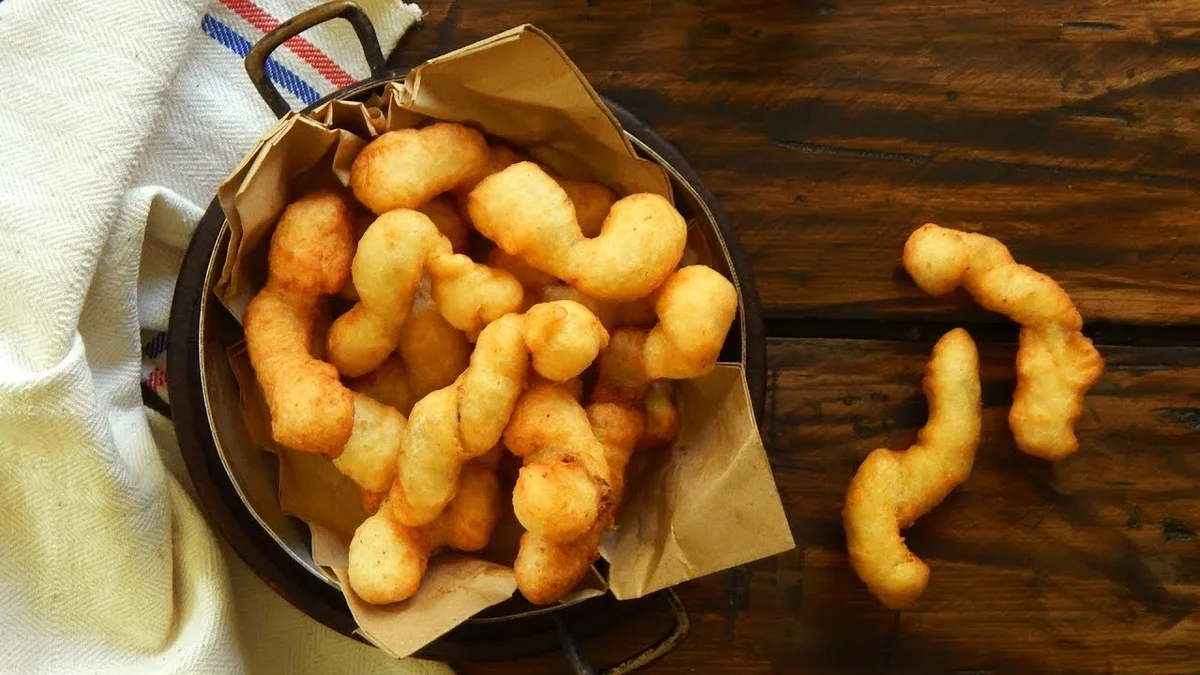
These zeppole are small, soft dough parcels filled with anchovies and fried until golden. Potato in the dough helps keep the centres tender, making them a savoury snack to serve warm.
Ingredients
- 150 gplain flour
- 85 mlwater
- 10 gfresh yeast
- 100 g (1 medium-large potato)mashed potato
- 1 tbspsalt
- 50 ganchovies
Instructions
- 1
Mix the dry ingredients
Put the flour, mashed potato and salt in a bowl, then mix them together.
- 2
Make the dough
Make a small well in the middle and add the yeast and water. Mix everything thoroughly, then knead in the bowl until it forms a ball.
- 3
Leave to rise
Cover the bowl and leave the dough to rest for 30 minutes, or until it has doubled in size.
- 4
Fill the dough
Have a bowl of water, the dough and the anchovies ready. Wet your hands well, take a piece of dough and flatten it across your palm. Put an anchovy in the middle, then gradually fold and roll the dough around it until fully covered. Press the join firmly so it stays closed.
- 5
Fry until golden
Fry the parcels in plenty of hot oil until golden. Repeat until you have used all the anchovies.
- 6
Serve the zeppole
Enjoy the zeppole, ideally with a good beer.
What are zeppole?
Zeppole are Italian fried dough treats, made in both sweet and savoury styles. This version is savoury, with an anchovy tucked inside each piece.
The recipe’s mashed potato gives the dough a soft base, while frying adds a crisp, golden outside. The contrast between mild dough and salty anchovy is what makes these little parcels distinctive.
Nutrition and macros by portion
The nutrition label shows one serving as written: 100 calories, 3g protein, 12g carbs, 5g fat.
| Portion | Adjustment | kcal | Protein | Carbs | Fat |
|---|---|---|---|---|---|
| Lighter | Serve with extra salad | 70 kcal | 2g | 8g | 3g |
| This serving | As written | 100 kcal | 3g | 12g | 5g |
| Hungry | Have a few more zeppole | 150 kcal | 5g | 17g | 7g |
The flour and potato provide most of the carbohydrates, while the anchovies contribute protein and fat; frying adds further fat. For a more balanced plate, serve a few zeppole with salad or vegetables rather than making them the whole meal.
The dough ingredients
Flour: plain flour forms the structure of the dough. Mix it with the mashed potato and salt before adding the liquids.
Potato: use smooth mashed potato so it blends evenly into the dough. The listed amount is 100 g, or about one medium-large potato.
Yeast and water: fresh yeast starts the rise, while the water brings the mixture together. The dough should become a cohesive ball after mixing and kneading.
Let the dough rise
Cover the bowl and leave the dough for 30 minutes, checking whether it has doubled in size. Room temperature affects how quickly yeast works, so use the rise as well as the time as your cue.
If it has not doubled after 30 minutes, give it more time rather than shaping it while it is still dense.
Seal in the anchovy
Wet hands: damp hands help manage the soft dough and reduce sticking as you shape it. Keep a little water close by so you can re-wet your hands as needed.
Close the seam: flatten each dough piece across your palm, place an anchovy in the centre and fold the dough over it. Press the join closed all the way round to help prevent the filling escaping during frying.
Frying and doneness
Use plenty of hot oil, as directed, and fry each parcel until its outside is golden. Keep an eye on the colour; the dough needs time to cook through as well as brown.
Work in batches if needed so the parcels have room in the pan. The recipe does not specify a frying temperature or time, so use the golden colour as the stated cue.
How to serve them
Serve the zeppole warm, when the outside is freshly fried and the dough is soft. The recipe suggests pairing them with beer.
For a more substantial spread, offer them alongside a crisp salad or vegetables to balance the rich, salty bites.
Recipe notes & tips
- Mash the potato until smooth so there are no lumps in the dough.
- Keep the dough covered while it rests to stop its surface drying out.
- Wet your hands again whenever the dough starts sticking as you shape it.
- Check each parcel’s seam before lowering it into the oil.
- Fry in batches if the pan is crowded, so the zeppole can brown evenly.
Variations
- Add herbs: mix finely chopped parsley into the dough for a fresh note.
- Use smaller anchovies: cut larger fillets into pieces that fit neatly inside each parcel.
- Add chilli: include a little chilli with the anchovy for gentle heat.
- Serve with lemon: offer lemon wedges at the table to add a bright contrast.
- Make a sweet batch: prepare a separate version without anchovy and serve it with sugar.
Common mistakes to avoid
- Dough that is too firm: knead until it comes together into a ball before leaving it to rise.
- Skipping the rise: wait until the dough has doubled, even if it takes longer than 30 minutes.
- Hands sticking to the dough: wet them well before shaping and re-wet as needed.
- A loose seam: press the join firmly all the way around the filling before frying.
- Crowded frying: cook in batches so the zeppole have room to brown.
How to store
These are best eaten freshly fried. If needed, refrigerate leftovers in a covered container for up to 2 days, then reheat in an oven until hot; the outside may be less crisp than when freshly made.
Frequently asked questions
Can I use dried yeast instead of fresh yeast?
The recipe specifies 10 g fresh yeast. It does not give an alternative quantity for dried yeast, so follow the conversion on your yeast packet if substituting.
How do I know when the dough has risen enough?
It should have doubled in size. The recipe gives 30 minutes as a guide, but allow longer if it has not reached that point.
How do I stop the filling leaking out?
Cover the anchovy completely with dough and press the seam firmly closed. Check the join before frying each parcel.
Can I prepare the dough ahead?
The recipe does not specify an overnight rise. For best results, follow its 30-minute rise and shape the zeppole shortly afterwards.
Can I reheat the zeppole?
Yes. Reheat them in an oven until hot, though they may not regain all of their freshly fried crispness.
Cook it from the original
This recipe comes from cuk-it.com. Their page has the author’s own photos, notes and tips — the best place to cook it from.
Open the recipe on cuk-it.com