
Bolognese sauce
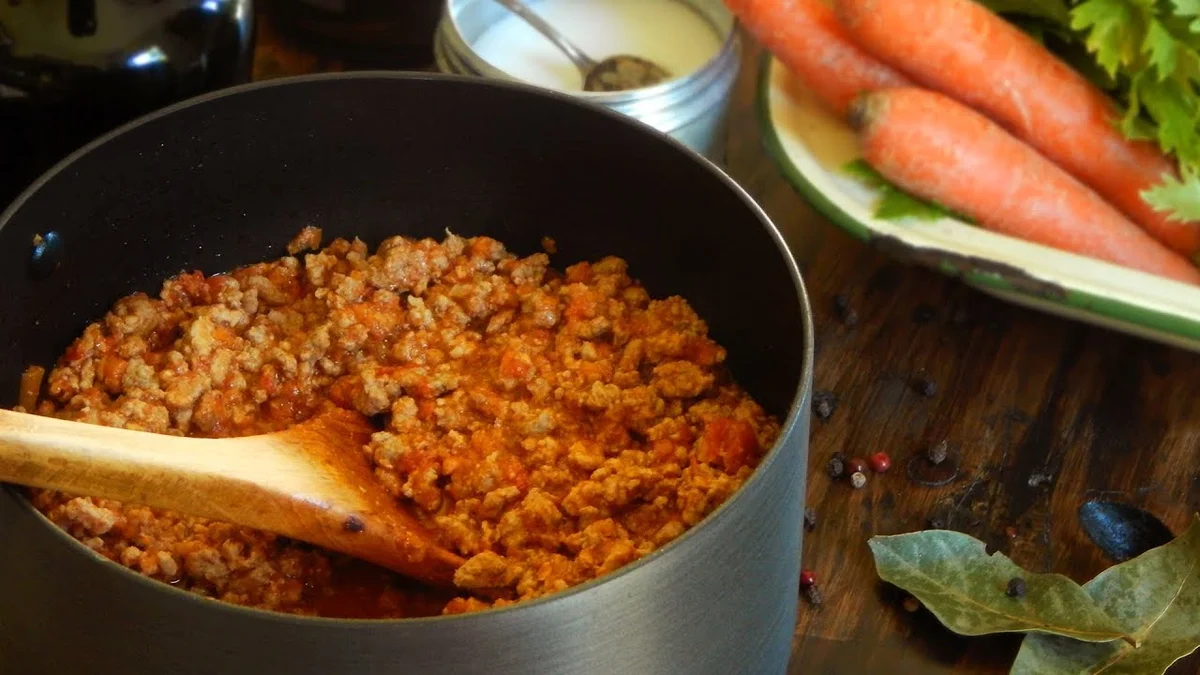
This slow-simmered Bolognese sauce combines beef and pork with finely chopped vegetables, tomato and white wine. Make a pot to serve with pasta, layer into lasagne or spoon over homemade pizza.
Ingredients
- 500 gminced beef
- 300 gminced pork
- 1onion
- 2celery sticks
- 1carrot
- 400 gchopped tomatoes
- 1 tbsp (15 ml)tomato purée
- 50 mlwhite wine
- 200 mlwater
- 2 tbsp (30 ml)olive oil
- 1bay leaf
- 1 tbspsalt
- to tasteblack pepper
Instructions
- 1
Chop the vegetables
Finely chop the celery, carrot and onion.
- 2
Soften the vegetables
Set a saucepan over a medium heat, add the olive oil and chopped vegetables, and cook for about 5 minutes.
- 3
Brown the meat
Add the beef and pork, stir to combine, and cook for another 5 minutes.
- 4
Add the liquids
Add the salt, white wine, black pepper, tomato purée and bay leaf. Finish by adding the chopped tomatoes and water.
- 5
Simmer the sauce
Stir well, turn the heat down and cover the saucepan. Cook for 2 hours.
- 6
Serve the sauce
The sauce is ready to enjoy.
What is Bolognese sauce?
Bolognese is a meat-based sauce associated with Bologna in northern Italy, often served with pasta or used in lasagne. This version brings together minced beef and pork with tomato and a long, gentle simmer.
The combination of finely chopped onion, celery and carrot gives the sauce a savoury vegetable base. White wine and tomato purée add depth alongside the chopped tomatoes.
Nutrition and macros by portion
The nutrition label shows one serving as written: 640 calories, 41g protein, 15g carbs, 41g fat.
| Portion | Adjustment | kcal | Protein | Carbs | Fat |
|---|---|---|---|---|---|
| Lighter | Use less oil | 448 kcal | 29g | 11g | 29g |
| This serving | As written | 640 kcal | 41g | 15g | 41g |
| Hungry | Serve with extra pasta | 960 kcal | 62g | 23g | 62g |
The meat supplies most of the protein and fat, while the tomatoes, vegetables and any pasta served with the sauce contribute carbohydrates. Olive oil adds further fat, and the salt contributes most of the sodium. Pair a serving with vegetables and choose a pasta portion that suits the rest of your meal.
Why use two kinds of meat?
Beef and pork: The recipe combines both, giving the sauce a fuller flavour than either meat alone. Stir them through the softened vegetables so they cook evenly.
Get the vegetable base right
Fine chopping: Cut the onion, celery and carrot into small, even pieces so they soften during the initial 5-minute cook. Larger pieces will remain more distinct in the finished sauce.
Gentle start: Cook the vegetables in olive oil over medium heat before adding the meat. This gives them a head start on softening.
Let the sauce simmer
Covered cooking: After adding the tomatoes, water and seasonings, lower the heat and cover the pan for the full 2 hours. Keep the simmer gentle rather than letting the sauce boil hard.
Doneness: The recipe gives a cooking time rather than a visual test. At the end, the vegetables and meat should be tender and the sauce should be well combined.
Make time for the long cook
The method includes about 10 minutes of initial cooking, followed by a 2-hour covered simmer. Use a saucepan large enough to hold the ingredients with room for stirring.
Check the pan occasionally while it simmers. If the sauce is catching on the bottom, lower the heat; stir gently before serving.
Ways to serve it
Pasta: Spoon the sauce over cooked spaghetti or another pasta shape. A little pasta cooking water can help it cling if you are combining the two in a pan.
Beyond pasta: Use the sauce as a layer in lasagne or as a topping for homemade pizza. For a balanced plate, add a green salad or cooked vegetables alongside.
Recipe notes & tips
- Chop the onion, celery and carrot to a similar small size so they soften at the same pace.
- Break up the minced meat as you stir it into the vegetables.
- Keep the heat low once the sauce is covered for its long simmer.
- Taste the sauce before serving and adjust the pepper if needed.
- Serve over freshly cooked pasta or use as a lasagne filling.
Variations
- Herb finish: Add chopped fresh parsley just before serving.
- Extra vegetables: Stir finely diced mushrooms in with the chopped vegetables.
- Aromatic twist: Add a little chopped garlic while the vegetables soften.
- Red wine: Replace the white wine with red wine for a different flavour.
- Chilli warmth: Add a pinch of chilli flakes with the seasonings.
Common mistakes to avoid
- Roughly chopped vegetables: Large pieces may stay firm; chop them finely and evenly.
- High heat during the simmer: The sauce can catch on the pan; turn the heat down and keep it covered.
- Adding meat in one lump: It can cook unevenly; break it up as you stir.
- Skipping the long cook: A short simmer will not follow the recipe's method; allow the full 2 hours.
- Too much stirring: Frequent stirring can interrupt a gentle simmer; check periodically and stir if needed.
How to store
Cool the sauce and refrigerate it in a sealed container for up to 3 days. Reheat in a saucepan over a low heat until steaming hot throughout, stirring occasionally; add a splash of water if it has thickened. It can also be frozen in portions for up to 3 months.
Frequently asked questions
Can I make the sauce ahead?
Yes. Cook it as directed, cool it promptly and refrigerate in a sealed container. Reheat thoroughly before serving.
Can I use only beef or only pork?
The recipe calls for both, but you can use one type if that is what you have. The flavour and fat content will differ.
What should I serve with Bolognese sauce?
Serve it with pasta, use it in lasagne or try it as a topping for homemade pizza. A simple green salad works well alongside.
Can I freeze the sauce?
Yes. Freeze it in sealed, portion-sized containers, then thaw in the fridge and reheat until steaming hot.
How can I tell when it is ready?
Follow the recipe's 2-hour covered simmer. The meat and vegetables should be tender and the sauce well combined.
Cook it from the original
This recipe comes from cuk-it.com. Their page has the author’s own photos, notes and tips — the best place to cook it from.
Open the recipe on cuk-it.com