
Lasagne with ricotta, cheese and Bolognese sauce
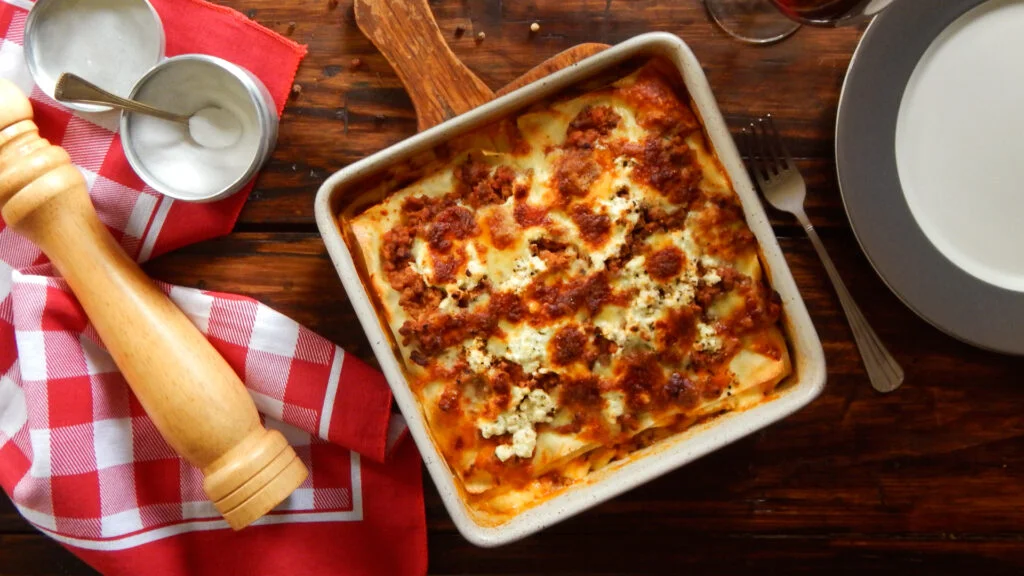
This homemade lasagne layers fresh pasta with nutmeg-seasoned ricotta, mozzarella and Bolognese sauce. Making the pasta from scratch gives the dish a tender, fresh texture, while the oven brings the cheese topping to a golden finish.
Ingredients
- 200 gplain flour
- 2eggs
- 300 gricotta
- 1 tspnutmeg
- 200 gsoft cheese, such as mozzarella
- 1 tspsalt
- to tasteblack pepper
- to tasteBolognese sauce
Instructions
- 1
Mix and rest
Put the flour in a bowl and add the eggs. Beat the eggs to break them up, then gradually work in the flour until combined. Knead for a few minutes until smooth and even. Cover and leave to rest for 20 minutes.
- 2
Roll the pasta
Lightly roll the dough on a floured surface with a rolling pin. Set a pasta machine to its thickest setting, pass the dough through, fold it into a rectangle and pass it through again. Repeat until the dough is smooth and even. Set the machine to a thinner setting and pass the dough through twice; repeat, gradually reducing the thickness, until it is 1–2 mm thick. Cut into even sheets sized to fit your baking dish, keeping them manageable to handle.
- 3
Cook the sheets
Bring plenty of water to the boil and cook the pasta sheets for 1 minute. Transfer them to a bowl of cold water to stop the cooking, then drain on a clean tea towel.
- 4
Layer the lasagne
Mix the ricotta with the nutmeg, salt and pepper in a bowl. Spread a thin layer of Bolognese sauce in a 20 × 20 cm baking dish, add pasta sheets, then more sauce and ricotta with cubed cheese. Repeat the layers to the desired height, finishing with cheese over the top pasta sheet.
- 5
Bake until tender
Bake at a medium temperature, 180°C, until the pasta is soft and the cheese is gratinated.
What is ricotta lasagne?
Lasagne is an Italian baked pasta dish built from layers of pasta and sauce. This version pairs Bolognese with a ricotta filling and mozzarella-style cheese, and makes the pasta sheets from flour and eggs.
The creamy ricotta contrasts with the savoury sauce, while the cheese on top browns in the oven. Freshly rolled sheets make the homemade approach especially satisfying.
Nutrition and macros by portion
The nutrition label shows one serving as written: 560 calories, 29g protein, 56g carbs, 23g fat.
| Portion | Adjustment | kcal | Protein | Carbs | Fat |
|---|---|---|---|---|---|
| Lighter | More salad, smaller slice | 392 kcal | 20g | 39g | 16g |
| This serving | As written | 560 kcal | 29g | 56g | 23g |
| Hungry | Larger lasagne portion | 840 kcal | 44g | 84g | 35g |
The pasta flour and eggs provide most of the carbohydrates, while ricotta and mozzarella contribute fat and protein; Bolognese sauce adds further protein and fat depending on how it is made. Serve a moderate slice with salad or vegetables to round out the plate.
Making the pasta dough
Flour and eggs: add the eggs to the flour and incorporate the flour gradually, then knead until the dough is smooth. Resting it for 20 minutes gives the dough time to relax before rolling.
Rolling even sheets
Start thick: fold and pass the dough through the machine repeatedly at its widest setting until it looks smooth. Reduce the thickness in stages, aiming for sheets between 1 and 2 mm.
Keep them manageable: cut the sheets to fit the 20 × 20 cm dish rather than making them awkwardly large. This makes layering easier and helps the pasta sit neatly in the dish.
Cooking the pasta briefly
One minute: the sheets are boiled briefly, then transferred to cold water to stop them cooking further. Drain them on a clean tea towel so excess water does not collect in the layers.
Balancing the filling
Seasoned ricotta: mix the ricotta with nutmeg, salt and pepper before assembling, so the seasoning is distributed through the filling. Cut the soft cheese into cubes for layering.
Sauce beneath: begin with a thin layer of Bolognese sauce in the dish, then alternate pasta, sauce and the ricotta-and-cheese mixture. Finish with cheese over the last sheet.
Checking when it is done
Soft pasta: the recipe gives no fixed baking time, so use tenderness as the main cue. The pasta should be soft, and the cheese on top should be gratinated.
Serving the lasagne
Let the baked layers settle briefly before cutting so portions are easier to lift. A simple green salad or cooked vegetables make a fresh accompaniment to the rich cheese and Bolognese.
Recipe notes & tips
- Keep the dough covered while it rests so its surface does not dry out.
- Dust the work surface lightly with flour to help the pasta roll without sticking.
- Cut pasta sheets to fit the dish before assembling the layers.
- Use cold water to stop the pasta sheets cooking after their brief boil.
- Drain the sheets well on a clean tea towel before layering.
- Spread the final cheese layer evenly so it gratinates across the top.
Variations
- Add herbs: mix chopped fresh basil or parsley into the ricotta.
- Use another melting cheese: swap the mozzarella-style cheese for a similar soft cheese.
- Add vegetables: layer in cooked sliced vegetables alongside the sauce.
- Make the sauce ahead: prepare the Bolognese in advance and use it for assembly.
- Season the top: add a little black pepper over the cheese before baking.
Common mistakes to avoid
- Skipping the rest: the dough can be harder to roll; leave it covered for the full 20 minutes.
- Rolling too quickly: uneven sheets can cook inconsistently; reduce the machine setting gradually.
- Overcooking the pasta sheets: they continue cooking in the oven; boil them for just 1 minute.
- Leaving the sheets wet: extra water can make the layers loose; drain them on a clean tea towel.
- Using oversized sheets: they are awkward to handle; cut them to fit the dish.
- Baking by time alone: no baking time is specified; check that the pasta is soft and the cheese is gratinated.
How to store
Refrigerate leftover lasagne in a covered container and eat within 3 days. Reheat until piping hot throughout, in the oven or microwave.
Frequently asked questions
Can I use shop-bought lasagne sheets?
The recipe makes fresh pasta, but ready-made sheets can be used as a shortcut. Follow their packet instructions, as some need pre-cooking and others do not.
How thin should I roll the pasta?
Aim for a thickness of 1–2 mm. Reduce the pasta machine setting gradually until you reach that range.
Why are the pasta sheets put in cold water?
The cold water stops them cooking after the 1-minute boil. Drain them well before assembling the lasagne.
How much Bolognese sauce should I use?
The recipe specifies sauce to taste rather than a measured amount. Use enough for a thin base and to cover the pasta between layers without making the dish overly wet.
How can I tell when the lasagne is ready?
Bake at 180°C until the pasta is soft and the cheese on top is gratinated. The recipe does not specify a baking time.
Can I assemble the lasagne ahead?
The recipe does not give make-ahead instructions, but you can assemble it and refrigerate it covered before baking. Allow for a longer bake if it goes into the oven cold, checking the pasta for softness.
Cook it from the original
This recipe comes from cuk-it.com. Their page has the author’s own photos, notes and tips — the best place to cook it from.
Open the recipe on cuk-it.com