
Summer Pan-fried Salmon with Dill Yoghurt
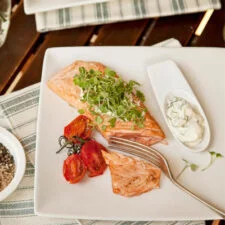
Pan-fried salmon is served with roasted vine tomatoes, mixed vegetables and a fresh dill-yoghurt sauce. It makes a quick, colourful meal, with the sauce ready while the fish cooks.
Ingredients
- 250 ml (1 cup)thick plain yoghurt
- to tastesalt and freshly milled black pepper
- 1 clovegarlic, crushed
- 30 ml (2 tbsp)olive oil
- 20 ml (4 tsp)fresh dill, finely chopped
- 45 ml (3 tbsp)olive oil
- to tasteMaldon salt and freshly milled black pepper
- 4 filletssalmon, skin removed
- to servevine tomatoes, roasted
- to servemixed vegetables, roasted
Instructions
- 1
Mix the sauce
Stir together the yoghurt, salt and pepper, crushed garlic, 30 ml olive oil and chopped dill. Refrigerate the sauce until needed.
- 2
Fry the salmon
Heat 45 ml olive oil in a large frying pan over medium heat. Season the salmon with Maldon salt and freshly milled black pepper, then fry for about 4 minutes until just cooked. Turn the fillets with a spatula and cook for a further 2 minutes.
- 3
Serve the fish
Transfer the salmon to a serving dish and serve with the roasted vine tomatoes, roasted mixed vegetables and dill-yoghurt sauce.
What is pan-fried salmon with dill yoghurt?
This is a simple meal of salmon cooked in a frying pan and served with roasted vegetables and a cool, herby yoghurt sauce. It has no specific regional origin stated here; the combination makes an easy summer-style plate.
The sauce brings tang and freshness to the rich fish, while tomatoes and vegetables add colour and a roasted counterpoint. Cooking the salmon just before serving keeps the method quick.
Nutrition and macros by portion
The nutrition label shows one serving as written: 560 calories, 36g protein, 13g carbs, 39g fat.
| Portion | Adjustment | kcal | Protein | Carbs | Fat |
|---|---|---|---|---|---|
| Lighter | Use less olive oil | 392 kcal | 25g | 9g | 27g |
| This serving | As written | 560 kcal | 36g | 13g | 39g |
| Hungry | Add extra vegetables | 840 kcal | 54g | 20g | 59g |
Salmon supplies most of the protein, while the yoghurt contributes some protein and the olive oil is the main source of fat. The fish, yoghurt and vegetables contribute carbohydrates in smaller amounts, with the exact balance depending on the portions of roasted vegetables and tomatoes. For a balanced plate, serve a generous amount of vegetables alongside one fillet.
Make the dill-yoghurt sauce
Yoghurt base: thick plain yoghurt gives the sauce a creamy texture that clings to the fish. Stir it well with the crushed garlic, dill, olive oil, salt and pepper.
Fresh dill: chop it finely so its flavour spreads evenly through the sauce. Refrigerating the mixture until needed lets you prepare it ahead of the frying.
Get the salmon just cooked
First side: heat the oil over medium heat, season the fillets and fry them for about 4 minutes. The recipe describes the target as just cooked, so avoid leaving them in the pan longer than needed.
Turn carefully: use a spatula to flip each fillet, then cook for a further 2 minutes. Fillet thickness can affect the timing, so check the centre for doneness as you approach the end of cooking.
Serve with roasted vegetables
Tomatoes and vegetables: have the roasted sides ready to serve, as the method does not give roasting instructions or timings for them. Their warm, savoury flavours pair well with the cool yoghurt sauce.
On the plate: serve the salmon alongside the vegetables and tomatoes, with the dill yoghurt available to spoon over the fish or alongside it.
Keep the cooking coordinated
Sauce first: mix it and put it in the fridge before starting the salmon. This leaves the pan free and helps keep the finished sauce cool.
Sides ready: the stated total time is 20 minutes, but the method assumes the vegetables and tomatoes are already roasted or prepared in time. Start those first if they still need cooking.
Recipe notes & tips
- Chop the dill finely so it mixes evenly into the yoghurt.
- Prepare the sauce before heating the frying pan.
- Pat the salmon dry before seasoning if its surface is wet.
- Use a large frying pan so the fillets have room to cook.
- Turn the fillets gently with a spatula to help keep them intact.
Variations
- Add lemon: serve with lemon wedges for a bright citrus note.
- Use different herbs: replace some of the dill with finely chopped parsley.
- Change the vegetables: serve with any roasted mixed vegetables you have ready.
- Make it more garlicky: add extra crushed garlic to the yoghurt sauce.
- Add a little heat: season the salmon with a pinch of chilli flakes.
Common mistakes to avoid
- Overcooking the fish: follow the stated 4 minutes on the first side and 2 minutes after turning, checking as the end of cooking approaches.
- Crowding the pan: cook in batches if the fillets do not fit with space between them.
- Turning too soon: let the first side cook for about 4 minutes before using a spatula to turn the fish.
- Serving watery sauce: use thick plain yoghurt and stir the sauce together thoroughly.
- Leaving the sides until last: have the roasted tomatoes and vegetables ready before the salmon finishes.
How to store
Refrigerate leftover salmon, sauce and vegetables separately in covered containers and use within 2 days. Reheat the salmon and vegetables gently until hot, and serve the yoghurt sauce cold.
Frequently asked questions
Can I make the dill-yoghurt sauce ahead?
Yes. Mix it and refrigerate it until needed, as directed in the recipe.
How long should I fry each salmon fillet?
Fry for about 4 minutes on the first side, then turn and cook for a further 2 minutes. The precise time can vary with the thickness of the fillets.
How can I tell when the salmon is cooked?
The method aims for fish that is just cooked. Check the centre as the cooking time ends; it should no longer look raw.
Do the tomatoes and vegetables need to be roasted first?
Yes, they are served roasted. The recipe does not include instructions for roasting them, so have them ready before serving.
Can I use another type of yoghurt?
Thick plain yoghurt is specified and gives the sauce a substantial texture. A thinner yoghurt will make a looser sauce.
Cook it from the original
This recipe comes from crushmag-online.com. Their page has the author’s own photos, notes and tips — the best place to cook it from.
Open the recipe on crushmag-online.com