
Dutch Plaasbrood
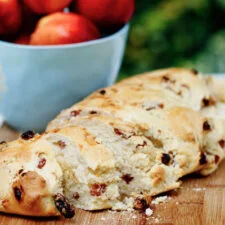
Dutch Plaasbrood is a sweet, enriched loaf filled with a lemon-scented almond paste and raisins. Serve it in slices, still plain or with butter and jam, for a generous breakfast or afternoon treat.
Ingredients
- 250 mlmilk
- 10 g sachetdry yeast
- 1 tbspsugar
- 2 largeeggs
- 50 gbutter, at room temperature
- 500 gbread flour
- 100 graisins
- 175 gcaster sugar
- 100 gground almonds
- 2egg yolks
- 10 mllemon juice
- zest of onelemon
Instructions
- 1
Mix the dough
Warm the milk and pour it into a large bowl. Stir in the yeast and 1 tbsp sugar, then mix in the eggs and butter. Add the flour and raisins and combine. Turn the dough onto a floured surface and knead for 5 minutes.
- 2
Leave to rise
Put the dough in a greased bowl, cover it with a damp towel and leave it to rise for 1 hour.
- 3
Make the filling
While the dough rises, pulse the ground almonds, caster sugar, egg yolks, lemon juice and lemon zest in a food processor until a thick paste forms. Shape it into a sausage, wrap it in cling film and refrigerate until firm.
- 4
Shape the loaf
Preheat the oven to 180°C and line a baking sheet with baking paper. On a floured surface, roll the dough into a rectangle. Set the chilled almond mixture down the middle, fold the dough over it and pinch the sides together.
- 5
Bake the bread
Place the dough on the prepared baking sheet and bake for 1 hour, until golden brown and hollow-sounding when tapped.
- 6
Cool before serving
Leave the bread to cool before serving.
What is Dutch Plaasbrood?
Plaasbrood means farmhouse bread in Afrikaans, and this version is a sweet, filled loaf rather than a plain everyday bread. Its soft yeast dough surrounds a rich almond paste, with raisins dotted through the crumb.
The contrast is what makes it appealing: lightly yeasted bread, sweet fruit and a citrus-scented centre. Serve it in slices as a treat for breakfast or alongside a cup of tea.
Nutrition and macros by portion
The nutrition label shows one serving as written: 1060 calories, 27g protein, 163g carbs, 31g fat.
| Portion | Adjustment | kcal | Protein | Carbs | Fat |
|---|---|---|---|---|---|
| Lighter | Serve thinner slices | 742 kcal | 19g | 114g | 22g |
| This serving | As written | 1060 kcal | 27g | 163g | 31g |
| Hungry | Serve a larger slice | 1590 kcal | 41g | 245g | 47g |
The bread flour, raisins and sugars provide most of the carbohydrates, while butter and ground almonds contribute much of the fat. Eggs, milk, flour and almonds add protein. Balance a slice with plain yoghurt or fruit, or serve it as a smaller part of a meal rather than alongside other sweet foods.
Building the dough
Yeast mixture: warm the milk rather than making it hot, then stir in the yeast and small measure of sugar. The eggs and room-temperature butter are mixed in before the flour and raisins.
Kneading: work the dough on a floured surface for the full 5 minutes. It should come together as a cohesive dough, with the raisins distributed through it.
Getting the almond filling right
Almond paste: pulse the ground almonds with caster sugar, yolks, lemon juice and zest until the mixture becomes a thick paste. It should hold together when shaped, rather than pour like a batter.
Chilling: wrap the paste into a sausage shape and refrigerate it until firm. This makes it easier to position down the centre of the rolled dough.
Shaping and sealing
Rectangle: roll the risen dough on a floured surface, keeping enough width to fold it over the filling. Place the chilled almond mixture down the middle.
Seal: fold the dough over and pinch the sides together so the filling is enclosed. Take care not to leave gaps where the paste could escape during baking.
When the loaf is done
Colour: bake at 180°C for 1 hour, until the outside is golden brown. If it is colouring quickly, keep an eye on it as it approaches the end of the stated baking time.
Sound: tap the loaf and listen for a hollow sound, the doneness cue given in the method. Let it cool before cutting so the filling and crumb can settle.
Serving and timing
Serving: this loaf is good on its own, or with butter and jam as suggested. Because the almond centre is sweet and substantial, thin slices make a natural starting point.
Planning: allow 1 hour for the dough to rise, plus time to make and chill the filling. The recipe gives 1 hour of baking, followed by cooling before serving.
Recipe notes & tips
- Bring the butter to room temperature so it mixes more easily into the dough.
- Use warm, not hot, milk when combining it with the yeast.
- Flour the work surface lightly to help shape the dough without adding too much extra flour.
- Chill the almond paste until firm before placing it in the loaf.
- Pinch the folded dough edges firmly to keep the filling enclosed.
- Allow the loaf to cool before slicing for neater pieces.
Variations
- More citrus: Add extra lemon zest to the almond paste for a brighter flavour.
- Spiced filling: Mix a little ground cinnamon into the almond paste for a warm note.
- Different dried fruit: Replace the raisins with an equal amount of sultanas.
- Nut swap: Use finely ground hazelnuts in place of the ground almonds for a different filling.
- Simple serving: Toast a slice gently and serve it with butter.
Common mistakes to avoid
- Milk too hot: It can hinder the yeast; warm the milk gently before mixing.
- Skipping the knead: The dough may be less cohesive; knead it on a floured surface for the full 5 minutes.
- Soft filling: It is harder to handle; chill the shaped almond paste until firm.
- Loose seam: Filling may leak out; pinch the folded sides together carefully.
- Cutting while hot: The loaf can be harder to slice neatly; let it cool before serving.
How to store
Once cool, store the loaf in an airtight container at room temperature and eat within 2–3 days. Reheat slices briefly in a low oven or toaster, keeping an eye on them so they do not dry out.
Frequently asked questions
Can I make the almond filling ahead?
Yes. Shape it, wrap it in cling film and refrigerate it until firm, as directed in the method.
How warm should the milk be?
Warm it gently rather than bringing it to a boil. It should not feel hot when you mix in the yeast.
How can I tell whether the loaf is baked?
The recipe calls for a golden-brown crust and a hollow sound when tapped. Bake for 1 hour at 180°C, checking for those cues.
Can I use plain flour instead of bread flour?
Bread flour is the flour specified here and gives the dough its intended structure. Plain flour may produce a different texture.
Why does the loaf need to cool before serving?
Cooling helps the crumb and almond filling settle, making the loaf easier to slice.
Cook it from the original
This recipe comes from crushmag-online.com. Their page has the author’s own photos, notes and tips — the best place to cook it from.
Open the recipe on crushmag-online.com