
Pesto
This basil pesto pasta combines fresh basil, garlic, walnuts and hard cheese into a fragrant sauce, mixed with hot pasta and a little cooking water. It is a straightforward meal when you want a full-flavoured supper made from a short list of ingredients.
Ingredients
- 30 g (1 small bunch)basil
- 1 clovegarlic
- 20 g (5 walnuts)walnuts
- 30 gParmesan or similar hard cheese
- A pinchcoarse salt
- To tasteolive oil
- 300 gdried pasta
Instructions
- 1
Crush the garlic
Peel the garlic clove and cut it into pieces. Put it in a mortar with a pinch of coarse salt and crush until it forms a paste.
- 2
Add the walnuts
Break the walnuts into pieces by hand and add them to the mortar a little at a time, crushing each addition until all the walnuts are incorporated.
- 3
Prepare the basil
Pick only the basil leaves, wash them and dry them carefully without bruising them. Make sure the leaves are thoroughly dry before using them.
- 4
Work in the basil
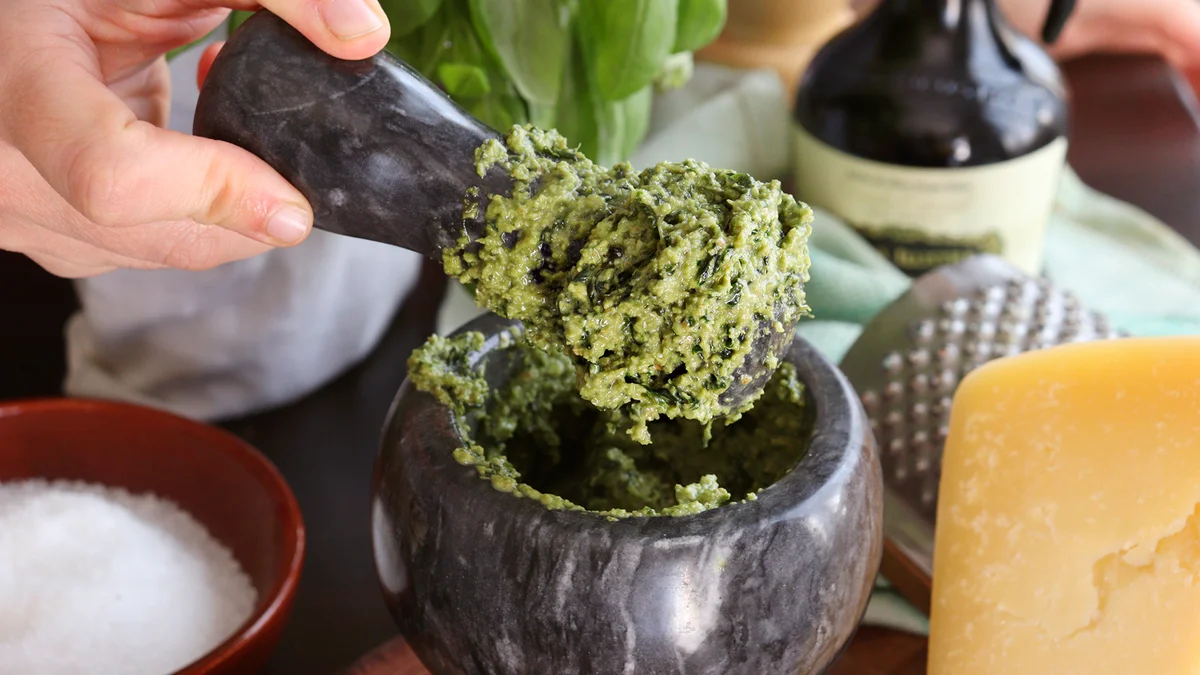
Add the basil leaves to the mortar in batches. Use circular movements to incorporate them rather than pounding them, repeating until all the leaves are used.
- 5
Mix in the cheese
Grate the cheese and add it to the mortar a little at a time, mixing it in with circular movements.
- 6
Check the paste
The mixture should form a paste.
- 7
Stream in oil
Pour in the olive oil slowly in a thin stream, mixing as you go. Add as much as you like, depending on whether you want a thick or more fluid consistency, then set the pesto aside.
- 8
Cook the pasta
Bring plenty of water and a pinch of salt to the boil in a pan. Add the pasta and cook for about 8 minutes. Remove it from the heat, drain it with a slotted spoon and transfer it to a serving dish.
- 9
Toss and serve
Add all the pesto to the pasta along with a tablespoon of hot pasta cooking water. Mix until the pasta is thoroughly coated, then serve immediately.
What is basil pesto?
Pesto is a fresh, uncooked sauce traditionally associated with Genoa in northern Italy. Its name is linked to the act of crushing ingredients, often done with a pestle and mortar.
This version uses walnuts rather than the pine nuts found in many classic recipes. Crushing the garlic and nuts first, then gently working in the basil, makes a savoury sauce that clings well to pasta.
Nutrition and macros by portion
The nutrition label shows one serving as written: 560 calories, 20g protein, 75g carbs, 20g fat.
| Portion | Adjustment | kcal | Protein | Carbs | Fat |
|---|---|---|---|---|---|
| Lighter | Use less olive oil | 392 kcal | 14g | 53g | 14g |
| This serving | As written | 560 kcal | 20g | 75g | 20g |
| Hungry | Add more pasta | 840 kcal | 30g | 113g | 30g |
Most of the carbohydrates come from the dried pasta, while the olive oil, walnuts and cheese contribute much of the fat. The pasta and cheese also provide protein, with smaller amounts from the walnuts. Serve a portion with vegetables or salad to add variety to the plate.
Why use a mortar?
A mortar gives you control over the texture, letting you crush the garlic and walnuts before bringing the leaves into the mixture. Work the basil with circular movements instead of pounding it, as the method advises.
Add the ingredients in batches so there is room to move them around. The finished pesto should be a paste before you loosen it with olive oil.
Keep the basil fresh
Dry leaves: wash the basil and dry it thoroughly before it goes into the mortar. Excess water can make the pesto less concentrated.
Gentle handling: use only the leaves and avoid bruising them as you work. This helps preserve their fresh green appearance.
Adjust the consistency
Olive oil: pour it in slowly while mixing, stopping when the pesto reaches the thickness you want. The recipe leaves the amount to taste, so add it gradually.
Cooking water: stir a tablespoon of hot pasta water into the pesto-coated pasta. It helps the sauce spread across the noodles.
Cook the pasta just right
The recipe gives a cooking time of about 8 minutes, but pasta shapes and brands can vary. Check a piece near the end and drain it when it has the texture you prefer.
Drain with a slotted spoon as instructed, then transfer the pasta to the serving dish. Keep a little hot cooking water available for mixing.
Serve it simply
Toss the pasta with all the pesto just before serving so the sauce coats it evenly. This dish is best served immediately while the pasta is hot.
For a more balanced plate, serve it with a simple green salad or a portion of cooked vegetables alongside.
Recipe notes & tips
- Dry the basil thoroughly after washing it.
- Add the walnuts gradually so they are easier to crush evenly.
- Use circular movements when working in the basil rather than pounding it.
- Add olive oil in a thin stream and stop when the pesto reaches your preferred consistency.
- Keep a tablespoon of hot pasta water ready for tossing the sauce through the pasta.
- Check the pasta as it cooks, since the stated 8 minutes may vary by shape and brand.
Variations
- Try another hard cheese: use a similar firm cheese in place of Parmesan.
- Change the nuts: swap the walnuts for another nut if you prefer.
- Make it looser: add olive oil gradually until the sauce is more fluid.
- Use a different pasta shape: choose a shape that catches the pesto well.
- Add vegetables: serve with cooked vegetables on the side for a fuller plate.
Common mistakes to avoid
- Wet basil: excess water can dilute the sauce; dry the leaves well before using them.
- Bruising the leaves: pounding can damage the basil; work it with circular movements instead.
- Adding all the oil at once: the texture can become too fluid; pour it in slowly.
- Skipping the cooking water: the pesto may not coat the pasta as evenly; mix in a tablespoon while it is hot.
- Overcooking the pasta: the texture can turn soft; check it around the 8-minute mark.
How to store
Store leftover pesto in a covered container in the fridge and use it within 2 days. The assembled pasta is best eaten straight away; refrigerate any leftovers promptly and reheat gently with a splash of water.
Frequently asked questions
Can I make the pesto without a mortar?
This method is written for a mortar and pestle. If you use another tool, work in short pulses and avoid turning the basil into a completely smooth purée.
How much olive oil should I use?
The recipe leaves the amount to taste. Add it a little at a time until the pesto is as thick or fluid as you like.
Can I use a different hard cheese?
Yes. The recipe allows a similar hard cheese in place of Parmesan.
Why should the basil be dry?
Dry leaves keep extra water from thinning the pesto. Dry them gently after washing so they are not bruised.
Can I prepare the pesto ahead?
You can make the pesto ahead and keep it covered in the fridge for up to 2 days. Mix it with the pasta just before serving.
Is the pasta cooking time exactly 8 minutes?
The recipe says about 8 minutes. Check the pasta as it cooks, as the time can depend on its shape and brand.
Cook it from the original
This recipe comes from cuk-it.com. Their page has the author’s own photos, notes and tips — the best place to cook it from.
Open the recipe on cuk-it.com