
Orange Dijon Glazed Ham
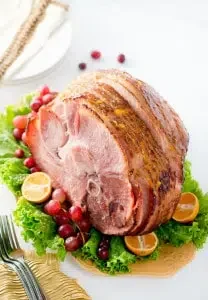
A fully cooked spiral ham is warmed in the oven with a sweet, tangy glaze of orange marmalade, Dijon mustard and fresh orange juice. It makes a generous centrepiece for a holiday meal or a gathering.
Ingredients
- 1 fully cooked hamfully cooked ham (the original recipe uses a bone-in Cherrywood-flavoured ham)
- 120 ml (½ cup)orange marmalade
- 30 ml (2 tablespoons)Dijon mustard
- Juice of 1orange
- 240 ml (1 cup)water
Instructions
- 1
Mix the glaze
Heat the oven to 135°C (275°F) and let the ham come to room temperature. Stir the marmalade, Dijon mustard and orange juice together in a small bowl.
- 2
Glaze the ham
Set the ham cut-side down in a foil-lined roasting pan and brush some of the glaze over it.
- 3
Cover the pan
Pour 240 ml (1 cup) of water into the pan. Seal the pan with foil or cover it with its roasting-pan lid.
- 4
Warm the ham
Bake according to the package directions; the original recipe uses 12 minutes per pound. Cook until warmed through, or until the centre reaches about 49–54°C (120–130°F), brushing on more glaze halfway through the cooking time.
- 5
Rest and serve
Cover the ham with foil and leave it to rest for 15 minutes before serving. Offer the remaining glaze for drizzling over the slices.
What is orange Dijon glazed ham?
Baked ham is a familiar American centrepiece for holiday meals and other gatherings. This version pairs the savoury, cured meat with a simple glaze made from orange marmalade, Dijon mustard and fresh orange juice.
The marmalade brings sweetness and citrus, while mustard adds a sharp counterpoint. Warming the ham covered helps keep it moist, and glazing it during cooking gives the outside a bright finish.
Nutrition and macros by portion
The nutrition label shows one serving as written: 992 calories, 86g protein, 5g carbs, 67g fat.
| Portion | Adjustment | kcal | Protein | Carbs | Fat |
|---|---|---|---|---|---|
| Lighter | Smaller ham portion | 694 kcal | 60g | 4g | 47g |
| This serving | As written | 992 kcal | 86g | 5g | 67g |
| Hungry | Larger ham portion | 1488 kcal | 129g | 8g | 101g |
The ham supplies most of the protein and fat, while the marmalade and orange juice contribute most of the carbohydrate. For a balanced plate, serve a slice with plenty of vegetables and a moderate portion of potatoes or another starch.
Choosing the ham
Fully cooked ham: This recipe warms an already-cooked ham rather than cooking a raw one. Follow its packaging directions for timing, since the weight and shape affect how long it takes to heat.
Spiral cut: The pre-sliced shape makes serving straightforward, but the exposed slices can dry out. Keep the ham covered while it bakes.
Making the glaze
Marmalade: Stir it well with the mustard and orange juice so the glaze is evenly mixed before brushing.
Dijon and orange: Dijon gives the sweet marmalade a tangy edge, while fresh juice loosens the mixture and adds citrus flavour. Keep some glaze back to serve at the table.
Keeping the ham moist
Covered roasting: Add the water to the pan, then seal it securely with foil or use the roasting-pan lid. This creates a moist cooking environment as the ham warms.
Glazing: Brush on some glaze before baking and add more halfway through. Avoid leaving the pan uncovered for the full cooking time, especially with a spiral-cut ham.
Checking when it is ready
Timing: Use the package instructions as the main guide; the original cook allowed 12 minutes per pound. The total time will vary with the ham’s size and starting temperature.
Temperature: Check the centre for the recipe’s target of about 49–54°C (120–130°F). Rest the ham, covered, for 15 minutes before slicing and serving.
Serving the ham
Carving: Serve slices with some of the reserved glaze drizzled over them. Put the rest on the table so guests can add more as they like.
On the plate: Pair the ham with vegetables and a starch, such as roast potatoes or bread, for a more rounded meal. The sweet-tangy glaze also works well alongside savoury sides.
Recipe notes & tips
- Let the ham rest at room temperature before putting it in the oven, as directed.
- Use a roasting pan large enough to hold the ham with space to seal it securely.
- Brush glaze over the ham halfway through the baking time for another layer of flavour.
- Check the package directions for heating guidance specific to your ham.
- Rest the ham for the full 15 minutes before serving so it is easier to handle.
Variations
- More mustard: Increase the Dijon slightly for a sharper, less sweet glaze.
- Extra orange: Add a little finely grated orange zest to the glaze for a more pronounced citrus note.
- Whole cloves: Press a few cloves into the ham before glazing for a warm, aromatic variation.
- Herb pairing: Serve with fresh thyme or rosemary alongside the slices for a savoury accent.
Common mistakes to avoid
- Skipping the cover: The ham can dry out as it warms; seal the pan with foil or use its lid.
- Guessing the timing: Ham sizes vary; use the package directions and check the centre temperature.
- Using all the glaze early: Reserve some to brush on halfway through and to serve with the slices.
- Cutting straight away: Rest the ham for 15 minutes under foil before serving.
- Forgetting the water: Add 240 ml (1 cup) to the pan before covering it.
How to store
Refrigerate leftover ham in a covered container within 2 hours of serving and use within 3–4 days. Reheat portions until steaming hot, adding a little reserved glaze if desired.
Frequently asked questions
Can I use a boneless ham?
Yes. Follow the package directions for its cooking time, as a boneless ham may differ in size and shape from the bone-in ham used in the original recipe.
Does the ham need to be cooked before baking?
Yes, this method is for a fully cooked ham. It warms the ham and adds glaze; it is not a cooking method for raw ham.
How do I know when the ham is warm enough?
Use the package guidance and check the centre with a thermometer. This recipe gives a target of about 49–54°C (120–130°F).
Can I prepare the glaze ahead?
Yes. Mix the marmalade, Dijon mustard and orange juice ahead and keep the mixture covered in the refrigerator until needed.
What can I do with leftover glaze?
Serve it alongside the ham for drizzling. If it has been in contact with a brush that touched the ham, do not store it for later use.
Cook it from the original
This recipe comes from deliciousmeetshealthy.com. Their page has the author’s own photos, notes and tips — the best place to cook it from.
Open the recipe on deliciousmeetshealthy.com