
Shrimp Alfredo pasta
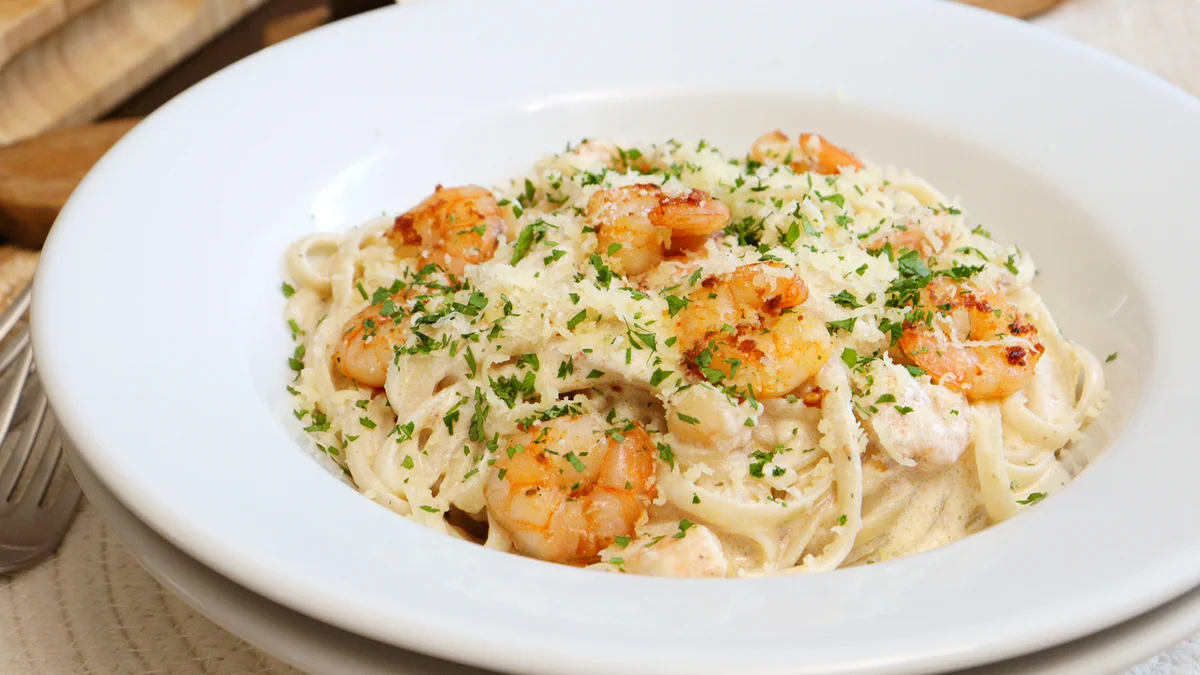
This creamy shrimp Alfredo-style pasta pairs pre-cooked prawns with garlic, white wine, cream and grated cheese. It makes a rich, quick-feeling main course, with the sauce finished in the same pan as the prawns.
Ingredients
- 200 gpasta
- 400 gpre-cooked prawns
- 250 mlcream
- 3 clovesgarlic
- 50 gbutter
- 50 mlwhite wine
- 100 gSardo or Parmesan cheese
- 1.25 ml (¼ tsp)nutmeg
- 1 pinchsalt
- to tastepepper
- to tastefresh parsley
Instructions
- 1
Cook the prawns
Peel and chop the garlic. Melt the butter in a wide frying pan over medium heat, then stir in the garlic. Add the prawns and pepper, and cook for 8–10 minutes, stirring occasionally. Lift the prawns out of the pan.
- 2
Make the sauce
Pour the white wine into the pan, followed by the cream, and stir. Season with nutmeg, salt and pepper, then mix in the grated cheese. Return the prawns to the pan, stir to coat, and take the pan off the heat.
- 3
Boil the pasta
Bring plenty of water to the boil in a saucepan with a pinch of salt. Add the pasta and cook for 8–10 minutes.
- 4
Combine pasta sauce
When the pasta is ready, take a tablespoon of its cooking water and stir it into the sauce. Return the sauce to medium heat, add the pasta and cook for 1–2 minutes, stirring constantly.
- 5
Finish and serve
Serve with extra grated cheese and chopped fresh parsley.
What is shrimp Alfredo pasta?
Alfredo-style pasta is known for a creamy, cheese-rich sauce coating the noodles. The familiar name is associated with an Italian pasta dish, while versions with cream and add-ins such as seafood have become popular in many places.
Here, prawns, garlic and white wine bring savoury flavour to a sauce made with cream and Sardo or Parmesan. Cooking the pasta briefly in the sauce helps it pick up the flavour.
Nutrition and macros by portion
The nutrition label shows one serving as written: 1370 calories, 78g protein, 72g carbs, 78g fat.
| Portion | Adjustment | kcal | Protein | Carbs | Fat |
|---|---|---|---|---|---|
| Lighter | Use less cream and butter | 959 kcal | 55g | 50g | 55g |
| This serving | As written | 1370 kcal | 78g | 72g | 78g |
| Hungry | Add more pasta | 2055 kcal | 117g | 108g | 117g |
The pasta provides most of the carbohydrates, while the cream, butter and cheese contribute much of the fat; prawns and cheese supply most of the protein. Add a generous portion of green vegetables or salad alongside to balance the rich sauce.
Choosing the ingredients
Cheese: Sardo or Parmesan both give the sauce a savoury, salty edge. Grate it finely so it blends into the cream more readily.
Prawns: The recipe uses pre-cooked prawns, so keep an eye on them as they warm in the pan. The method specifies 8–10 minutes of cooking before removing them.
Building the sauce
Garlic and butter: Melt the butter over medium heat and stir in the chopped garlic before adding the prawns. Stir occasionally as they cook so the garlic does not sit in one spot.
Wine and cream: Add the wine to the same pan, then stir in the cream and seasonings. Mix in the grated cheese before returning the prawns to the sauce.
Getting the pasta right
Cooking time: Boil the pasta for 8–10 minutes, checking it near the end because shapes and brands can cook at different rates. The recipe does not specify a pasta shape.
Finishing: Stir a tablespoon of pasta water into the sauce, then toss the pasta in the pan for 1–2 minutes. Keep stirring so the noodles are evenly coated.
Serving the dish
Parsley: Chop fresh parsley and scatter it over the pasta with extra grated cheese just before serving. Its fresh flavour contrasts with the rich sauce.
Sides: A crisp green salad or simply cooked green vegetables make a fresh accompaniment. Serve the pasta straight away while the sauce is warm.
Recipe notes & tips
- Grate the cheese finely so it is easier to stir into the sauce.
- Chop the garlic before heating the butter, as it is added as soon as the butter melts.
- Stir the prawns occasionally during their 8–10 minutes in the pan.
- Take a tablespoon of pasta water before draining the pasta.
- Keep stirring during the final 1–2 minutes so the pasta is coated evenly.
- Serve promptly and finish with parsley and extra grated cheese.
Variations
- Add lemon: Finish with a little lemon zest for a brighter contrast to the creamy sauce.
- Use another pasta shape: Choose a shape that holds sauce well and cook it for the time on its packet.
- Add greens: Stir in cooked peas or spinach when returning the prawns to the sauce.
- Make it spicier: Add a pinch of chilli flakes with the pepper.
- Try another hard cheese: Use a finely grated hard cheese in place of the Sardo or Parmesan.
Common mistakes to avoid
- Leaving the garlic unattended: Stir it into the melted butter and keep it moving as you add the prawns.
- Overcooking the prawns: They are already cooked, so watch them closely and follow the stated 8–10 minutes without letting them dry out.
- Adding cheese in a lump: Grate it finely and mix it into the cream gradually.
- Forgetting the pasta water: Set aside a tablespoon before draining so it can be stirred into the sauce.
- Skipping the final toss: Cook the pasta in the sauce for 1–2 minutes, stirring constantly, to coat it well.
How to store
Refrigerate leftovers in a sealed container and eat within 2 days. Reheat gently in a pan, stirring; add a small splash of water if the sauce has thickened. Avoid prolonged heating, which can make the prawns tough.
Frequently asked questions
Can I use raw prawns instead?
Yes, but the recipe's 8–10-minute timing is for pre-cooked prawns. Cook raw prawns until they are opaque and cooked through before lifting them out of the pan.
Which pasta shape works best?
The recipe does not specify a shape. Use a pasta you enjoy, and follow its packet timing for the boiling stage.
Can I make the sauce ahead?
It is best made just before serving, as cream sauces can thicken when chilled and prawns can become tough if reheated for too long.
What can I use instead of white wine?
You can leave it out, though the sauce will lose some of its wine flavour. Stir the cream into the pan after the garlic and prawns have been removed.
How do I stop the sauce becoming too thick?
Use the tablespoon of pasta cooking water specified in the method, and stir it through before adding the pasta.
Cook it from the original
This recipe comes from cuk-it.com. Their page has the author’s own photos, notes and tips — the best place to cook it from.
Open the recipe on cuk-it.com