
Eggs Benedict
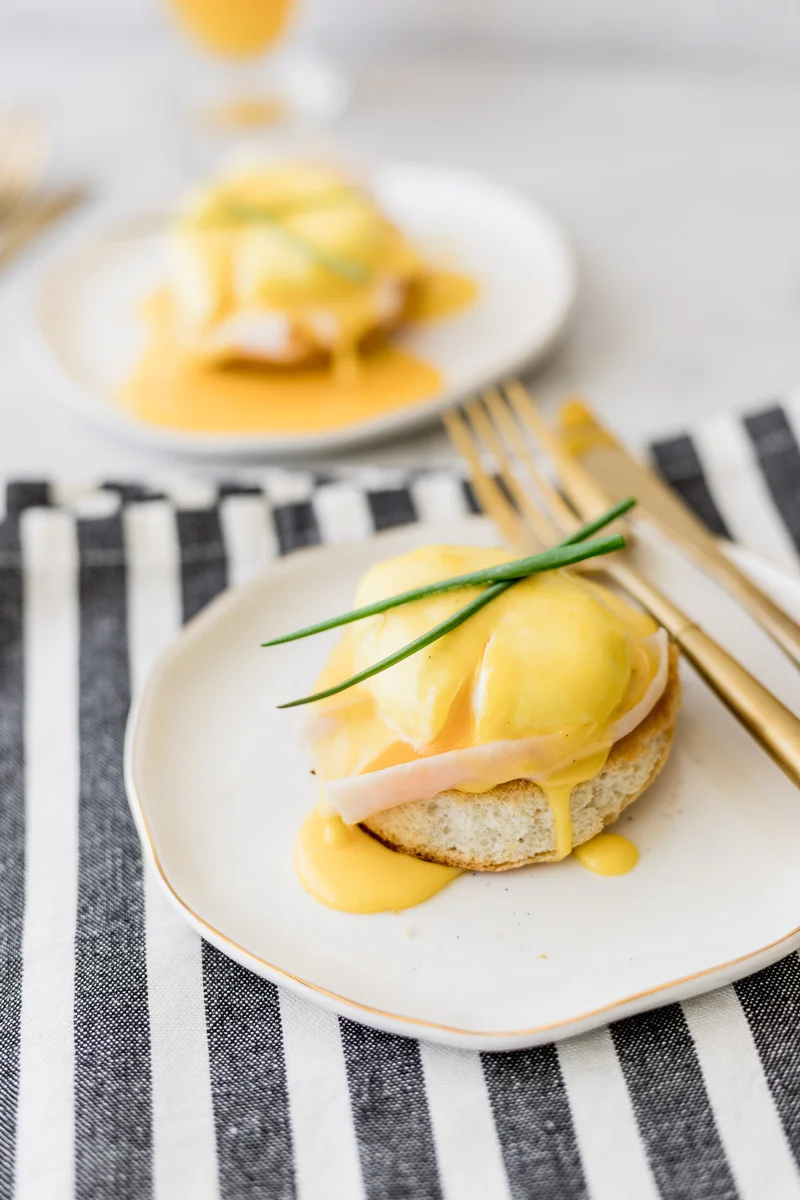
Eggs Benedict pairs toasted bread and ham with a softly poached egg and a rich, buttery hollandaise. It makes a special brunch feel achievable at home, with each component prepared in a short sequence.
Ingredients
- 2egg yolks
- 1 tbspwater or apple cider vinegar (choose one; water is used here)
- 100 gunsalted butter, melted and cooled to room temperature
- to tastesalt and pepper
- 2eggs
- as neededwater
- 15% of the amount of water usedapple cider vinegar
- 2 piecesbread, toasted
- 2 slicesham
Instructions
- 1
Separate the butter
Melt the butter in the microwave or over a bain-marie, then leave it to cool. The milk solids will settle at the bottom and the fat will remain on top; use the fat, not the milk.
- 2
Whisk the yolks
Whisk the egg yolks with 1 tbsp water in a bowl.
- 3
Thicken the yolks
Set the bowl over a bain-marie on medium-low heat and whisk continuously until the yolks are foamy. If they begin to get too hot or scramble, take the bowl off the heat and whisk briskly; return it to the bain-marie if they need more cooking.
- 4
Finish the hollandaise
Once the yolks are foamy and thick, remove them from the bain-marie. Slowly stream in the butter fat while whisking to prevent the sauce from splitting. When it has the consistency of light mayonnaise, season with salt and pepper, then cover with cling film touching the surface to stop a skin forming.
- 5
Heat the poaching water
Bring the water and apple cider vinegar to a boil.
- 6
Prepare each egg
Crack an egg into a small container or ramekin.
- 7
Lower the heat
Turn down the heat until there are no visible bubbles in the water.
- 8
Poach the egg
Create a swirl with a spoon, bring the container close to the water and tip the egg in at once.
- 9
Set the white
Carefully stop the swirl in the water so the egg does not stretch.
- 10
Check for doneness
Cook for 2 minutes, or until the white feels firm to the touch and the yolk is still liquid in the centre. Before poaching another egg, bring the water back to a boil, then lower the heat again before adding it.
- 11
Drain the egg
Trim off the tail formed by the runniest part of the white. Set the egg on a plate first so excess water can drain away.
- 12
Build the base
Lay the ham on the toasted bread and place the poached egg on top.
- 13
Spoon over sauce
If the hollandaise has become too thick, whisk in a little warm water a few drops at a time, as a small amount can thin it quickly. Serve the sauce over the egg.
What is Eggs Benedict?
Eggs Benedict is a brunch dish built around toasted bread, ham, a poached egg and hollandaise. It is commonly associated with American brunch menus, though its exact origins are disputed.
This version keeps the assembly simple and makes the hollandaise from egg yolks and butter. The gently poached egg and warm, rich sauce bring the separate parts together.
Nutrition and macros by portion
The nutrition label shows one serving as written: 600 calories, 29g protein, 30g carbs, 43g fat.
| Portion | Adjustment | kcal | Protein | Carbs | Fat |
|---|---|---|---|---|---|
| Lighter | Less hollandaise sauce | 420 kcal | 20g | 21g | 30g |
| This serving | As written | 600 kcal | 29g | 30g | 43g |
| Hungry | Add another toast portion | 900 kcal | 44g | 45g | 65g |
The bread supplies most of the carbohydrates, while the butter and egg yolks account for much of the fat. The eggs and ham contribute protein, with further fat from the eggs and ham. Serve with a green salad or tomatoes for a fresh side alongside the toast and sauce.
Making the hollandaise
Yolks first: whisk them with the measured tablespoon of water before placing the bowl over the bain-marie. Constant whisking helps them heat evenly and become foamy without setting into scrambled egg.
Butter slowly: use the clear fat from the melted butter, leaving the settled milk behind. A thin, steady stream while whisking helps the sauce turn smooth; add seasoning once it reaches a light mayonnaise-like consistency.
Poaching the eggs
Gentle water: after bringing the water and vinegar to a boil, lower the heat until the bubbles disappear. A small ramekin makes it easier to lower each egg into the water cleanly.
One at a time: swirl the water, tip in an egg and carefully stop the swirl so the white does not trail out. The recipe calls for 2 minutes, with a firm white and liquid yolk as the doneness cues.
Getting the texture right
Sauce: the hollandaise should be smooth and thick enough to coat the egg. If it tightens while waiting, add warm water a few drops at a time and whisk, since it can become runny quickly.
Egg: let excess water drain from the poached egg before placing it on the toast. Trimming the loose tail gives the finished dish a neater shape.
Timing the components
Prepare the hollandaise first and cover its surface with cling film while you poach the eggs. The sauce can thicken as it stands, so check its consistency before serving.
Toast the bread and have the ham ready as the eggs finish cooking. Assemble promptly so the toast stays crisp and the egg is served warm.
Choosing the bread and ham
Bread: use two pieces and toast them before assembly, so they can support the egg and sauce without becoming soggy straight away.
Ham: the recipe leaves the type to your preference. Choose slices that fit the bread, then lay them directly on the toast as the base for the poached egg.
What to serve alongside
A lightly dressed green salad or sliced tomatoes can add freshness alongside the buttery sauce and ham. Keep the side simple so it does not compete with the poached egg.
For a fuller brunch plate, add fruit or another vegetable side. Assemble each portion just before serving for the best contrast between crisp toast and soft egg.
Recipe notes & tips
- Use water with the yolks, as in the version described here.
- Let the melted butter cool before separating the fat from the milk solids.
- Keep the bain-marie at medium-low heat and whisk the yolks continuously.
- Lower the poaching water until no bubbles are visible before adding an egg.
- Poach one egg at a time and bring the water back to a boil before starting the next.
- Drain each poached egg before placing it on the toast.
Variations
- Choose your ham: use the type of ham you prefer, as the recipe allows.
- Use vinegar with the yolks: replace the tablespoon of water with 1 tbsp apple cider vinegar if preferred.
- Adjust the sauce: add warm water a few drops at a time if the hollandaise thickens.
- Add a fresh side: serve with salad leaves or sliced tomatoes for contrast.
- Change the bread: use another bread that can be toasted and hold the toppings.
Common mistakes to avoid
- Overheating the yolks: take the bowl off the bain-marie if they begin to scramble and whisk briskly.
- Adding butter too quickly: stream in the butter fat slowly while whisking to help prevent the sauce splitting.
- Using boiling water to poach: lower the heat until bubbles are no longer visible before adding the egg.
- Letting the egg white trail: stop the swirl carefully after tipping the egg into the water.
- Skipping the drain: rest the poached egg briefly on a plate so excess water runs off.
- Thinning the sauce too much: add warm water only a few drops at a time and whisk between additions.
How to store
Eggs Benedict is best assembled and eaten straight away. If you have leftovers, refrigerate the components separately in covered containers and use within 1 day; reheat the ham and toast separately, and make or gently rewarm the hollandaise with care, whisking in a few drops of warm water if needed.
Frequently asked questions
Can I make the hollandaise without a bain-marie?
The method uses a bain-marie to heat the yolks gently while whisking. Keep the heat medium-low and remove the bowl if the yolks begin to scramble.
How do I know when the poached egg is ready?
Cook it for about 2 minutes, then check that the white feels firm while the yolk remains liquid in the centre.
Why has my hollandaise become too thick?
It can thicken while standing. Whisk in warm water a few drops at a time until it loosens to a spoonable consistency.
Can I poach both eggs at once?
This method cooks the eggs one at a time. Bring the water back to a boil between eggs, then lower the heat until there are no visible bubbles before adding the next.
Can I use vinegar with the egg yolks?
Yes. The ingredient list offers 1 tbsp apple cider vinegar as an alternative to the 1 tbsp water; the method here uses water.
How much vinegar goes in the poaching water?
Use apple cider vinegar equal to 15% of the amount of water used.
Cook it from the original
This recipe comes from cravingsjournal.com. Their page has the author’s own photos, notes and tips — the best place to cook it from.
Open the recipe on cravingsjournal.com