
Baked ricotta
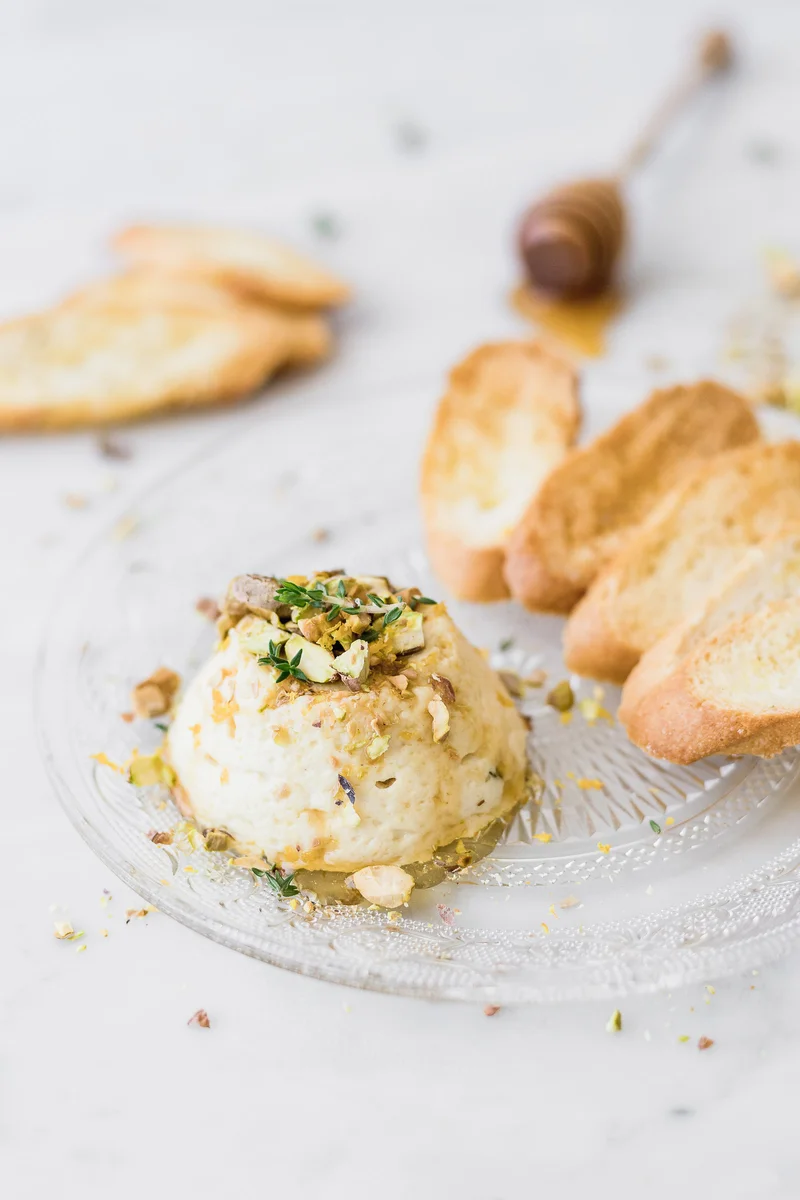
This baked ricotta pairs gently set, lemon-and-thyme-flecked cheese with crisp baguette toasts. Make it when you want a warm, savoury centrepiece for sharing, with honey or olive oil and pistachios to finish.
Ingredients
- 1 litrewhole milk (avoid UHT milk if possible)
- 4 tbsplemon or lime juice
- 1 tspsalt
- all the ricotta made abovericotta
- a littleolive oil
- zest of 1 lemon, dividedlemon zest
- 2 sprigsthyme
- to tastesalt
- to tastepepper
- to tastehoney or olive oil
- to tastepistachios, roughly chopped
- 1baguette
- a drizzleolive oil
- to tastesalt and pepper
Instructions
- 1
Heat the milk
Bring the milk and 1 tsp salt to the boil, stirring occasionally so it does not catch on the bottom of the pan.
- 2
Add the citrus
As soon as the milk boils, take it off the heat and stir in the lemon or lime juice briefly. Leave it for 10 minutes to curdle. If it has not separated, return the pan to the heat for a few seconds.
- 3
Strain the curds
Set a colander over a bowl and line it with muslin or a clean butter cloth. A dedicated vegetable-milk straining bag can also be used. Pour in the milk mixture and leave it to drain for 15 minutes, then gently squeeze out a little more liquid.
- 4
Season the ricotta
Mix the thyme leaves, half the lemon zest, salt and pepper into the ricotta.
- 5
Fill the moulds
Lightly oil a mould, or two silicone muffin moulds as used here, and fill it with the ricotta. Press the mixture down so it takes the mould's shape.
- 6
Bake the ricotta
Bake in an oven preheated to 180°C for 15 minutes. Turn the ricotta out onto a piece of baking paper and return it to the oven for another 15 minutes.
- 7
Finish and serve
Serve with chopped pistachios, the remaining lemon zest, and honey or olive oil.
- 8
Prepare the toasts
Cut the baguette into thin diagonal slices and drizzle with olive oil. Season with salt and pepper.
- 9
Bake the toasts
Bake in an oven preheated to 180°C until golden, for 7–15 minutes.
What is baked ricotta?
Ricotta is an Italian fresh cheese traditionally made from the whey left after cheesemaking. This recipe makes a ricotta-style cheese directly from milk, using citrus juice to separate the curds, then bakes it until it holds its shape.
The combination of thyme and lemon keeps the cheese fragrant, while pistachios add crunch and honey or olive oil brings a finishing contrast. Baguette toasts make it easy to serve as a shareable starter or snack.
Nutrition and macros by portion
The nutrition label shows one serving as written: 400 calories, 19g protein, 48g carbs, 15g fat.
| Portion | Adjustment | kcal | Protein | Carbs | Fat |
|---|---|---|---|---|---|
| Lighter | Less baguette, more salad | 280 kcal | 13g | 34g | 11g |
| This serving | As written | 400 kcal | 19g | 48g | 15g |
| Hungry | Add extra baguette | 600 kcal | 29g | 72g | 23g |
The milk and ricotta provide most of the protein and saturated fat, while the baguette supplies most of the carbohydrates. Olive oil, pistachios and any honey add further energy, with the oil and nuts contributing fat and the honey contributing sugar. To balance the plate, serve with a generous side of fresh vegetables or salad.
Choosing the milk and citrus
Milk first: whole milk gives the curds a richer texture. The recipe advises avoiding UHT milk, which may not curdle as reliably.
Citrus next: lemon or lime juice provides the acidity that separates the milk into curds and liquid. If the mixture has not visibly curdled after resting, the method calls for a brief return to the heat.
Drain without drying out
Set-up: line a colander with muslin or a clean butter cloth and place it over a bowl to catch the liquid. A dedicated straining bag is another option.
Timing: drain for 15 minutes, then squeeze gently to release a little more liquid. Avoid squeezing too hard, as the ricotta should stay moist enough to press into the mould.
Shape and bake
Oiling: coat the mould lightly so the cheese is easier to turn out. Press the ricotta in firmly enough to take the mould's shape.
Two stages: bake at 180°C for 15 minutes, turn it out onto baking paper, then bake for another 15 minutes. Handle it carefully when turning, as the fresh cheese can be delicate.
Check the toast texture
Slice the baguette thinly and at an angle so each piece has a broad surface for the oil and seasoning. Spread the slices out before baking so they can brown evenly.
The toasts can take 7–15 minutes at 180°C. Start checking towards the earlier end of that range and take them out when golden.
Serve with contrast
Finish the warm ricotta with the reserved lemon zest and chopped pistachios. Add honey for sweetness or olive oil for a more savoury finish.
Arrange the baguette toasts alongside so they stay crisp. A simple green salad or sliced vegetables can add freshness to the plate.
Recipe notes & tips
- Use a pan large enough to stir the milk without splashing.
- Keep a close eye on the milk as it approaches the boil so it does not catch on the pan.
- Use a clean, dedicated cloth or straining bag for the curds.
- Reserve half the lemon zest for the final garnish, as directed.
- Check the baguette slices regularly because their baking time can vary with thickness.
Variations
- Herb swap: use another soft herb in place of thyme for a different fresh flavour.
- Citrus mix: use lemon juice with a little lime zest for a sharper finish.
- Peppery finish: add extra freshly ground pepper to the ricotta before shaping.
- Savoury topping: choose olive oil rather than honey and add the pistachios just before serving.
- Sweet finish: drizzle with honey and serve the toasts alongside for dipping.
Common mistakes to avoid
- Milk catching: stir occasionally as it heats and take the pan off the heat as soon as it boils.
- Curds not forming: leave the mixture for the full 10 minutes, then return it to the heat for a few seconds if needed.
- Over-squeezing: press gently after draining so the ricotta does not become too dry.
- Sticking in the mould: lightly oil the mould before filling it.
- Breaking the cheese: turn it out carefully onto baking paper after the first 15 minutes.
- Burnt toasts: check them early and remove them once golden, rather than relying only on the longest time.
How to store
Refrigerate leftover baked ricotta and toasts separately in airtight containers and use within 2–3 days. Reheat the ricotta gently in the oven until warmed through; refresh the toasts briefly in a low oven so they crisp up.
Frequently asked questions
Why has my milk not curdled?
Give it the full 10-minute rest after adding the lemon or lime juice. If it still has not separated, briefly return it to the heat as described in the method.
Can I use UHT milk?
The recipe recommends avoiding UHT milk because it may not curdle as reliably. Whole milk that is not UHT is the preferred choice.
What can I use instead of muslin?
A clean butter cloth or a dedicated vegetable-milk straining bag can be used to drain the curds.
How do I know when the baguette toasts are ready?
They are ready when golden. The stated baking time is 7–15 minutes at 180°C, so check them before the end of that range.
Can I prepare the ricotta ahead?
You can make the ricotta and refrigerate it, then shape and bake it closer to serving. Keep the baguette toasts separate so they do not soften.
Should I use honey or olive oil on top?
Either works: honey gives a sweet contrast, while olive oil keeps the finish savoury. Choose according to how you plan to serve the dish.
Cook it from the original
This recipe comes from cravingsjournal.com. Their page has the author’s own photos, notes and tips — the best place to cook it from.
Open the recipe on cravingsjournal.com