
Authentic Peruvian Ceviche Recipe
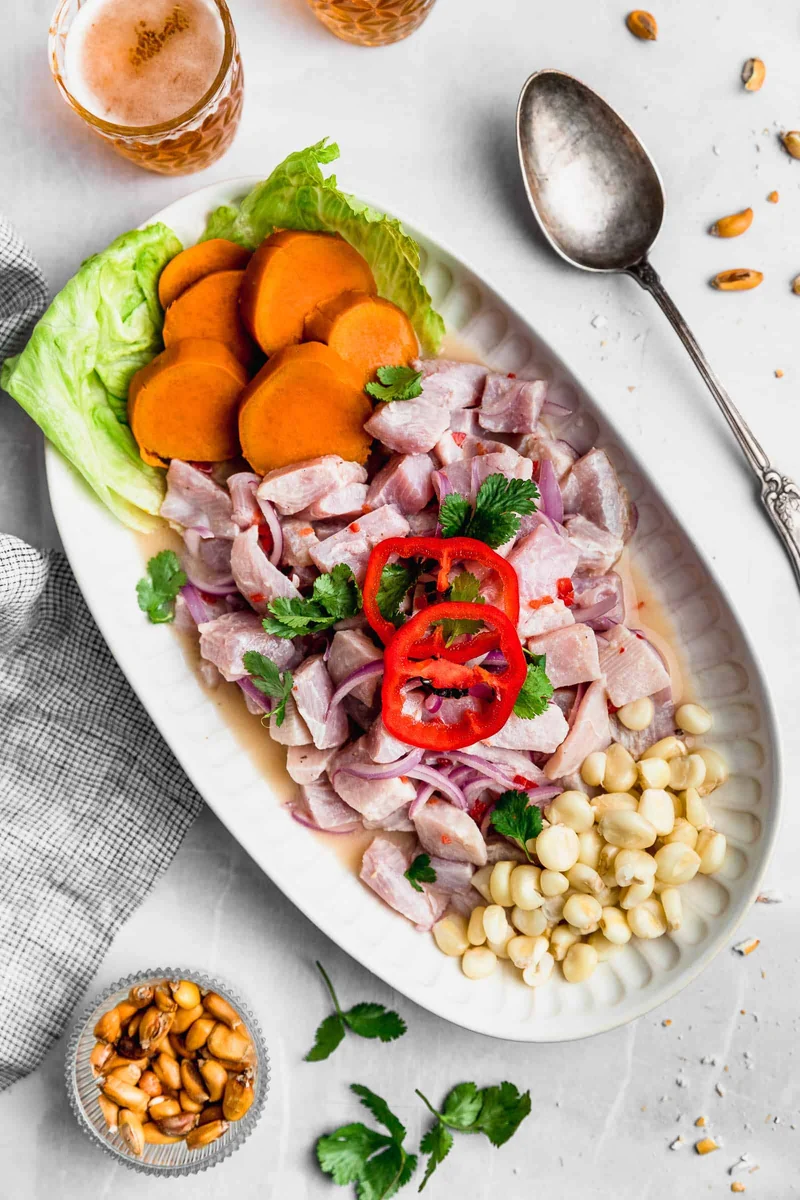
Peruvian ceviche pairs firm white fish with sharp lime, chilli and a fragrant leche de tigre, then serves it with sweet potato and corn. This version is quick to prepare and relies on fresh ingredients and serving the fish straight away.
Ingredients
- 1 kgwhite fish fillet (sole, flounder, sea bass, halibut or mahi mahi)
- to tastechopped chilli
- to tastesalt and pepper
- ½red onion, sliced
- 40 gtrimmings from fish fillets
- 30 gred or brown onion (red onion gives the leche de tigre a pinkish colour; brown onion keeps it white)
- 2garlic cloves
- to tastechilli
- 30 gcelery
- 15 gginger
- to tastesalt and sugar
- 500 mllime juice
- 4coriander stalks
- to tastecoriander leaves, chopped, to serve
- 2cooked sweet potatoes
- to tastecooked Peruvian corn
Instructions
- 1
Salt the onion
Leave the sliced onion with plenty of salt for 15 minutes to mellow its flavour. Rinse it and set it aside.
- 2
Cut the fish
Cut the fish into 2 cm cubes. Set aside any pieces that are too thin to cube; they will go into the leche de tigre.
- 3
Season the fish
Mix the fish with the chopped chilli, sliced onion, salt and pepper. Leave it to rest while you make the leche de tigre.
- 4
Prepare the lime
Squeeze the limes as close as possible to serving time to help prevent bitterness. Keep an ice cube with the juice as you squeeze, then remove it before blending.
- 5
Blend the mixture
Put the fish trimmings, onion, garlic, chilli, celery, ginger, lime juice and coriander stalks in a blender. Pulse 3–6 times, stopping when the ingredients are in small pieces.
- 6
Strain the sauce
Pour the mixture through a sieve, pressing the solids to extract as much juice as possible.
- 7
Adjust the flavour
Taste the leche de tigre and adjust the salt. If it is too sour, add sugar; limes outside Peru may need extra sweetness. The sauce should taste good enough to drink on its own.
- 8
Mix and serve
Mix the leche de tigre with the fish and the other ceviche ingredients. Serve immediately with coriander leaves, cooked sweet potato and Peruvian corn.
What is Peruvian ceviche?
Ceviche is a Peruvian dish of fish dressed with citrus, chilli and aromatics. The lime juice changes the fish’s texture, but it does not make it equivalent to fish cooked with heat, so use fish intended to be eaten raw.
Leche de tigre, the citrus-based dressing, brings the flavours together. Here, fish trimmings, celery, ginger and coriander stalks are blended into the lime, while sweet potato and corn temper its sharpness.
Nutrition and macros by portion
The nutrition label shows one serving as written: 525 calories, 69g protein, 58g carbs, 6g fat.
| Portion | Adjustment | kcal | Protein | Carbs | Fat |
|---|---|---|---|---|---|
| Lighter | More fish, less sweet potato | 368 kcal | 48g | 41g | 4g |
| This serving | As written | 525 kcal | 69g | 58g | 6g |
| Hungry | Larger fish portion | 788 kcal | 104g | 87g | 9g |
The white fish provides most of the protein, while the sweet potatoes and corn contribute most of the carbohydrates. The lime dressing adds little fat; the exact sodium depends on how much salt you use. To make a balanced plate, serve a measured portion with the listed sweet potato and corn, and add extra vegetables if you have them.
Choose firm, fresh fish
Fish choice: Sole, flounder, sea bass, halibut and mahi mahi are listed options. Choose very fresh fish from a reliable source and keep it chilled until you are ready to prepare it.
Even pieces: Cut the fish into roughly 2 cm cubes so the pieces are similar in size. Save thin trimmings for the dressing rather than mixing uneven scraps into the cubes.
Build the leche de tigre
Citrus: Squeeze the limes shortly before serving, as the recipe directs, and remove the ice cube before blending. This helps keep the juice fresh-tasting.
Blending: Pulse the ingredients only 3–6 times, stopping when they are in small chunks. Straining and pressing the mixture extracts the liquid while leaving the larger solids behind.
Balance the flavour
Seasoning: Taste the strained dressing before it meets the fish, then adjust the salt. Add sugar a little at a time if the lime tastes too sour.
Onion: The sliced red onion rests with salt for 15 minutes, then is rinsed to soften its bite. The separate 30 g onion goes into the leche de tigre; red onion colours it pinkish, while brown onion keeps it white.
Keep the fish tender
Timing: The recipe gives the fish a brief rest while the dressing is made, then calls for immediate serving once they are mixed. Avoid leaving the finished ceviche sitting in the lime juice, as the texture will continue to change.
Texture: Use a gentle hand when combining the fish and dressing so the cubes stay intact. Serve as soon as everything is coated.
Serve with traditional sides
Sweet potato: Cooked sweet potato brings a soft, sweet contrast to the lime and chilli. Cut it into manageable pieces for serving alongside the fish.
Corn: Serve with cooked Peruvian corn and finish with chopped coriander leaves. The recipe does not specify quantities for the corn or garnish, so use as much as suits the plate.
Recipe notes & tips
- Keep the fish chilled until you are ready to cut and dress it.
- Use a sharp knife to make neat, evenly sized 2 cm cubes.
- Rinse the salted sliced onion well before adding it to the fish.
- Pulse the dressing briefly rather than blending it into a smooth purée.
- Taste the strained leche de tigre before adding it to the fish.
- Prepare the sweet potato and corn ahead so the ceviche can be served immediately.
Variations
- Pink dressing: Use red onion for the leche de tigre to give it a pinkish hue.
- White dressing: Choose brown onion in the leche de tigre to keep its colour pale.
- Adjust the chilli: Use less for a milder dressing or more for extra heat.
- Change the fish: Use another listed firm white fish, such as sea bass or halibut.
- Extra coriander: Add more chopped coriander leaves at the table for a fresher finish.
Common mistakes to avoid
- Leaving the onion unsalted: Rest it with plenty of salt for 15 minutes, then rinse to soften its flavour.
- Cutting uneven pieces: Aim for 2 cm cubes so the fish is more consistent to eat.
- Over-blending: Stop after 3–6 pulses, when the ingredients are in small chunks.
- Skipping the straining: Pass the dressing through a sieve and press the solids to release their juices.
- Serving the ceviche late: Mix the fish and leche de tigre just before serving to avoid an extended soak.
- Making the dressing too sour: Taste it and add sugar a little at a time if needed.
How to store
Ceviche is best served immediately after the fish is mixed with the leche de tigre. Keep any ingredients that have not yet been combined covered and refrigerated, and do not leave the finished dish at room temperature.
Frequently asked questions
Can I prepare the leche de tigre ahead?
The recipe recommends squeezing the limes as close as possible to serving to help prevent bitterness. For the freshest flavour, make and strain the dressing shortly before combining it with the fish.
How long should the fish sit in the lime juice?
This method rests the seasoned fish while the leche de tigre is prepared, then says to serve immediately after mixing. It does not give a longer marinating time.
Can I use frozen fish?
Use fish that is suitable for eating raw and follow the supplier’s guidance on freezing and handling. Thaw it safely in the refrigerator and keep it cold while preparing the dish.
What can I use instead of Peruvian corn?
The recipe specifies cooked Peruvian corn. If it is unavailable, serve another cooked corn variety, understanding that its size and texture may differ.
Why does the leche de tigre taste too sour?
Limes vary in sweetness. Add sugar gradually, tasting as you go, until the acidity is balanced to your liking.
Can I leave out the chilli?
Yes. Use less or omit it to reduce the heat, while keeping the other ingredients and adjusting the seasoning to taste.
Cook it from the original
This recipe comes from cravingsjournal.com. Their page has the author’s own photos, notes and tips — the best place to cook it from.
Open the recipe on cravingsjournal.com