
Basic White Bread
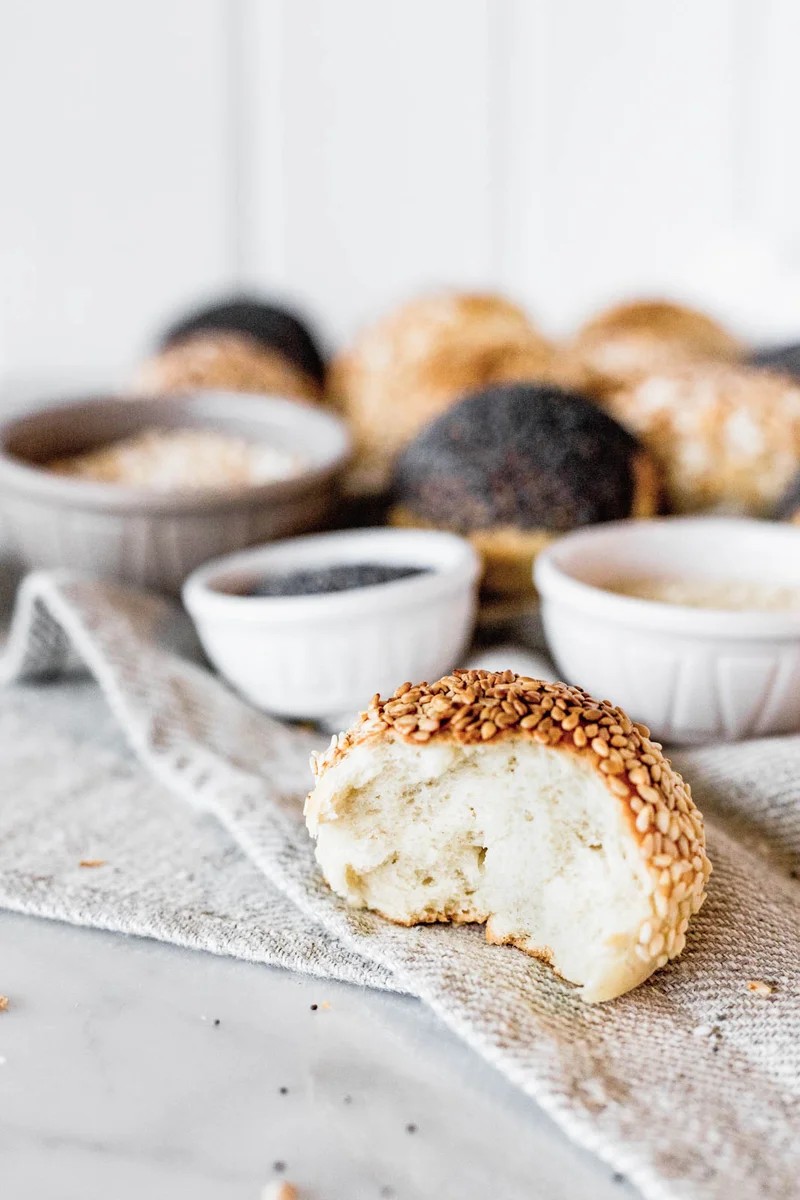
A soft, lightly sweetened white bread dough that can be shaped into a loaf, a braid or individual rolls. Choose the shape that suits your meal, then bake until golden.
Ingredients
- 375 gplain flour
- 30 gsugar
- 6 gsalt
- 11 g instant yeast (or 44 g fresh yeast or 22 g fry yeast; see note for method of use)yeast
- 23 gunsalted butter, melted and cooled to room temperature
- 225 mllukewarm water
- 1egg
- 2 tbspwater
- to tasteseeds and nuts to decorate (optional)
Instructions
- 1
Knead the dough
Put everything except the egg, 2 tbsp water and optional seeds or nuts in a stand mixer bowl. Knead with the dough hook for 15–20 minutes, or knead by hand, until the dough passes the window test: gently stretch a small piece from the sides until you can see light through it without it tearing.
- 2
First proof
Transfer the dough to a clean bowl, cover it with a tea towel and leave it in a warm spot for 40 minutes to 1 hour, until it has doubled in size.
- 3
Shape a loaf
For a regular loaf, roll the dough out to the length of the tin, then roll it up on itself while keeping that length. Place it in a lightly oiled tin to proof.
- 4
Shape a braid
For a braid, divide the dough into 3 equal-weight portions and roll each to twice the length of the tin. Braid the strands, tuck the ends underneath with the neater side on top, and place in a lightly oiled tin to proof.
- 5
Second proof
Cover the shaped loaf or braid with a tea towel and leave it in a warm spot for 40 minutes to 1 hour, until doubled in size.
- 6
Glaze the loaf
Mix the egg with 2 tbsp water and brush it over the loaf or braid. Decorate with seeds and/or nuts if using.
- 7
Bake the loaf
Bake in an oven preheated to 180°C for 30 minutes, or until nicely golden.
- 8
Portion the rolls
For rolls, weigh out 45 g pieces. Keep the remaining dough covered with a tea towel while you work, as it can dry out.
- 9
Shape each roll
Flatten each piece and fold the outer edges into the centre to make a parcel. Turn it over so the join is underneath.
- 10
Roll into balls
Roll each piece under your hand, applying a little pressure towards the work surface and keeping the join underneath.
- 11
Rest the rolls
Arrange the shaped rolls on the work surface, cover with a tea towel and leave for 20 minutes.
- 12
Coat the rolls
Dip the top of each roll in the egg-and-water mixture, then roll it through seeds or nuts to coat. Alternatively, place the rolls on a baking tray, brush with the mixture and sprinkle with seeds, or leave them plain after brushing.
- 13
Bake the rolls
Bake in an oven preheated to 180°C for 15–20 minutes, until golden on top and underneath.
What is basic white bread?
White bread is made from wheat flour with the bran and germ removed, giving it a pale crumb and a soft texture. This is a simple enriched dough, with butter, sugar and egg adding tenderness and a little richness.
The recipe offers several familiar shapes rather than one fixed loaf: a tin loaf, a braid or rolls. Its straightforward dough makes it useful for everyday bread, whether served with a meal or used for sandwiches.
Nutrition and macros by portion
The nutrition label shows one serving as written: 17 calories, 1g protein, 3g carbs, 0g fat.
| Portion | Adjustment | kcal | Protein | Carbs | Fat |
|---|---|---|---|---|---|
| Lighter | Use less butter | 12 kcal | 0g | 2g | 0g |
| This serving | As written | 17 kcal | 1g | 3g | 0g |
| Hungry | Serve a larger slice | 26 kcal | 1g | 5g | 0g |
Most of the carbohydrates come from the flour and sugar, while butter and egg contribute much of the fat; flour and egg provide most of the protein. The stated 100 servings appear unusually high for this quantity of dough, so the estimate is divided across 100 portions; serve it alongside vegetables and a protein-rich dish for a more balanced plate.
The ingredients that matter
Flour and yeast: plain flour forms the dough, while instant yeast helps it rise. The recipe also lists fresh yeast and “fry yeast” as alternatives; check the note from the original recipe for how to use those forms.
Butter and sugar: melted, cooled butter enriches the dough, and sugar gives it a gentle sweetness. Lukewarm water helps bring the dough together without being hot enough to risk damaging the yeast.
Kneading for strength
Window test: stretch a small piece of dough gently from the edges. It is ready when it becomes thin enough for light to show through without tearing.
Take your time: the method allows 15–20 minutes of kneading in a mixer, or by hand. If the dough tears quickly during the test, continue kneading and check again.
Shaping the loaf or braid
Loaf: roll the dough to the length of the tin, then roll it up and place it in the lightly oiled tin. Keeping the roll close to the tin’s length helps it fit the shape.
Braid: divide the dough into three equal-weight pieces, roll them to twice the tin’s length and braid them. Tuck the ends underneath so the top looks neat.
Shaping the rolls
Even portions: weigh the pieces at 45 g each for rolls of consistent size. Keep the rest of the dough under a tea towel while shaping so its surface does not dry out.
Tight joins: fold the edges of each flattened piece towards the centre, turn it over and roll it with the join underneath. A smooth, closed underside helps each roll hold its shape.
Proofing and doneness
First rise: leave the dough covered in a warm spot for 40 minutes to 1 hour, until doubled. After shaping the loaf or braid, allow another 40 minutes to 1 hour; rolls need 20 minutes.
Bake cues: the loaf or braid takes about 30 minutes at 180°C, while rolls take 15–20 minutes. Look for a golden surface; the rolls should also be golden underneath.
Serving ideas
Serve the rolls alongside soup, salad or a main meal, or split them for sandwiches. A loaf or braid can be sliced for toast or served with butter and a savoury topping.
The dough has a little sweetness, so it works with both savoury fillings and simple breakfast toppings. Add seeds or nuts to the outside if you want extra crunch.
Recipe notes & tips
- Let the melted butter cool to room temperature before adding it to the dough.
- Use the window test rather than relying on kneading time alone.
- Keep unused dough covered while shaping the rolls to stop it drying out.
- Oil the loaf tin lightly so the shaped dough can be removed more easily.
- Brush the loaf or rolls with the egg mixture for a glossy golden finish.
Variations
- Seeded topping: brush with egg mixture and coat the dough with seeds before baking.
- Nut topping: add chopped nuts to the outside for a crisp finish.
- Plain rolls: brush with the egg mixture and leave off the seeds and nuts.
- Braided loaf: divide the dough into three strands and braid them before the second proof.
- Dinner rolls: shape the dough into 45 g portions and bake for 15–20 minutes.
Common mistakes to avoid
- Hot water: very hot water can affect the yeast; use lukewarm water.
- Under-kneading: dough that tears in the window test needs more kneading before proofing.
- Uncovered dough: the surface can dry out; keep the bowl and unused portions covered.
- Loose shaping: a poorly tucked loaf or roll may lose its shape; keep the joins underneath.
- Overbaking: the bread can become dry; check for a golden finish around the stated baking time.
How to store
Once completely cool, keep the bread in an airtight container or bread bag at room temperature and use within 2–3 days. Reheat slices briefly in a toaster or warm rolls in the oven; freeze extra bread well wrapped for longer storage.
Frequently asked questions
Can I knead the dough by hand?
Yes. Knead by hand until a small piece stretches thin enough to show light through without breaking, using the window test.
How do I know when the dough has proofed enough?
For the first rise and the loaf or braid’s second rise, look for the dough to double in size. The shaped rolls rest for 20 minutes as directed.
Can I make rolls instead of a loaf?
Yes. Weigh the dough into 45 g pieces, shape them with the joins underneath and proof for 20 minutes before coating and baking.
Do the rolls have to be covered in seeds?
No. You can brush them with the egg-and-water mixture and leave them plain, or brush them on the tray and sprinkle seeds over the top.
Can I use fresh yeast?
The ingredients list gives 44 g fresh yeast as an alternative to 11 g instant yeast. The recipe refers to a separate note for how to use alternative yeast types.
How can I tell when the bread is baked?
The loaf or braid should be nicely golden after about 30 minutes. Rolls take 15–20 minutes and should be golden on both the top and bottom.
Cook it from the original
This recipe comes from cravingsjournal.com. Their page has the author’s own photos, notes and tips — the best place to cook it from.
Open the recipe on cravingsjournal.com