
Orange and cranberry scones
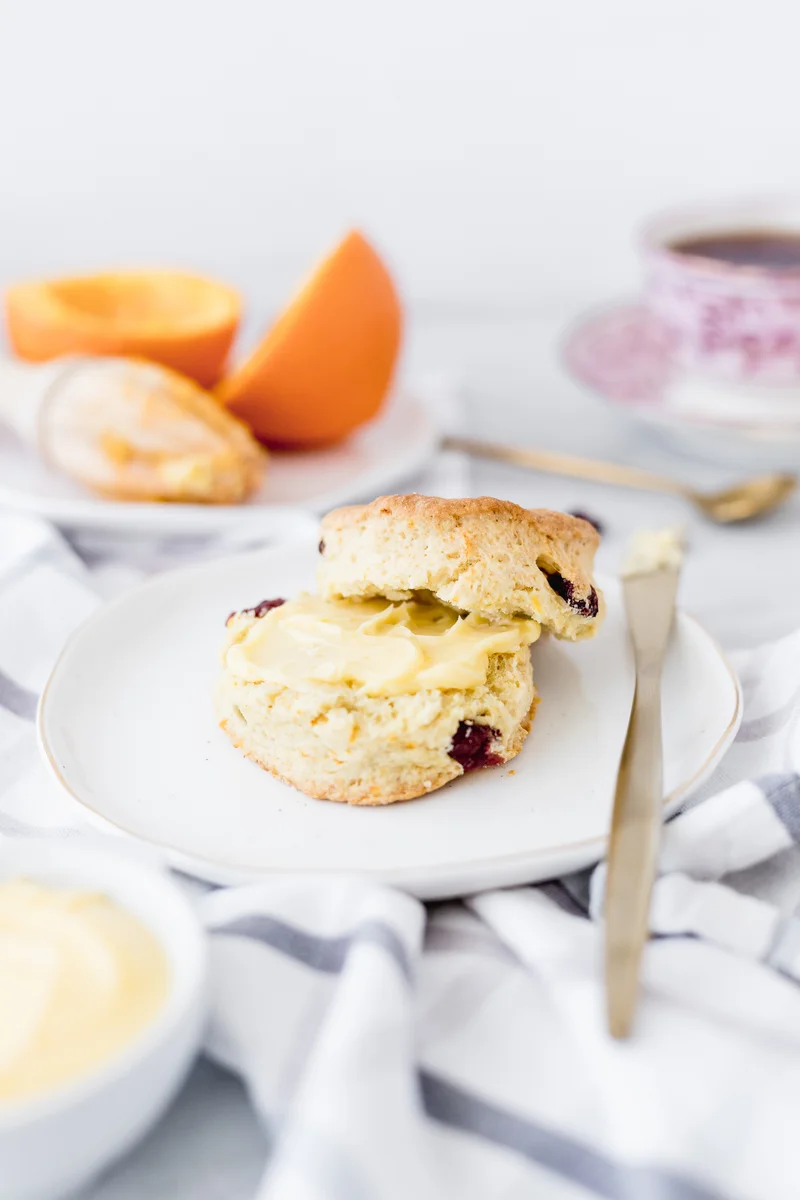
These orange and cranberry scones are buttery, lightly sweet and scented with fresh orange zest and juice. Chilling the dough helps keep it manageable and gives you time to preheat the oven before baking.
Ingredients
- 500 gplain flour
- 80 gsugar
- 2 tbspbaking powder
- 1 tspsalt
- 160 gunsalted butter, cold and cut into cubes
- 2 orangeszest
- 50 gdried cranberries
- 100 mlmilk (skimmed milk can be used)
- 140 mlfresh orange juice
Instructions
- 1
Rub in butter
Put the flour, sugar, baking powder, salt and butter in a bowl. Rub the butter into the dry ingredients with your fingertips until the mixture resembles wet sand and no large pieces of butter remain. If your hands are very warm, briefly hold an ice cube before rubbing in the butter. You can also do this in a food processor.
- 2
Add orange
Add the zest of 2 oranges, the milk and the orange juice. Stir with a spatula until it is no longer effective.
- 3
Mix cranberries
Add the cranberries and use your hands to bring them evenly through the dough. Do not knead it; just combine the ingredients, as kneading can make the scones tough.
- 4
Chill the dough
Wrap the dough in cling film, flattening it rather than shaping it into a ball. Refrigerate for 30 minutes.
- 5
Roll the dough
Remove the dough from the fridge and roll it out on a floured surface until it is 3 cm thick.
- 6
Cut the scones
Cut the dough into your preferred shapes, such as triangles, circles or hearts. If you gather the scraps to roll them out again, bring the dough together gently and combine it before rolling; it may be flaky and prone to separating.
- 7
Bake until golden
Place the scones on a baking tray lined with baking paper or a silicone baking mat. Bake in a preheated oven for 20–30 minutes, or until golden.
What are orange and cranberry scones?
Scones are a British baked treat, commonly served with tea and made in both sweet and savoury versions. This one pairs dried cranberries with orange zest and juice for a bright, fruity flavour.
Cold butter rubbed into flour gives the dough its crumbly character, while a brief chill makes it easier to roll and cut. The recipe keeps the fruit and citrus in the dough itself, so each scone gets a little of both.
Nutrition and macros by portion
The nutrition label shows one serving as written: 902 calories, 14g protein, 131g carbs, 34g fat.
| Portion | Adjustment | kcal | Protein | Carbs | Fat |
|---|---|---|---|---|---|
| Lighter | Use skimmed milk | 631 kcal | 10g | 92g | 24g |
| This serving | As written | 902 kcal | 14g | 131g | 34g |
| Hungry | Serve an extra scone | 1353 kcal | 21g | 197g | 51g |
Most of the carbohydrates come from the flour and sugar, with additional sugars from the dried cranberries and orange juice. Butter supplies most of the fat, while the flour and milk contribute some protein. Pair a scone with fruit or yoghurt to make a more balanced snack.
Why cold butter matters
Cold butter: keep it chilled and cut it into cubes before rubbing it into the dry ingredients. Stop once the mixture looks like wet sand and there are no large lumps; working it for too long can soften the butter.
Warm hands: if your hands heat the butter quickly, briefly hold an ice cube before mixing. A food processor is another option for this stage.
How to mix the dough
Liquid: add the orange zest, milk and juice, then stir with a spatula until it becomes difficult to mix that way. The dough should come together without being worked like bread dough.
Cranberries: use your hands to distribute them gently. Avoid kneading, which can develop the dough and leave the baked scones tough.
Chilling and shaping
Chill: flatten the dough before wrapping it, rather than forming a ball, and refrigerate for 30 minutes. This gives the dough a chance to firm up before rolling.
Roll: use a lightly floured surface and aim for 3 cm thickness. The dough is flaky and may split when you gather the scraps, so handle it gently as you shape it again.
When are the scones done?
Bake: allow 20–30 minutes in a preheated oven. The recipe uses colour as the doneness cue, so look for a golden finish rather than relying on the shortest time alone.
Tray: line it with baking paper or a silicone baking mat before adding the cut dough. If the scones are not golden at 20 minutes, continue baking and check them as they approach 30 minutes.
Serving ideas
Serve the scones warm or at room temperature, on their own or with butter. Their citrus and cranberry flavour also works well with a little jam.
For a more filling snack, serve one alongside yoghurt or fruit. The scones are sweet and rich, so a fresh accompaniment offers a contrast.
Recipe notes & tips
- Keep the butter cold until you are ready to rub it into the flour.
- Zest the oranges before juicing them.
- Use a spatula for the initial mixing, then add the cranberries by hand.
- Flatten the dough before wrapping it so it chills evenly.
- Measure the rolled dough to keep it close to 3 cm thick.
- Check for a golden colour during the 20–30 minute baking window.
Variations
- Extra citrus: add a little more orange zest for a stronger orange aroma.
- Different dried fruit: replace the cranberries with an equal amount of another dried fruit.
- Mixed citrus: use some lemon zest alongside the orange zest.
- Scone shapes: cut circles, triangles or hearts from the rolled dough.
- Skimmed milk: use skimmed milk for the milk portion, as the recipe allows.
Common mistakes to avoid
- Soft butter: keep it cold before mixing so the dough stays crumbly rather than greasy.
- Overworking the dough: stop mixing once everything is incorporated to help avoid tough scones.
- Uneven fruit: distribute the cranberries gently by hand before chilling.
- Skipping the chill: refrigerate the flattened dough for 30 minutes before rolling.
- Rolling too thin: keep the dough about 3 cm thick as directed.
- Forgetting to check: bake for 20–30 minutes and use a golden colour as the cue.
How to store
Once cool, store the scones in an airtight container at room temperature and eat within 2 days. Reheat briefly in a low oven until warmed through.
Frequently asked questions
Can I use skimmed milk?
Yes. The recipe specifically says skimmed milk can be used.
Can I make the dough in a food processor?
Yes. The butter-rubbing step can be done in a food processor. Mix only until the butter is incorporated and the mixture resembles wet sand.
Why is my dough splitting when I reshape it?
This dough is flaky and can be stubborn when gathered. Bring it together gently and combine it before rolling it out again.
How thick should I roll the dough?
Roll it to 3 cm thick. The recipe deliberately calls for a fairly thick layer.
How do I know when the scones are baked?
Bake for 20–30 minutes in a preheated oven, looking for a golden colour. The exact time within that range can vary with the oven and the size of the cut scones.
Can I cut the scones into different shapes?
Yes. Triangles, circles and hearts are all suggested; use whichever cutter or knife shape you prefer.
Cook it from the original
This recipe comes from cravingsjournal.com. Their page has the author’s own photos, notes and tips — the best place to cook it from.
Open the recipe on cravingsjournal.com