
Crispy Baked Potatoes
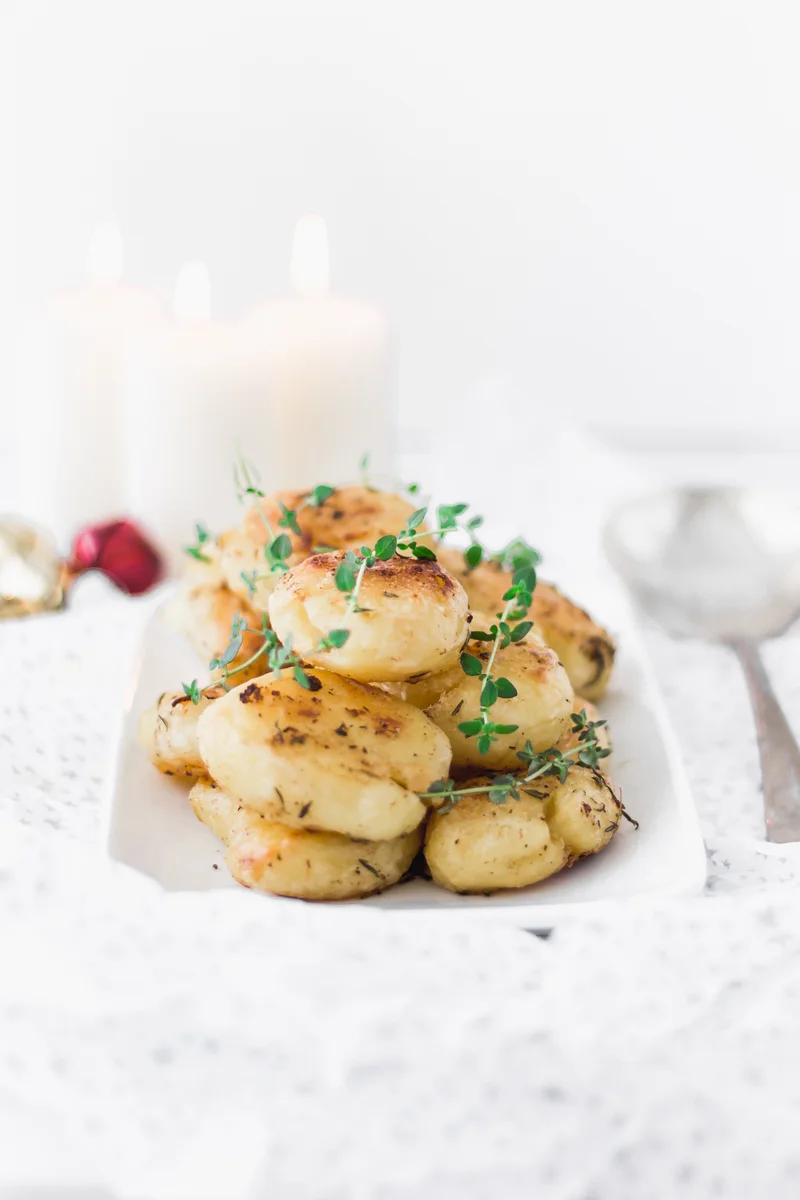
These crispy baked potatoes are boiled until tender, then roasted with olive oil, butter, garlic and thyme until golden. The two-stage cooking gives them a fluffy centre and plenty of crisp edges.
Ingredients
- 1 kgmedium-small potatoes
- as neededwater
- 1 tbspsalt, for the cooking water
- 10 sprigsfresh thyme
- 100 mlextra-virgin olive oil
- 50 gunsalted butter, melted
- 2garlic cloves
- to tastesalt and pepper
Instructions
- 1
Peel the potatoes
Peel the potatoes and put them in a pan with water and 1 tbsp salt. The salted water helps draw out moisture as they cook, which helps them crisp in the oven.
- 2
Heat the pan
Set the pan over a medium heat, starting with cold water so the potatoes warm gradually and cook more evenly. Keep the water below a full boil to avoid cooking the outsides faster than the centres.
- 3
Cook until soft
Cook the potatoes until very tender, with their outsides beginning to break down when handled.
- 4
Add the flavourings
Lift the potatoes from the water and place them on an oven tray. Add the remaining ingredients and bake at 200°C for 40 minutes.
- 5
Check the undersides
Take the tray out and turn the potatoes if the undersides are crisp. If they need longer, return them to the oven for more time.
- 6
Flatten the potatoes
Before putting the tray back in the oven, gently press each potato with a spatula to flatten it slightly. This helps make the centres softer.
- 7
Roast until golden
Return the tray to the oven for a further 20–30 minutes, or until the potatoes are completely golden.
- 8
Serve with thyme
Serve with extra thyme.
What are crispy baked potatoes?
They are roast-style potatoes that are boiled first, then baked until crisp outside and soft within. This version uses thyme, garlic, olive oil and butter for savoury flavour.
The method draws on a familiar home-cooking approach rather than a specific regional tradition: tenderise the potatoes in water, then finish them in a hot oven. Rough, soft edges and a gentle press before the final roast help create more crisp surfaces.
Nutrition and macros by portion
The nutrition label shows one serving as written: 485 calories, 5g protein, 42g carbs, 32g fat.
| Portion | Adjustment | kcal | Protein | Carbs | Fat |
|---|---|---|---|---|---|
| Lighter | Use less oil and butter | 340 kcal | 4g | 29g | 22g |
| This serving | As written | 485 kcal | 5g | 42g | 32g |
| Hungry | Serve a larger portion | 728 kcal | 8g | 63g | 48g |
Most of the carbohydrates come from the potatoes, while the olive oil and butter provide most of the fat. The potatoes contribute a little protein, but the dish is not a substantial protein source on its own; pair it with a protein-rich main and vegetables for a more balanced plate.
Why boil them first?
Cold water: starting the potatoes in cold, salted water lets them heat gradually and helps them cook more evenly from edge to centre.
Very tender potatoes: cook them until the outsides are starting to break up when handled. That roughness helps the oven-baked edges turn crisp.
Getting the roasting right
Room on the tray: arrange the potatoes with space around them so the hot air can reach their surfaces. If they are crowded, they are more likely to soften than brown.
Oil and butter: coat the potatoes with the olive oil and melted butter, and distribute the garlic and thyme across the tray. Keep an eye on the garlic as the potatoes finish, as small pieces can darken quickly.
When to turn and crush
First check: after the initial 40 minutes at 200°C, inspect the undersides. Turn the potatoes if they are crisp; if they are not ready, give them more time.
Gentle pressure: flatten each potato slightly with a spatula before the final 20–30 minutes. Press just enough to expose more surface without breaking them into pieces.
How to judge doneness
Look for a deep golden colour and crisp edges after the final roast. If the potatoes are not golden after 20 minutes, continue baking and check them again rather than relying on the clock alone.
The centres should remain soft when pierced or pressed. Take care when turning or crushing them, as very tender potatoes can fall apart.
What to serve alongside
Serve them hot with extra thyme as suggested, alongside roast vegetables, a green salad or a main dish with a lighter sauce. Their buttery, herb-scented edges also work well with grilled or roasted foods.
For a fuller plate, add a source of protein and a fresh or steamed vegetable. The potatoes are rich and crisp, so a bright, tangy accompaniment can bring contrast.
Recipe notes & tips
- Choose potatoes of a similar size so they become tender at roughly the same time.
- Start in cold water and keep it below a full boil for more even cooking.
- Handle the cooked potatoes carefully because their soft edges may break away.
- Leave space between the potatoes on the oven tray to encourage browning.
- Check the undersides at the 40-minute mark and turn only if they are crisp.
- Add extra thyme when serving for a fresh herbal finish.
Variations
- Add rosemary: use it alongside the thyme for a different herbal note.
- Use garlic powder: replace the cloves with a light dusting if you want the flavour without pieces of garlic.
- Add lemon: finish with a little lemon zest for a fresh, sharp contrast.
- Make it dairy-free: replace the butter with more olive oil.
- Add paprika: scatter a little over the potatoes before baking for a warm, savoury flavour.
Common mistakes to avoid
- Boiling too vigorously: the outsides may cook faster than the centres; keep the water below a full boil.
- Stopping while they are firm: the rough, tender edges help crisp in the oven; cook until very soft.
- Crowding the tray: the potatoes may steam instead of brown; spread them out.
- Crushing too hard: the potatoes can break apart; press gently with the spatula.
- Turning too early: crisp undersides may stick or tear; check that they have browned before flipping.
- Taking them out too soon: pale potatoes need longer; roast until golden and crisp.
How to store
Cool leftovers promptly and refrigerate in an airtight container for up to 3 days. Reheat on a tray in a 200°C oven until hot and crisp; microwaving warms them but softens the edges.
Frequently asked questions
Can I prepare the potatoes ahead?
You can boil them in advance and refrigerate them once cooled, then add the oil, butter, garlic and thyme before baking. For the crispest result, roast them soon after adding the flavourings.
Do I need to peel the potatoes?
Yes, peeling is part of this method. The recipe relies on the soft, rough edges created by boiling and gently crushing the peeled potatoes.
Why start the potatoes in cold water?
They warm gradually as the water heats, helping them cook more evenly. A full boil can soften the outside faster than the middle.
How do I know when to turn them?
Check the undersides after the first 40 minutes at 200°C. Turn them if they are crisp; if they still need time, continue baking before turning.
Can I make them without butter?
Yes. Replace the butter with additional olive oil, though the flavour and texture will differ slightly.
Can I reheat leftovers?
Yes. Reheat them on a baking tray in a 200°C oven until hot, which helps restore some crispness.
Cook it from the original
This recipe comes from cravingsjournal.com. Their page has the author’s own photos, notes and tips — the best place to cook it from.
Open the recipe on cravingsjournal.com