
Granny Doms Buttermilk and Bran Rusks
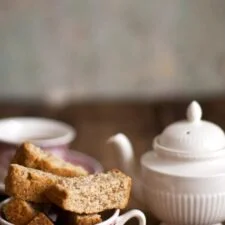
Granny Dom’s buttermilk and bran rusks are twice-baked slices with a buttery, lightly sweet crumb and a crisp finish. Make a batch when you want a sturdy teatime biscuit to dunk in tea or coffee.
Ingredients
- 1 kgself-raising flour
- 15 ml (1 Tbsp)baking powder
- 2 ml (1/2 tsp)salt
- 500 ml (2 cups)bran
- 500 gbutter
- 500 ml (2 cups)sugar
- 1 largeegg
- 500 ml (2 cups)buttermilk
Instructions
- 1
Prepare the tins
Heat the oven to 180 °C and grease 2 medium loaf tins.
- 2
Mix the dry ingredients
Sift the self-raising flour, baking powder and salt into a bowl. Stir in the bran, then set the mixture aside.
- 3
Make and bake
Melt the butter, stir in the sugar, then add this to the dry ingredients. Whisk the egg with the buttermilk and add that too. Mix until combined, taking care not to overwork the dough. Divide it between the loaf tins and bake for 1 hour, or until lightly browned on top. Take the loaves out of the tins and cool them on a wire rack.
- 4
Slice and dry
With a serrated knife, cut the loaves into 3 cm-thick slices, then cut each slice lengthways into 3 pieces. Arrange the pieces on an oven tray and dry overnight at 100 °C, or at 70 °C in a fan-assisted oven.
What are bran rusks?
Rusks are baked loaves cut into pieces and dried in a low oven until crisp. They are especially associated with South African home baking, where they are often served for dunking with tea or coffee.
This version gets its distinctive texture from bran and buttermilk, while butter and sugar make the loaf rich and gently sweet. Baking it first as a loaf keeps the centre tender before the slow drying turns the slices crisp.
Nutrition and macros by portion
The nutrition label shows one serving as written: 2325 calories, 37g protein, 319g carbs, 107g fat.
| Portion | Adjustment | kcal | Protein | Carbs | Fat |
|---|---|---|---|---|---|
| Lighter | Smaller rusk portion | 1628 kcal | 26g | 223g | 75g |
| This serving | As written | 2325 kcal | 37g | 319g | 107g |
| Hungry | Add another rusk | 3488 kcal | 56g | 479g | 161g |
The flour, bran and sugar supply most of the carbohydrates, while the butter is the main source of fat; flour, bran, egg and buttermilk contribute protein. Balance a rusk or two with fruit or yoghurt, especially if serving them as part of breakfast.
The role of bran and buttermilk
Bran: stir it through the sifted flour mixture so it is evenly distributed in every slice. Its coarse texture gives the rusks a heartier bite.
Buttermilk: whisk it with the egg before adding it to the bowl. This helps the wet ingredients combine and brings moisture to the dough.
Mix gently for a tender loaf
Once the wet and dry mixtures meet, mix only until there are no obvious dry patches. Overworking the dough can make the baked loaf tougher and less pleasant to slice.
Divide the mixture between the two greased tins so the loaves bake at a similar pace. The recipe does not specify tin dimensions, so use medium loaf tins as directed.
Look for a light golden top
The first bake takes 1 hour at 180 °C, with a lightly browned top as the visual cue. Let the loaves cool on a wire rack before cutting so they are easier to handle.
Use a serrated knife and a gentle sawing motion for the 3 cm slices. Cutting lengthways into 3 pieces makes rusks that are easier to dry and serve.
Dry slowly until crisp
The low-temperature drying stage removes moisture gradually and gives the rusks their characteristic crunch. Arrange the pieces on an oven tray rather than piling them up.
Dry them overnight at 100 °C, or at 70 °C in a fan-assisted oven. The method does not give an exact finishing time beyond overnight, so check that the pieces feel dry and crisp before taking them out.
Serve with a hot drink
Serve the rusks plain alongside tea or coffee, or dunk them briefly if you like a softer bite. Their firm, dry texture also makes them handy for a make-ahead snack.
For a more substantial plate, add yoghurt or fruit alongside a rusk rather than changing the dough itself.
Recipe notes & tips
- Measure the bran and sugar by volume as stated in the recipe.
- Grease both loaf tins thoroughly before dividing in the mixture.
- Stop mixing as soon as the wet and dry ingredients come together.
- Cool the loaves before slicing to help them hold their shape.
- Use a serrated knife to cut through the loaf without crushing it.
- Leave space between the pieces on the tray so they can dry evenly.
Variations
- Add seeds: Stir a small handful into the dry ingredients for extra crunch.
- Use wholemeal flour: Replace some of the self-raising flour, while keeping enough self-raising flour for the recipe to rise.
- Add warm spice: Mix ground cinnamon into the dry ingredients for a spiced flavour.
- Include dried fruit: Fold chopped dried fruit through the dough before dividing it between the tins.
- Make smaller rusks: Cut the slices into narrower pieces before drying for smaller portions.
Common mistakes to avoid
- Overmixing the dough: Mix only until combined to help keep the baked loaf tender.
- Slicing the loaves while hot: Let them cool on a rack first so the pieces are easier to cut cleanly.
- Using a blunt knife: Choose a serrated knife and saw gently through the loaf.
- Crowding the tray: Space the pieces apart so warm air can circulate around them.
- Rushing the drying stage: Keep the oven low and allow the rusks to dry overnight as directed.
- Taking them out too soon: Check for a dry, crisp texture before ending the drying stage.
How to store
Once completely cool, keep the rusks in an airtight container in a cool, dry place. If they soften, return them to a low oven until crisp again, then cool before storing.
Frequently asked questions
Can I use a fan-assisted oven?
Yes. The recipe gives 70 °C for a fan-assisted oven during the drying stage; the initial loaf bake is specified at 180 °C.
How do I know when the rusks are dry?
They should feel crisp rather than soft or damp. The recipe specifies drying overnight, so use that as your guide and check the texture before finishing.
Can I cut the rusks thicker or thinner?
The method specifies 3 cm-thick slices, then cutting each slice lengthways into 3 pieces. Changing the size can affect how long the pieces need to dry.
Why has my loaf crumbled while slicing?
It may have been cut before it cooled, or the knife may not have been sharp enough. Cool the loaf fully and use a serrated knife with a gentle sawing motion.
Can I make the rusks ahead?
Yes. The loaves are baked first and the pieces are dried overnight, making this a useful make-ahead bake. Store them airtight once fully cool.
Cook it from the original
This recipe comes from crushmag-online.com. Their page has the author’s own photos, notes and tips — the best place to cook it from.
Open the recipe on crushmag-online.com