
Nikkei Tuna Ceviche
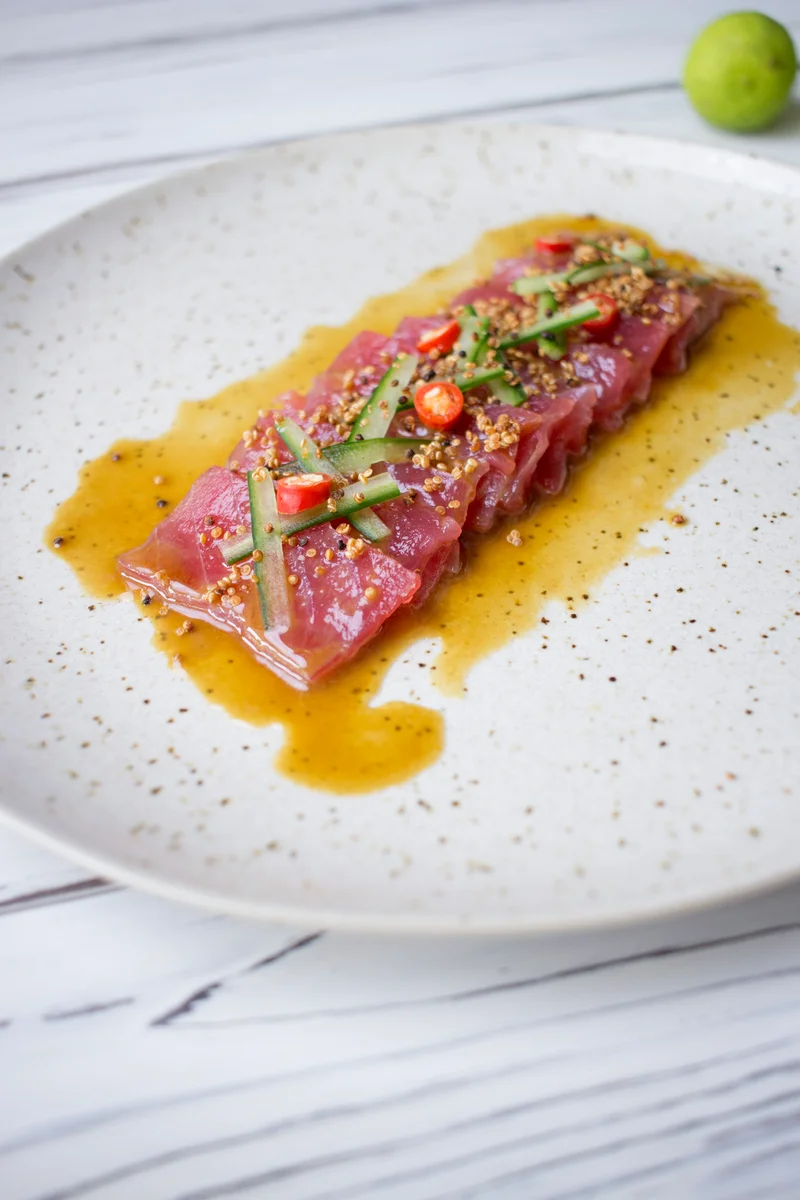
Nikkei tuna ceviche pairs thin slices of tuna with a sharp, citrusy tiger’s milk and a cooked soy, vinegar and orange sauce. It is a fresh, bright dish to serve as a starter, with cucumber, crispy quinoa and chilli for contrast.
Ingredients
- 4 tbspsoy sauce
- 100 mlapple or cider vinegar
- zest and juice of 2oranges
- 40 gginger, peeled and cut
- 150 ml (about 15 limes)lime juice
- 2garlic cloves
- 30 gbrown onion, roughly chopped
- 20 gginger, peeled and cut
- 50 gwhite fish scraps
- 30 gcelery, sliced
- 1chilli pepper
- 260 gtuna fillet
- to tastesalt
- 1 piececucumber
- to tastecrispy quinoa
- to tastechopped chilli
- a few drops, to tastesesame oil
Instructions
- 1
Cook the sauce
For the Asian-style sauce, put the soy sauce, vinegar, orange zest and juice, and 40 g of ginger in a pot. Heat over high heat until the mixture becomes syrupy.
- 2
Chill the sauce
Cool the syrupy sauce in the fridge or freezer until cold, ready to mix with the tiger’s milk.
- 3
Blend the ingredients
For the tiger’s milk, put the lime juice, garlic, onion, 20 g of ginger, white fish scraps, celery and chilli in a blender. Pulse about five times, just enough to break the ingredients down slightly; do not blend them completely.
- 4
Strain the mixture
Pass the mixture through a fine sieve, pressing it to extract all the juice.
- 5
Keep it chilled
If you are not using the tiger’s milk straight away, keep it in the fridge to prevent it turning bitter.
- 6
Slice the tuna
Cut the tuna into thin slices, removing any dark meat.
- 7
Season the fish
Season the tuna with salt before arranging it on the plate.
- 8
Dress the tuna
Arrange the tuna slices in a line and spoon the sauce over them. Do this just before serving so the fish does not cook in the sauce.
- 9
Prepare cucumber
Cut thin sticks from the green part of the cucumber, including a little flesh. The recipe suggests using the centre part to flavour water.
- 10
Finish the plate
Top with crispy quinoa, sliced chilli and a few drops of sesame oil.
What is Nikkei tuna ceviche?
Nikkei cooking brings together Japanese and Peruvian influences, and this ceviche uses tuna with citrus, soy and sesame. Ceviche is commonly served with fish dressed in an acidic mixture; here, the two sauces bring both sharpness and savoury depth.
The recipe works by keeping the tuna in thin slices and adding the sauce just before eating. Cucumber and crispy quinoa provide a cool, crisp contrast to the tender fish.
Nutrition and macros by portion
The nutrition label shows one serving as written: 100 calories, 13g protein, 7g carbs, 2g fat.
| Portion | Adjustment | kcal | Protein | Carbs | Fat |
|---|---|---|---|---|---|
| Lighter | Use less crispy quinoa | 70 kcal | 9g | 5g | 1g |
| This serving | As written | 100 kcal | 13g | 7g | 2g |
| Hungry | Serve with steamed rice | 150 kcal | 20g | 11g | 3g |
The tuna and white fish scraps provide most of the protein, while the quinoa contributes carbohydrates; the citrus sauces and garnishes add relatively little energy in the amounts used. Soy sauce is the main sodium source, so serve with a simple side such as unsalted rice or vegetables to balance the plate.
Two sauces, two roles
Asian-style sauce: Soy, vinegar, orange and ginger are cooked until syrupy, then chilled. Cooling it before combining it with the tiger’s milk keeps the finishing sauce cold.
Tiger’s milk: Lime juice, aromatics, celery, chilli and fish scraps are pulsed briefly and strained. Short pulses break the ingredients down without turning them into a fully blended purée.
Keep the tuna tender
Thin slices: Use a sharp knife and remove the dark meat as directed. Aim for slices that are even enough to arrange neatly and take a light coating of sauce.
Last-minute dressing: Salt the fish before plating, but add the sauce just before serving. The citrus can change the texture of the tuna if it sits on it.
Straining and chilling
Fine sieve: Press the blended mixture through the sieve to collect the juices, rather than leaving the solids in the dressing. This gives the tiger’s milk a smoother finish.
Cold sauce: Chill the cooked sauce before mixing it with the tiger’s milk. Keep the tiger’s milk refrigerated if you are not using it straight away, as the recipe notes that it can turn bitter.
Cucumber and crunchy toppings
Cucumber: Cut thin sticks from the green skin and a little of the flesh for a neat garnish. The softer centre is not used on the plate in this method.
Quinoa and chilli: Add the crispy quinoa and chopped chilli at the end so they sit on top of the tuna. Finish with just a few drops of sesame oil.
Serving the ceviche
Arrange the slices in a line on a plate, then dress them and add the garnishes immediately before serving. This makes the presentation easy and keeps the toppings crisp.
Serve as a starter or alongside a simple salad or steamed rice if you want to make the meal more substantial.
Recipe notes & tips
- Chill the cooked soy and orange sauce before combining it with the tiger’s milk.
- Pulse the tiger’s milk ingredients about five times rather than blending them smooth.
- Press the mixture firmly through a fine sieve to extract the juices.
- Keep the tiger’s milk in the fridge if you are not using it immediately.
- Slice the tuna thinly and remove the dark meat.
- Dress the tuna just before serving to avoid changing its texture.
Variations
- Use white fish: Replace the tuna with thinly sliced white fish if preferred.
- Adjust the chilli: Use less or more chopped chilli to suit your preference.
- Change the citrus: Use the recipe’s apple or cider vinegar option alongside the orange and lime.
- Add cucumber: Cut extra thin sticks for more cool crunch.
- Serve with rice: Add plain steamed rice on the side for a more filling meal.
Common mistakes to avoid
- Over-blending the tiger’s milk: Pulse only about five times so the ingredients are broken down but not fully puréed.
- Skipping the sieve: Strain the mixture through a fine sieve and press it to collect the juices.
- Using warm sauce: Chill the cooked sauce before mixing it with the tiger’s milk.
- Leaving the tuna in sauce: Dress it right before eating so the citrus does not cook the fish.
- Leaving dark meat on: Remove it while slicing for the cleanest result.
- Adding toppings too early: Finish with quinoa, chilli and sesame oil just before serving.
How to store
Keep the tiger’s milk refrigerated if you are not using it immediately, and use it promptly as the recipe warns it may turn bitter. This is a raw-fish dish, so keep the tuna chilled and serve it freshly dressed rather than storing the assembled ceviche.
Frequently asked questions
Can I make the sauces ahead?
The cooked soy, vinegar and orange sauce can be made ahead and chilled. Keep the tiger’s milk refrigerated if prepared in advance, and use it promptly because it may turn bitter.
Can I use white fish instead of tuna?
Yes. The recipe mentions white fish as an option and suggests using uneven white-fish pieces as scraps for the tiger’s milk.
Why should I pulse the tiger’s milk rather than blend it smooth?
The method calls for about five short pulses to break the ingredients down slightly. The mixture is then strained, so full blending is not needed.
When should I add the sauce?
Add it just before serving. The recipe warns that the fish will cook if it sits in the sauce.
What part of the cucumber should I use?
Cut thin sticks from the green part and a little of the flesh. The recipe suggests using the centre to flavour water.
Cook it from the original
This recipe comes from cravingsjournal.com. Their page has the author’s own photos, notes and tips — the best place to cook it from.
Open the recipe on cravingsjournal.com