
Spaghetti with Avocado Sauce
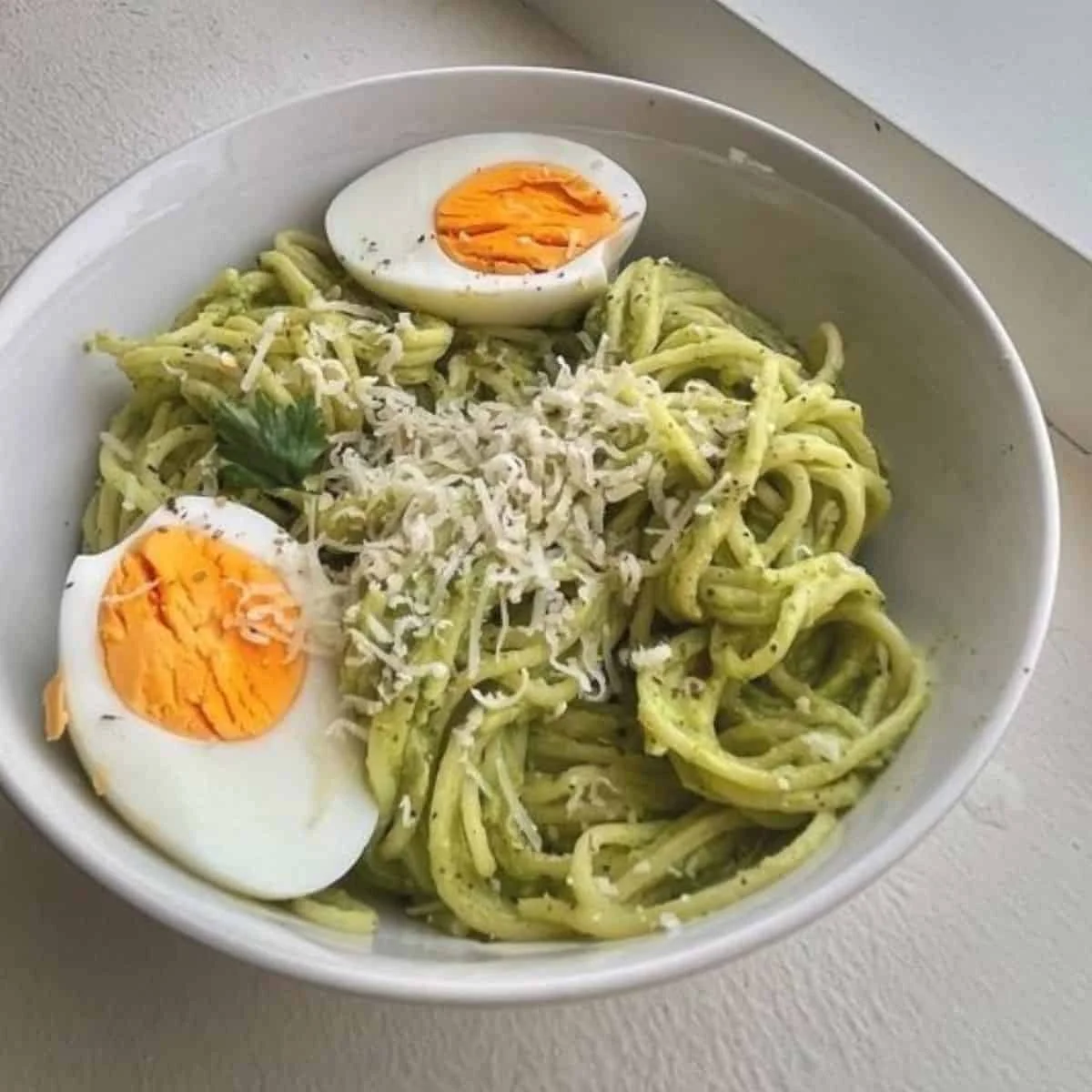
Spaghetti is tossed with a smooth, no-cook avocado sauce brightened with lemon, garlic and fresh coriander. It makes a quick, creamy meal, with boiled eggs and Parmesan to finish.
Ingredients
- 200 gspaghetti (no. 3 or 5)
- 2 litreswater
- 3 tspsalt
- 1 largeripe avocado
- 1 clovegarlic
- 1green chilli (optional)
- to tastefresh coriander leaves, freshly chopped
- ½lemon, juiced
- 2 tablespoonsfull-fat labneh (Greek or strained yoghurt)
- 2 tablespoonsextra virgin olive oil
- ½ teaspoonItalian seasoning
- to tastesalt and pepper
- 75 g (½ cup)cherry tomatoes (optional)
- 2 to 3hard-boiled eggs, to serve
- to tastefreshly grated Parmesan
Instructions
- 1
Boil the pasta
Bring a large pot of heavily salted water to the boil. Add the spaghetti and cook for 6–10 minutes, or follow the instructions on the packet for your pasta.
- 2
Blend the sauce
While the pasta cooks, put the avocado, garlic, labneh, lemon juice, olive oil, coriander, Italian seasoning, chilli if using, and salt and pepper in a blender. Blitz until completely smooth, scraping down the sides as needed.
- 3
Toss and serve
Drain the spaghetti and transfer it to a large bowl. Pour over the avocado sauce and toss gently until all the strands are coated. Fold in the cherry tomatoes if using, divide between bowls, then top with halved boiled eggs and freshly grated Parmesan. Chop and fold in the eggs instead if you prefer.
What is spaghetti with avocado sauce?
This is a pasta dish with a creamy sauce blended from avocado, labneh, lemon, garlic and herbs. Avocado pasta is a modern, no-cook approach rather than a traditional Italian sauce; this version pairs it with coriander and Italian seasoning.
The ripe avocado gives the sauce body, while lemon and labneh add a tangy counterpoint. Eggs and Parmesan make the finished bowls more substantial.
Nutrition and macros by portion
The nutrition label shows one serving as written: 620 calories, 22g protein, 75g carbs, 28g fat.
| Portion | Adjustment | kcal | Protein | Carbs | Fat |
|---|---|---|---|---|---|
| Lighter | Less oil, extra tomatoes | 434 kcal | 15g | 53g | 20g |
| This serving | As written | 620 kcal | 22g | 75g | 28g |
| Hungry | Add another egg | 930 kcal | 33g | 113g | 42g |
The spaghetti supplies most of the carbohydrates, while avocado and olive oil contribute much of the fat. Eggs, labneh and Parmesan provide protein, with the cheese also adding richness; balance the bowl with a side of salad or vegetables.
Choosing the ingredients
Ripe avocado: Choose one that yields gently when pressed so it blends smoothly. An underripe fruit can leave the sauce dense and grainy.
Labneh and lemon: Full-fat labneh or thick strained yoghurt brings tang and helps create a creamy texture. Fresh lemon juice keeps the rich avocado flavour lively.
Coriander and chilli: Fresh coriander gives the sauce its herbal edge, while green chilli is optional and can be adjusted to taste.
Blend for a smooth sauce
Blender: Add the sauce ingredients while the pasta cooks, then blend until no chunks of avocado or garlic remain. Scrape down the sides if some ingredients stick above the blades.
Seasoning: Taste the blended sauce and adjust the salt, pepper or lemon to suit your palate before tossing it with the pasta.
Cook the spaghetti
Timing: Cook the spaghetti for 6–10 minutes, using the packet instructions as the best guide for the chosen shape and brand. Check it near the end of the cooking time so it does not become too soft.
Salted water: The recipe calls for 3 tsp salt in 2 litres of water. Stir the spaghetti into the boiling water and cook until it reaches your preferred doneness.
Coat every strand
Toss gently: Drain the pasta and combine it with the sauce in a large bowl. Turn the strands through the sauce until they are evenly coated without breaking them up.
Tomatoes: Fold in the cherry tomatoes at the end if using, so they keep their shape and add a fresh contrast to the creamy sauce.
Finish and serve
Eggs: Halved boiled eggs make a simple topping; chop and fold them through the pasta if that is easier to eat. They are served alongside the pasta rather than blended into the sauce.
Parmesan: Grate it fresh over the bowls just before serving. A crisp green salad or lightly cooked vegetables make a fresh accompaniment.
Recipe notes & tips
- Use a ripe avocado for a sauce that blends without lumps.
- Chop the coriander before adding it to the blender for more even blending.
- Scrape the blender sides during blending so all the sauce ingredients are incorporated.
- Check the spaghetti against the packet timing and taste it before draining.
- Toss the pasta with the sauce gently to keep the strands intact.
- Add the Parmesan at the table if you want each person to choose how much to use.
Variations
- Skip the chilli: Leave it out for a milder sauce.
- Add tomatoes: Fold in the optional cherry tomatoes for freshness and a juicy contrast.
- Change the herbs: Use chopped basil in place of coriander for a different herbal note.
- Make it tangier: Add a little more lemon juice to the blended sauce.
- Fold in the eggs: Chop the boiled eggs and mix them through the pasta instead of serving them on top.
Common mistakes to avoid
- Using an underripe avocado: Choose one that yields gently to pressure so the sauce blends creamy.
- Overcooking the spaghetti: Follow the packet timing and check the pasta near the end of cooking.
- Leaving the sauce lumpy: Blend thoroughly and scrape down the sides as needed.
- Adding the sauce unevenly: Toss the pasta gently in a large bowl until every strand is coated.
- Forgetting to taste the sauce: Check the seasoning before mixing it with the pasta and adjust salt, pepper or lemon.
How to store
Store leftovers in an airtight container in the fridge and eat within a day, as avocado sauce can darken over time. Reheat gently until just warm, or serve cold; the sauce may thicken, so stir it well before serving.
Frequently asked questions
Can I make the avocado sauce ahead?
It is best blended shortly before serving, as avocado can discolour when exposed to air. If preparing ahead, cover it closely and refrigerate, then stir before using.
Can I use Greek yoghurt instead of labneh?
Yes. Use thick Greek yoghurt or strained yoghurt as the recipe suggests; a thinner yoghurt may make the sauce less creamy.
How do I know when the spaghetti is done?
Use the packet instructions as your guide and taste a strand near the end of the stated cooking time. Drain it when it has the texture you like.
Do I need to add the green chilli?
No, it is optional. Leave it out for a mild sauce or use it for a little heat.
Can I serve this without eggs?
Yes. The eggs are served alongside the pasta, so you can leave them out or serve them separately.
Cook it from the original
This recipe comes from butfirstchai.com. Their page has the author’s own photos, notes and tips — the best place to cook it from.
Open the recipe on butfirstchai.com