
Easy fougasse with green olives and rosemary
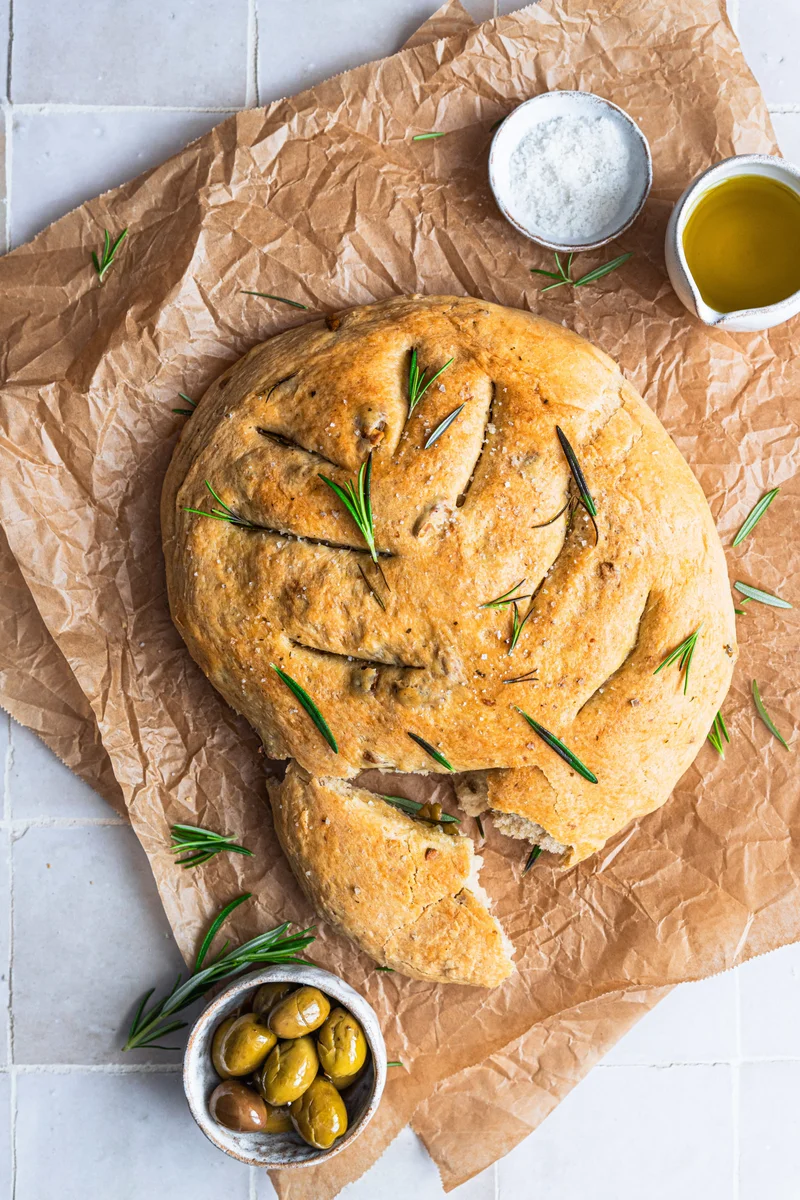
This fougasse is a soft, rustic French flatbread studded with green olives and scented with fresh rosemary. Make it when you want a hands-on bread to serve alongside a meal or salad.
Ingredients
- 300 gT65 wheat flour
- 200 gT80 wheat flour
- 1 tsphoney
- 35 mlolive oil
- 225 mlwater
- 20 gfresh baker’s yeast
- 6 gsalt
- 20pitted green olives
- A few sprigsfresh rosemary
- 1 tbspolive oil, for brushing before baking
Instructions
- 1
Combine ingredients
Put both flours, the honey, olive oil, water, yeast and salt into the bowl of a stand mixer.
- 2
Knead the dough
Knead on a low speed for 8–10 minutes, until the dough forms a smooth ball that no longer sticks to the sides of the bowl.
- 3
Add the olives
Roughly chop the olives and add them to the dough. Knead on a low speed for 5 minutes; if using olives preserved in oil, add 1–2 level tablespoons of flour.
- 4
Leave to rise
Cover the mixer bowl with a damp tea towel or cling film. Leave the dough in a warm place for about 1–1½ hours, or until it has doubled in size.
- 5
Knock back dough
Deflate the dough, then knead it by hand for 2 minutes.
- 6
Shape the fougasse
Flatten the dough and shape it into an oval.
- 7
Rise again
Cover the dough again with a tea towel or cling film and leave it to rise for a further 40 minutes.
- 8
Heat the oven
Preheat the oven to 220°C.
- 9
Cut the pattern
Use a knife to make cuts in the dough, arranging them like the veins of a leaf.
- 10
Brush and bake
Brush the fougasse with olive oil and add a few fresh rosemary leaves. Bake for about 20–25 minutes, or until golden.
- 11
Cool briefly
Leave the bread to cool for 5 minutes before serving alongside a meal or salad.
What is fougasse?
Fougasse is a flatbread associated with Provence in the south of France. Its leaf-like shape is made with decorative cuts that also help the bread bake evenly.
This version combines two types of wheat flour with green olives and rosemary. The olives bring savoury bursts through the soft crumb, while rosemary adds a fragrant finish.
Nutrition and macros by portion
The nutrition label shows one serving as written: 2340 calories, 63g protein, 372g carbs, 66g fat.
| Portion | Adjustment | kcal | Protein | Carbs | Fat |
|---|---|---|---|---|---|
| Lighter | Serve a smaller slice | 1638 kcal | 44g | 260g | 46g |
| This serving | As written | 2340 kcal | 63g | 372g | 66g |
| Hungry | Larger slice | 3510 kcal | 95g | 558g | 99g |
Most of the carbohydrates come from the 500 g of flour, while olive oil supplies much of the fat and the flour contributes most of the protein. The olives add flavour and some extra fat and salt. Since the listed serving is the whole loaf, share it across the meal and balance it with a generous salad or vegetables.
Choosing the flour
T65 flour: This is a relatively white wheat flour and gives the loaf a light base.
T80 flour: The more wholemeal character adds flavour and a slightly heartier texture. Using both keeps the bread rustic without making it too dense.
Working with the dough
Initial knead: Give the dough the full 8–10 minutes on low speed so it becomes smooth and cohesive. It should pull away from the bowl rather than cling to its sides.
Olive knead: Add the roughly chopped olives after the first knead, then mix for another 5 minutes. If the olives are oil-preserved, the extra flour specified in the method helps compensate for their added oil.
Getting the rises right
First rise: Use a comfortably warm spot and judge by the dough’s size: it should double, which may take 1–1½ hours.
Second rise: After shaping, allow the full 40 minutes for the dough to puff again. Keep it covered so its surface does not dry out.
Shaping and scoring
Oval shape: Flatten the dough into an oval before its second rise. The final cuts give fougasse its familiar leaf-like appearance.
Leaf pattern: Make several cuts with a knife to suggest the veins of a leaf. The method does not specify their number, so focus on the overall pattern rather than making the cuts too close together.
When it is ready
Oven: Bake at 220°C for about 20–25 minutes. Look for a golden surface as the main cue that the bread is ready.
Cooling: Wait 5 minutes before serving. This brief rest makes the hot bread easier to handle while keeping it warm for the table.
Serving ideas
Serve the fougasse alongside a salad or as an accompaniment to a meal, as suggested in the recipe. Its olives and rosemary also make it a flavourful choice for a bread basket.
Because it is substantial, pair it with a dish that brings fresh vegetables or a lighter contrast to the plate.
Recipe notes & tips
- Weigh the flour and water for a consistent dough.
- Use olives that are well drained before chopping.
- Keep the dough covered during both rises to prevent a dry surface.
- Check the dough’s volume during the first rise rather than relying only on the clock.
- Brush the surface with the specified olive oil just before baking.
- Let the loaf rest for 5 minutes before serving.
Variations
- Herb change: Use another fresh herb in place of some or all of the rosemary.
- Olive mix: Combine green olives with another pitted olive variety.
- Coarser texture: Use more T80 flour and less T65 while keeping the total flour amount the same.
- Olive oil finish: Add a little extra rosemary on top before baking.
- Smaller loaves: Divide and shape the dough into smaller ovals, checking them as they bake.
Common mistakes to avoid
- Rushing the first rise: Wait until the dough has doubled rather than moving on at a fixed time.
- Adding un-drained olives: Drain oil-preserved olives well and add 1–2 level tablespoons of flour as directed.
- Skipping the second rise: Leave the shaped dough covered for the full 40 minutes.
- Cutting too many slits: Keep the leaf pattern open so the dough retains its shape.
- Taking it out too early: Bake for about 20–25 minutes and look for a golden surface.
How to store
Once cool, store the fougasse in an airtight container at room temperature and eat within 2 days for the best texture. Warm slices briefly in the oven before serving.
Frequently asked questions
Can I use only one type of flour?
The recipe uses both T65 and T80 flour for a balance of lightness and a more rustic flavour. Using a single flour will change the texture, so keep the total flour amount at 500 g.
How can I tell when the dough has risen enough?
For the first rise, look for the dough to double in size. The second rise lasts 40 minutes; the dough should look puffier before it goes into the oven.
What if my olives are preserved in oil?
Roughly chop and add them as directed, then include 1–2 level tablespoons of flour during the olive knead.
Can I make the dough without a stand mixer?
The method is written for a stand mixer, but the dough can be kneaded by hand until smooth and cohesive. The recipe’s later hand-kneading step remains the same.
How do I know the fougasse is baked?
Bake at 220°C for about 20–25 minutes, until the surface is golden.
Can I freeze fougasse?
Yes. Once completely cool, wrap it well and freeze. Thaw before serving and warm briefly in the oven.
Cook it from the original
This recipe comes from clemfoodie.com. Their page has the author’s own photos, notes and tips — the best place to cook it from.
Open the recipe on clemfoodie.com