
Lemon tart with whipped cream
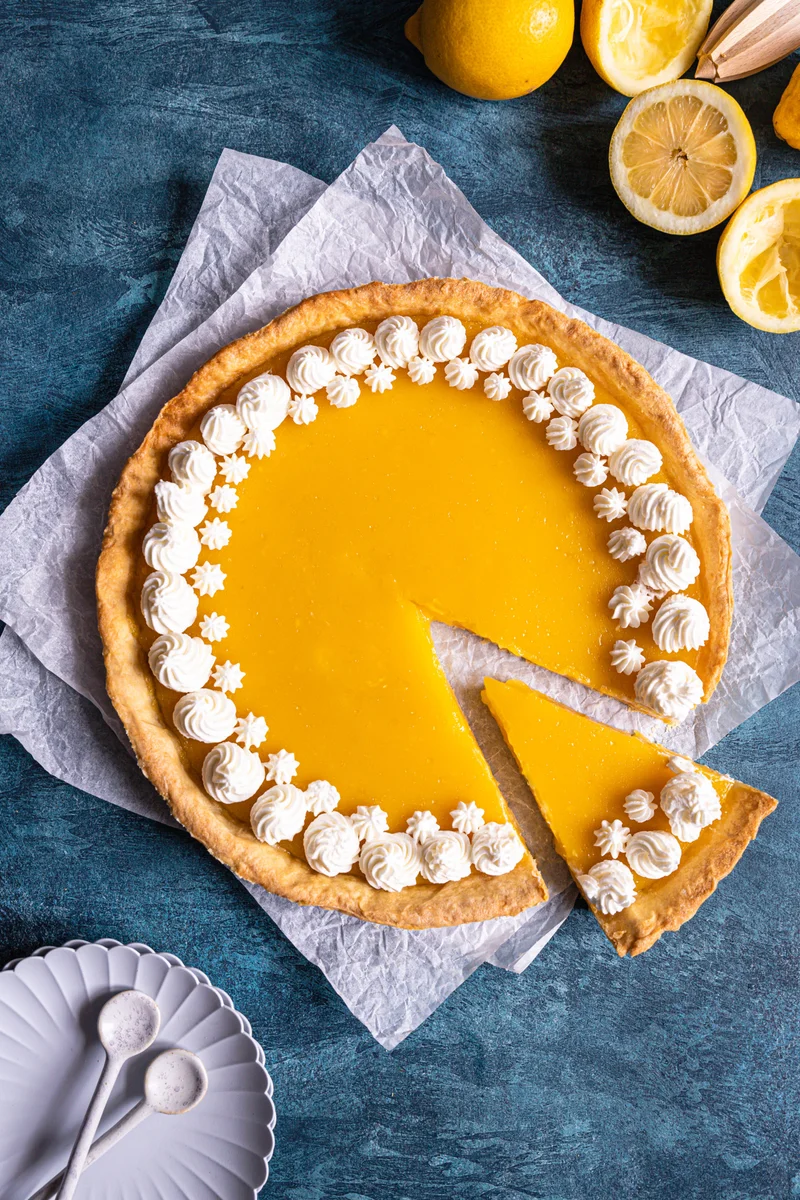
This lemon tart pairs a crisp, lightly salted pastry shell with a smooth, sharp lemon filling and a topping of softly sweetened whipped cream. It takes some chilling time, but the stages can be prepared ahead for an elegant dessert.
Ingredients
- 215 gType 65 wheat flour
- 30 gsugar
- 100 gcold salted butter
- 1egg
- 70 mlcold water
- 125 gsalted butter
- 10 ml (2 tsp)lemon zest (from 2 lemons)
- 4eggs
- 2egg yolks
- 300 gwhite sugar
- 250 mllemon juice (from 4–5 lemons)
- 150 mlcold double cream
- 5 ml (1 tsp)sugar
Instructions
- 1
Make the pastry
Put the cubed butter and all the pastry ingredients in a bowl. Knead by hand, then, once the dough begins to come together, move it to a floured work surface and knead until smooth and the butter is fully incorporated.
- 2
Chill the dough
Wrap the dough and chill it for 1 hour so it is easier to roll out.
- 3
Prepare the tin
After chilling, line a tart tin about 26 cm in diameter. Preheat the oven to 180°C.
- 4
Roll the pastry
On a floured work surface, roll the dough into a circle about 30–32 cm across and fit it into the tin.
- 5
Blind-bake the shell
Prick the pastry with the tip of a knife. Cover it with baking parchment and add baking weights, such as dried beans or baking beads. Bake for about 10 minutes, remove the weights and parchment, then bake for a further 5 minutes. The pastry should be lightly golden but not fully cooked.
- 6
Lower the heat
Reduce the oven temperature to 160°C.
- 7
Prepare the butter
Cut the 125 g of butter into a large bowl and add the lemon zest. Set aside.
- 8
Mix the filling
In a saucepan, whisk together the eggs, egg yolks, sugar and lemon juice, without any pulp.
- 9
Cook the curd
Set the pan over medium-low heat and stir continuously with a silicone spatula. The mixture will first become runny as the sugar dissolves, then thicken; allow 10–15 minutes. If it starts bubbling or forming lumps, remove it from the heat immediately.
- 10
Finish the curd
Once thick and creamy, pour the mixture straight over the butter and zest, whisking vigorously until smooth and creamy.
- 11
Bake the tart
Pour the lemon curd into the pre-baked pastry shell and bake at 160°C for about 20 minutes. The outside should be lightly golden, not brown or cracked, and the centre should still wobble like a set custard when gently shaken.
- 12
Cool the tart
Remove the tart from the oven and leave it to cool to room temperature.
- 13
Chill before serving
Once the tart has reached room temperature, refrigerate it for at least 2–3 hours.
- 14
Whip the cream
Five minutes before serving, put the cold cream and 5 ml of sugar in a stand-mixer bowl or a mixing bowl for an electric whisk. Whisk at high speed until firm peaks form; this takes about 6 minutes in a stand mixer.
- 15
Decorate and serve
Transfer the whipped cream to a piping bag and pipe it onto the tart, or serve it alongside.
What is a lemon tart?
A lemon tart is a pastry shell filled with a citrus custard, often called lemon curd. It belongs to a long tradition of European fruit tarts, with lemon lending the filling its vivid acidity.
This version uses a salted-butter pastry and a generous curd filling, then adds whipped cream just before serving. The contrast between crisp pastry, tangy filling and soft cream makes each slice feel balanced.
Nutrition and macros by portion
The nutrition label shows one serving as written: 588 calories, 8g protein, 63g carbs, 33g fat.
| Portion | Adjustment | kcal | Protein | Carbs | Fat |
|---|---|---|---|---|---|
| Lighter | Less cream topping | 412 kcal | 6g | 44g | 23g |
| This serving | As written | 588 kcal | 8g | 63g | 33g |
| Hungry | Larger slice | 882 kcal | 12g | 95g | 50g |
The pastry flour and sugars provide most of the carbohydrates, while butter and cream contribute much of the fat. Eggs and yolks add protein, though this is still a dessert rather than a substantial protein source. Serve a slice with fresh fruit, or alongside a meal with a protein-rich main, to make a more balanced plate.
The pastry and its rest
Cold butter: starting with chilled butter helps keep the pastry tender rather than greasy as you work it into the dough.
Chilling time: the hour in the fridge firms the dough and makes it easier to roll without tearing. Flour the work surface lightly so the pastry lifts cleanly into the tin.
Blind-baking the shell
Use weights: baking parchment and dried beans or baking beads hold the pastry in place during the first 10 minutes. Removing them for the final 5 minutes helps the base dry and colour slightly.
Keep it pale: the shell will bake again once filled, so it should be lightly golden rather than fully browned at this stage.
Getting a smooth lemon curd
Steady heat: cook the eggs, yolks, sugar and lemon juice over medium-low heat, stirring continuously. This gradual cooking gives the mixture time to thicken without scrambling the eggs.
Finish off the heat: pouring the hot curd over the butter and zest, then whisking briskly, combines the ingredients into a smooth filling. If bubbles or lumps appear while the curd is cooking, take the pan off the heat promptly.
How to judge the bake
The rim: after about 20 minutes at 160°C, the edge should look lightly golden but not brown or cracked.
The centre: a gentle wobble is expected when the tart comes out of the oven; it will firm up as it cools and chills. Avoid waiting for the centre to look completely set in the oven.
Chilling and serving
Cool first: let the tart reach room temperature before refrigerating it for at least 2–3 hours. This gives the filling time to set enough for neat slices.
Whip at the end: the recipe makes the cream topping five minutes before serving. Pipe it over the tart for a finished look, or offer it alongside so everyone can choose their own amount.
What to serve alongside
Serve a slice with the whipped cream and, if you like, fresh berries for a fruity contrast. Keep other accompaniments simple so the lemon remains the focus.
For a larger dessert spread, pair the tart with tea or coffee rather than another rich pudding.
Recipe notes & tips
- Keep the pastry butter cold until you begin mixing.
- Roll the dough to about 30–32 cm so it can cover the base and sides of the 26 cm tin.
- Stir the curd continuously and scrape around the base and sides of the pan.
- Strain the lemon juice to remove any pulp before adding it to the eggs.
- Let the tart cool fully before chilling so it sets evenly.
- Use cold cream and a cold bowl if possible to help the cream whip firmly.
Variations
- Citrus mix: Replace some of the lemon juice with orange juice for a softer citrus flavour.
- Extra zest: Add a little more finely grated lemon zest for a more pronounced aroma.
- Plain cream: Serve the whipped cream alongside instead of piping it over the tart.
- Berry finish: Add fresh berries when serving for a fruity contrast.
- No piping bag: Spoon the whipped cream beside each slice for an easy finish.
Common mistakes to avoid
- Warm pastry: It can become difficult to handle; chill it for the full hour before rolling.
- Skipping the weights: The pastry may puff up during blind-baking; cover it with parchment and add baking weights.
- High heat for curd: The eggs can form lumps; keep the pan over medium-low heat and stir constantly.
- Overcooking the filling: A firm centre in the oven can turn dry; take the tart out while the middle still wobbles.
- Slicing too soon: The filling may not hold its shape; chill the cooled tart for at least 2–3 hours.
- Whipping warm cream: It may not reach firm peaks; use cold cream straight from the fridge.
How to store
Store the tart covered in the fridge and eat within 2–3 days. Keep any whipped cream separately if you want the pastry to stay crisper, and add it shortly before serving. This tart is best served chilled rather than reheated.
Frequently asked questions
Can I make the tart ahead?
Yes. Bake and chill the tart ahead of time, then whip and add the cream shortly before serving.
How do I know when the lemon curd is thick enough?
It should look creamy and noticeably thicker after 10–15 minutes of continuous stirring. Remove it from the heat if it begins bubbling or forming lumps.
Should the centre still wobble when the tart comes out?
Yes. The centre should have a gentle, custard-like wobble; it will continue to set as the tart cools and chills.
Can I use unsalted butter?
Yes, though the pastry and filling will have less salt. The recipe specifies salted butter for both the pastry and the curd.
Can I use bottled lemon juice?
Freshly squeezed juice is best here because the recipe also uses the zest of fresh lemons. If using bottled juice, still use fresh lemons for the zest.
Can I serve the cream on the side?
Yes. Pipe it onto the tart or serve it alongside; both options are included in the method.
Cook it from the original
This recipe comes from clemfoodie.com. Their page has the author’s own photos, notes and tips — the best place to cook it from.
Open the recipe on clemfoodie.com