
Cauliflower Paratha (Gobi Paratha) — Easy, No-Cook Filling Method
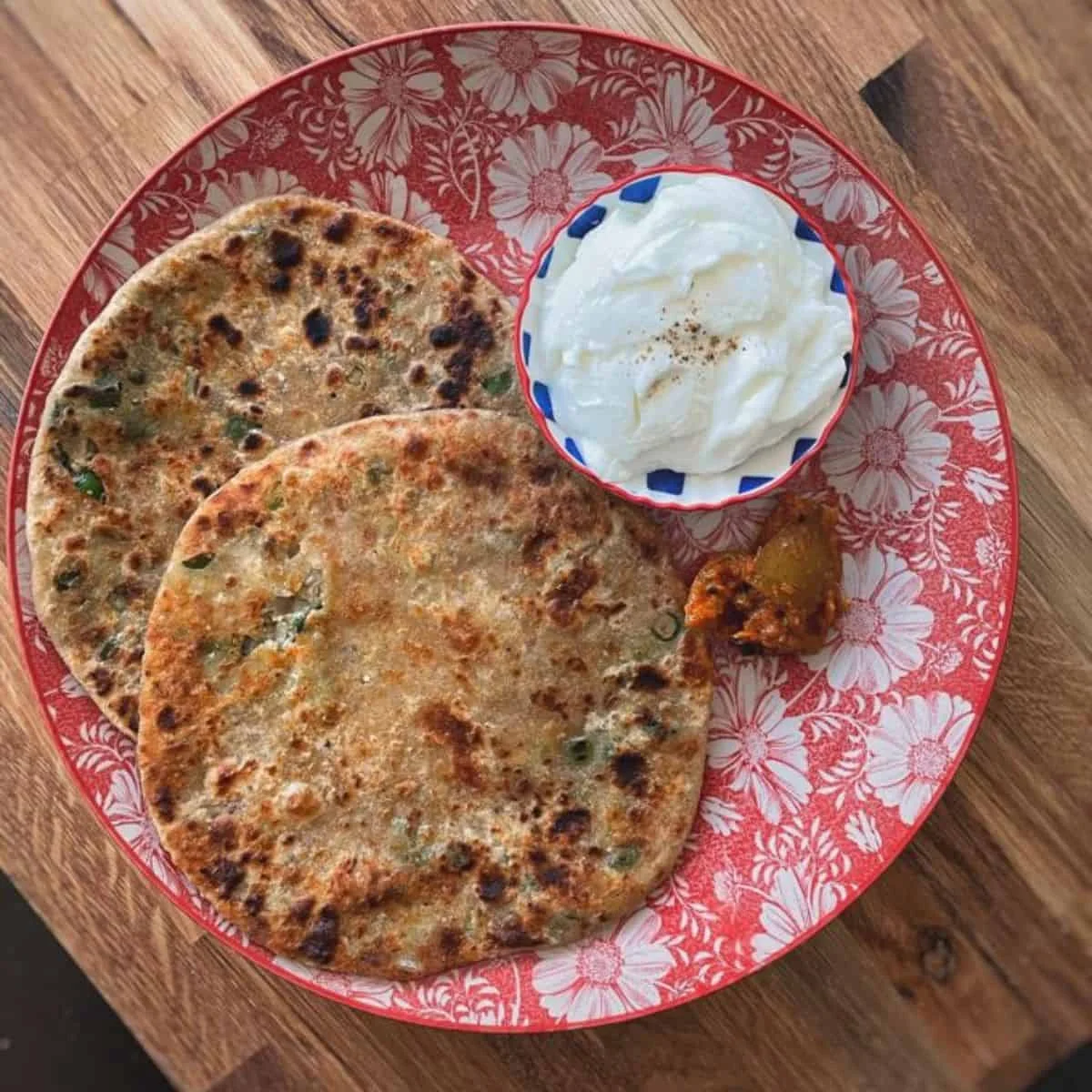
Gobi paratha is an Indian flatbread filled with grated cauliflower, warming spices and fresh herbs. This no-cook filling method keeps the centre flavourful, while gentle rolling and a hot pan help the parathas turn tender and golden.
Ingredients
- 240 g (2 cups)wholemeal flour
- 2 teaspoonscarom seeds (ajwain)
- to tastesalt
- 180 ml (¾ cup), or as requiredwater
- as neededflour, for dusting and working
- 4–6cauliflower florets
- 2–3green chillies, slit and finely chopped
- 2 teaspoonsgrated ginger
- 1 smallonion, finely chopped (optional)
- 1 teaspoonred chilli powder
- ½ teaspoongaram masala
- to tastefresh coriander leaves, finely chopped (or dill or mint)
- to tastesalt, added only when stuffing
- as requiredghee or butter
Instructions
- 1
Mix the dough
Put the wholemeal flour, salt and carom seeds in a large bowl. Add most of the water and knead just until the dough comes together.
- 2
Rest the dough
Cover the bowl and leave the dough to rest for 15–20 minutes.
- 3
Divide the dough
Knead the rested dough until smooth, for a couple of minutes, then divide it into 7–8 balls. Keep the dough covered.
- 4
Prepare the cauliflower
While the dough rests, check the florets and use fresh, clean pieces. Trim away any blemishes and thick stalks, rinse the florets in a colander under running water, then pat them dry with a kitchen towel.
- 5
Grate the florets
Grate the cauliflower using the larger holes of a grater, and discard any thick stalks.
- 6
Season the filling
Mix in the chopped green chillies, ginger and chopped coriander, mint or dill. Add garam masala and red chilli powder to taste; leave out the salt until you are ready to stuff the parathas.
- 7
Roll one dough ball
Dust the work surface with flour. Roll one dough ball into a disc 3–4 inches across, or a little smaller than your palm. Add 2–3 tablespoons of filling and sprinkle salt over it.
- 8
Seal the filling
Bring the dough edges together around the filling, gathering it into a bundle. Twist to seal, then gently push any excess dough back towards the centre.
- 9
Roll the paratha
Dip the stuffed dough in flour and press it lightly to check for trapped air. Use a fork to release any air, then roll gently to chapati size. Some filling may show through; it will roast in the ghee.
- 10
Make two discs
For the alternative method, divide one dough ball into two smaller balls. Roll each into a palm-sized disc. Put some filling in the centre of one, leaving about ½ inch around the edge, then sprinkle with salt and mix it into the filling.
- 11
Seal two discs
Place the second disc over the filling and seal the edges. Use a fork to release any trapped air, then dust with flour and roll gently to chapati size.
- 12
Heat the pan
Heat a thick-bottomed flat pan as you begin stuffing the parathas, so it is ready when they are rolled.
- 13
Roast the parathas
Cook each paratha on the hot tawa over medium heat, turning it and spreading ghee on both sides. Press the edges with a turner as it cooks.
- 14
Serve warm
Roast until brown spots appear on both sides. Cook the remaining parathas in the same way and stack them in a basket or on a plate, not in a casserole. Serve straight from the tawa if possible, with pickle, yoghurt, boiled eggs or dal tadka.
What is gobi paratha?
Gobi paratha is a stuffed Indian flatbread, with gobi referring to cauliflower. It is associated with North Indian home cooking and is often served for breakfast or as a meal with yoghurt, pickle or dal.
Here, grated cauliflower is mixed with spices and herbs without cooking it first. Keeping salt out until stuffing helps limit moisture in the filling, while the wholemeal dough gives the paratha a hearty, nutty base.
Nutrition and macros by portion
The nutrition label shows one serving as written: 166 calories, 4g protein, 31g carbs, 4g fat.
| Portion | Adjustment | kcal | Protein | Carbs | Fat |
|---|---|---|---|---|---|
| Lighter | Use less ghee | 116 kcal | 3g | 22g | 3g |
| This serving | As written | 166 kcal | 4g | 31g | 4g |
| Hungry | Add another paratha | 249 kcal | 7g | 46g | 6g |
The wholemeal flour supplies most of the carbohydrate, while ghee or butter contributes much of the fat; the cauliflower and flour provide some protein. Serve a paratha with yoghurt and a portion of dal or vegetables to round out the plate.
The dough and its rest
Carom seeds: these small, aromatic seeds lend the dough a savoury, gently spiced flavour. Knead the flour, salt and seeds with most of the water first, adding more only as needed to bring the dough together.
Resting time: cover the dough for 15–20 minutes before kneading it smooth. Keep the dough balls covered as you work so they do not dry out and become difficult to roll.
Keep the filling dry
Dry cauliflower: rinse the florets, then pat them thoroughly dry before grating. Wet cauliflower can make the filling harder to contain and the dough more likely to tear.
Salt timing: mix the spices and herbs into the grated cauliflower, but wait to add salt until each paratha is being filled. Salt draws moisture from the vegetables, so this timing helps the filling stay manageable.
Two ways to stuff
One ball: roll a dough ball into a small disc, add 2–3 tablespoons of filling, then gather and twist the edges closed. This method makes a single, enclosed pocket of filling.
Two discs: sandwich the filling between two small rolled discs and seal around the edges. It can be easier to handle, especially if you are new to stuffing flatbreads; either way, use a fork to release trapped air before rolling.
Roll gently and evenly
Light pressure: dust the stuffed dough with flour and roll gently towards chapati size. Pressing hard can push the filling through the dough, while trapped air can cause bubbles or splits.
A little filling showing is fine. The method expects a few bits to peek through, which can toast as the paratha cooks; patch large tears with a small piece of dough if needed.
Cook until spotted
Medium heat: a hot, thick-bottomed pan gives the bread time to cook through while brown spots form on the outside. Turn the paratha and spread ghee on both sides, pressing the edges with a turner.
Cook each one until both sides have browned spots. Keep finished parathas on a plate or in a basket rather than a casserole, which can trap steam and soften their surface.
What to serve alongside
Yoghurt and pickle make simple accompaniments, bringing a cool, tangy contrast to the warm, spiced filling. For a more substantial meal, serve the parathas with boiled eggs or dal tadka.
For the best contrast between a tender centre and a lightly crisp surface, bring them to the table soon after cooking.
Recipe notes & tips
- Pat the cauliflower dry before grating so the filling is easier to handle.
- Keep the dough covered while you prepare and fill the parathas.
- Hold back the filling salt until each paratha is ready to be stuffed.
- Use only gentle pressure when rolling the filled dough.
- Have the pan heating while you roll so each paratha can go straight on to cook.
- Stack cooked parathas on a plate or in a basket rather than a lidded casserole.
Variations
- Add onion: finely chopped onion is optional and brings extra savoury sweetness.
- Choose the herbs: use coriander, mint or dill in the filling.
- Adjust the heat: vary the green chillies and red chilli powder to suit your taste.
- Change the fat: use butter instead of ghee for roasting.
- Serve with dal: pair the parathas with dal tadka for a more substantial meal.
Common mistakes to avoid
- Wet cauliflower: pat the florets dry before grating to keep excess moisture out of the filling.
- Salting too soon: add salt only as you begin stuffing so the cauliflower has less time to release water.
- Drying dough: keep the dough balls covered between rolling and stuffing.
- Rolling too firmly: use light, even pressure so the filling does not burst through the dough.
- Skipping trapped air: prick air pockets with a fork before rolling to help prevent the paratha splitting.
- Steaming the stack: avoid a casserole, which traps moisture and softens the cooked parathas.
How to store
For best texture, serve the parathas fresh from the pan. Refrigerate leftovers in an airtight container for up to 3 days, then reheat in a dry frying pan over medium heat until hot, turning once.
Frequently asked questions
Can I prepare the filling ahead?
You can grate the cauliflower and mix in the spices and herbs ahead, but leave out the salt until you are ready to stuff. Store the prepared filling covered in the fridge and use it promptly.
Why is salt added just before stuffing?
Salt draws moisture out of the grated cauliflower. Adding it at the last moment helps keep the filling easier to enclose and roll.
Which stuffing method should I use?
The single-ball method wraps the filling in one piece of dough. The two-disc method sandwiches it between two smaller rounds and may feel simpler if you are new to stuffing parathas.
How do I know when a paratha is cooked?
Look for brown spots on both sides. Turn it during cooking and press the edges with a turner as directed.
Can I use dried herbs instead of fresh?
The recipe calls for fresh coriander, mint or dill, so dried herbs will give a different result. If substituting, add a small amount and adjust to taste.
What can I serve with gobi paratha?
Serve it with pickle or yoghurt, or make it part of a larger meal with boiled eggs or dal tadka.
Cook it from the original
This recipe comes from butfirstchai.com. Their page has the author’s own photos, notes and tips — the best place to cook it from.
Open the recipe on butfirstchai.com