
Pork loin yakisoba in 15 minutes or less
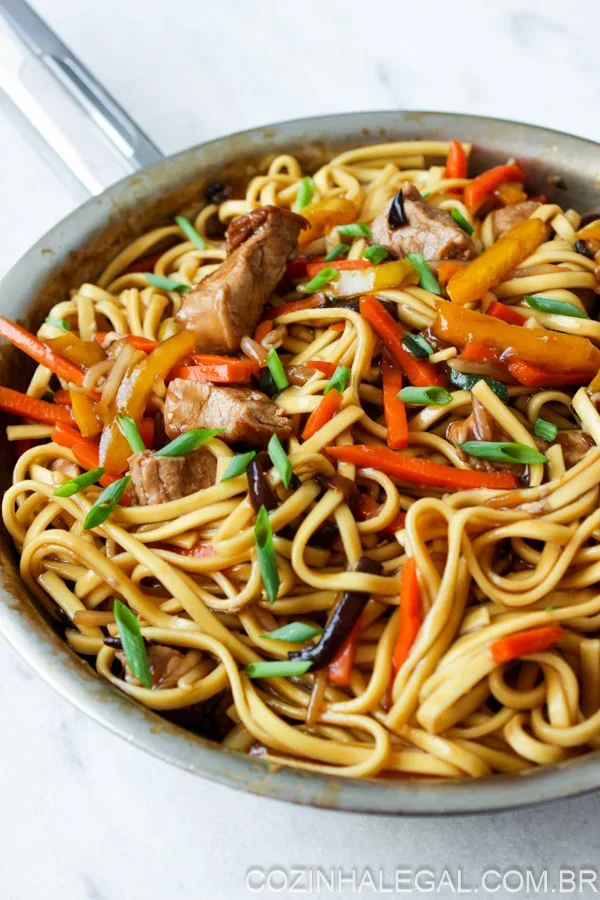
This quick yakisoba combines noodles, strips of pork loin and frozen vegetables in a lightly thickened soy sauce. It is a practical weeknight dinner, with the vegetables and sauce cooked while the noodles boil.
Ingredients
- 250 gyakisoba noodles
- 30 gpork loin, cut into strips
- 2 tablespoonscornflour
- 2 tablespoonsrapeseed oil
- 1 tablespoonsoy sauce
- 250 gfrozen yakisoba vegetable mix
- 160 ml (⅔ cup)water
- 80 ml (⅓ cup)soy sauce
- to tastespring onion
Instructions
- 1
Cook the noodles
Bring a large pan of water to the boil over a high heat. Add the noodles and cook for 8 minutes, then turn off the heat, drain them and set aside.
- 2
Coat the pork
In a medium bowl, mix 1 tablespoon of cornflour with 1 tablespoon of soy sauce and 1 tablespoon of rapeseed oil. Add the pork strips and mix until coated.
- 3
Fry the pork
Heat 1 tablespoon of rapeseed oil in a medium frying pan over a high heat. Once hot, add the pork and fry until cooked through; cover the pan if you wish.
- 4
Add the vegetables
Once the pork is cooked and browned, add the frozen vegetables. Cover the pan and cook until the vegetables have thawed completely.
- 5
Mix the sauce
Combine 160 ml of water with 80 ml of soy sauce. Add 1 tablespoon of cornflour and stir with a spoon until mixed.
- 6
Thicken the sauce
Pour the cornflour and soy sauce mixture into the frying pan. Cook uncovered until the sauce thickens slightly, about 5 minutes after it comes to the boil.
- 7
Finish and serve
Turn off the heat, scatter over chopped spring onion and serve straight away.
What is yakisoba?
Yakisoba is a Japanese dish of noodles cooked with vegetables and often meat, seasoned with a savoury sauce. Its name refers to fried noodles, though recipes and home versions vary.
This version boils the noodles separately, then brings them together with pork, frozen vegetables and a soy-based sauce. That makes it a straightforward way to get dinner on the table quickly.
Nutrition and macros by portion
The nutrition label shows one serving as written: 70 calories, 0g protein, 0g carbs, 0g fat.
| Portion | Adjustment | kcal | Protein | Carbs | Fat |
|---|---|---|---|---|---|
| Lighter | Use less oil | 49 kcal | 0g | 0g | 0g |
| This serving | As written | 70 kcal | 0g | 0g | 0g |
| Hungry | Add more noodles | 105 kcal | 0g | 0g | 0g |
The noodles provide most of the carbohydrates, while the rapeseed oil and the oil in the sauce contribute fat. Pork supplies some protein, though the listed amount is modest for four portions. For a more balanced plate, serve with extra vegetables alongside.
The ingredients that make it work
Noodles: use yakisoba noodles if available, and cook them for the stated 8 minutes before draining. Keeping them separate at first makes it easier to cook the pork and vegetables without overcooking the noodles.
Vegetables: the frozen mix can go straight into the pan. The recipe relies on covering it so it can thaw before the sauce is added.
Coating and cooking the pork
Marinade: the pork is tossed with a spoonful each of cornflour, soy sauce and oil. This coats the strips before they meet the hot pan.
Browning: spread the pork out in the hot pan and cook until it is cooked through and browned, as the method specifies. A lid is optional during this step.
Getting the sauce right
Cornflour: stir it into the water and soy sauce before pouring the mixture into the pan. Mixing it first helps avoid adding dry lumps directly to the hot pan.
Thickness: simmer the sauce uncovered after it boils, for about 5 minutes, until it thickens slightly. Keep an eye on it as it cooks so you can stop when it reaches the consistency described.
Timing the components
Noodles: they take 8 minutes to cook, so start the water first and prepare the pork mixture while it heats if you want to keep the meal moving.
Pork and vegetables: cook the pork before adding the frozen vegetables, then let the vegetables thaw under the lid. Add the sauce only after that stage, as directed.
Serving the yakisoba
Spring onion: scatter it over the finished dish just before serving for a fresh onion note. The recipe calls for it to be chopped and added after the heat is off.
Alongside: serve the noodles as the main part of the meal. A simple side of extra vegetables can complement the dish without changing the cooking method.
Recipe notes & tips
- Have the sauce ingredients measured before the pork and vegetables finish cooking.
- Cut the pork into strips of similar size so they cook at a similar pace.
- Stir the cornflour mixture just before pouring it into the pan.
- Use a lid while the frozen vegetables thaw, as the method directs.
- Serve the dish as soon as it is finished so the noodles stay hot.
Variations
- Extra vegetables: add another portion of frozen vegetables for a vegetable-forward bowl.
- Different pork cut: use another tender cut of pork, sliced into strips.
- More spring onion: scatter on extra chopped spring onion just before serving.
- Noodle swap: use another suitable stir-fry noodle, following its packet cooking time.
- Soy adjustment: reduce the soy sauce slightly for a less salty-tasting sauce.
Common mistakes to avoid
- Adding dry cornflour: mix it with the water and soy sauce first to help prevent lumps.
- Skipping the pork browning: cook it until browned and cooked through before adding the vegetables.
- Leaving the vegetables uncovered: cover the pan so the frozen mix can thaw as instructed.
- Cooking the sauce covered: leave the pan uncovered while the sauce thickens.
- Overcooking the noodles: drain them after 8 minutes, as the recipe specifies.
How to store
Refrigerate leftovers in a covered container and eat within 2 days. Reheat in a pan until piping hot, adding a small splash of water if the noodles seem dry.
Frequently asked questions
Can I use fresh vegetables instead of frozen?
Yes, but the recipe's thawing step is written for frozen vegetables. Cook fresh vegetables until tender before adding the sauce.
Can I prepare the pork ahead?
You can mix the pork with the cornflour, soy sauce and oil shortly before cooking. Keep it covered and refrigerated until you are ready to fry it.
How do I know the sauce is thick enough?
It should thicken slightly after boiling and cooking uncovered for about 5 minutes. Stop when it reaches that lightly thickened consistency.
Can I cook the noodles ahead of time?
They are best cooked just before combining the dish, but you can cook and drain them ahead. Keep them covered so they do not dry out.
Is the spring onion essential?
No. It is added at the end as a garnish, so you can leave it out or use more if you like.
Cook it from the original
This recipe comes from cozinhalegal.com.br. Their page has the author’s own photos, notes and tips — the best place to cook it from.
Open the recipe on cozinhalegal.com.br