
Rendang Sapi: Beef Rendang (Beef Braised in Spiced Coconut Milk)
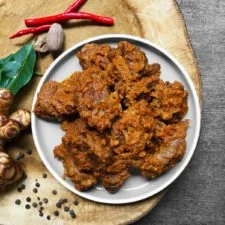
Beef rendang is Indonesian beef slowly cooked in coconut milk and a fragrant chilli and spice paste. As the liquid reduces, it coats the tender meat in a rich, dark, deeply flavoured sauce.
Ingredients
- 1 kgtop round beef, cut into 4 cm pieces
- 250 glarge red chillies, chopped
- 10shallots, peeled and chopped
- 5 clovesgarlic, peeled and chopped
- 4 cmfresh galangal, peeled and chopped
- 4 cmfresh ginger, peeled and chopped
- to tastesalt
- 1 tsptamarind
- 2lemongrass stalks, bruised and knotted
- 4kaffir lime leaves
- 2fresh turmeric leaves (optional)
- 1.5 litres, or 1 litre water and 400 ml canned coconut milkfresh thick coconut milk
Instructions
- 1
Blend the paste
Use a blender or food processor to combine the chillies, shallots, garlic, galangal and ginger into a smooth paste.
- 2
Add the beef
Put the beef pieces in a large non-stick pan. Add the spice paste, tamarind, salt, lemongrass, kaffir lime leaves and turmeric leaves, if using.
- 3
Pour in coconut milk
Add the coconut milk to the pan.
- 4
Stir over heat
Mix everything together and stir constantly over a medium heat.
- 5
Lower the heat
Once the liquid boils, turn the heat to low and continue cooking.
- 6
Reduce until tender
Keep stirring and cooking until the beef is tender and the liquid has evaporated, leaving a moist, thick paste around the meat.
What is beef rendang?
Rendang is an Indonesian dish of meat cooked slowly with coconut milk and a mixture of aromatic spices. The long cooking allows the liquid to reduce and the flavours to become concentrated.
This version builds its flavour from red chillies, shallots, garlic, galangal and ginger, with lemongrass and lime leaves adding fragrance. The beef and coconut milk cook together in one pan, so the finished paste clings closely to the meat.
Nutrition and macros by portion
The nutrition label shows one serving as written: 1080 calories, 45g protein, 20g carbs, 88g fat.
| Portion | Adjustment | kcal | Protein | Carbs | Fat |
|---|---|---|---|---|---|
| Lighter | Use less coconut milk | 756 kcal | 31g | 14g | 62g |
| This serving | As written | 1080 kcal | 45g | 20g | 88g |
| Hungry | Serve with extra rice | 1620 kcal | 68g | 30g | 132g |
The beef provides most of the protein, while coconut milk is the main source of fat and contributes substantially to the energy in each serving. The shallots and chillies supply most of the carbohydrates. Pair a portion with rice and vegetables, adjusting the rice to suit how filling you want the meal to be.
The spice paste
Blend the chillies, shallots, garlic, galangal and ginger until smooth so they distribute evenly through the coconut milk. A smooth paste also makes it easier to stir the mixture as it thickens.
Fresh galangal: it has a distinct, peppery aroma and is not quite the same as ginger, so use both as listed if you can. If you cannot find fresh turmeric leaves, the recipe marks them as optional.
Why the beef cut matters
Top round is a lean cut, so the gentle, extended cooking helps it become tender. Cut the beef into even 4 cm pieces to encourage them to cook at a similar rate.
Lemongrass: bruising the stalks helps release their aroma, while knotting them keeps them easy to pick out. Kaffir lime leaves contribute a citrusy note as the sauce reduces.
Managing the reduction
Bring the pan to a boil over medium heat, then lower the heat and let the beef cook in the coconut milk. The recipe gives a total cooking time of 180 minutes, but the key cues are tender meat and evaporated liquid.
Stirring: the method calls for constant stirring at first, then continued stirring as the mixture cooks. Pay particular attention as it thickens, when the paste can catch on the bottom of the pan.
How to judge the finish
The rendang is ready when the beef is tender and the liquid has reduced to a moist paste. The description for this recipe aims for spices that caramelise and meat that becomes a rich, dark brown.
If the meat is not yet tender, keep cooking gently and stirring; if the liquid remains, allow it to reduce further. Avoid turning up the heat sharply to hurry the process, as the thickening paste needs attention.
Serving the rendang
Serve the beef with plain rice to soak up the concentrated coconut and spice paste. A simple vegetable side, such as steamed greens, gives the plate a fresh contrast.
The recipe makes five servings, so divide the beef and sauce evenly. Remove the lemongrass and any whole leaves before serving if you prefer not to have them on the plate.
Recipe notes & tips
- Cut the beef into evenly sized 4 cm pieces for more consistent cooking.
- Blend the aromatics thoroughly so the paste cooks evenly with the beef.
- Bruise the lemongrass before tying it into a knot to help release its aroma.
- Keep the heat low after the mixture boils and stir regularly as it reduces.
- Remove the lemongrass stalks and whole leaves before serving.
- Taste for salt as the sauce reduces, since its flavour becomes more concentrated.
Variations
- Adjust the heat: Use fewer red chillies for a milder rendang.
- Use the substitute: Replace the fresh coconut milk with 1 litre of water and 400 ml canned coconut milk.
- Skip the turmeric leaves: They are optional, so leave them out if unavailable.
- Add a citrus note: Serve with a squeeze of lime alongside the finished dish.
- Choose another cut: Use another braising-friendly beef cut, cut into 4 cm pieces, and cook until tender.
Common mistakes to avoid
- Large uneven pieces: They may cook at different rates; cut the beef into even 4 cm chunks.
- Rushing the reduction: The meat may not become tender; cook gently until both the beef and liquid reach the stated cues.
- Leaving the pan unattended: The thick paste can catch; keep stirring as the liquid reduces.
- High heat after boiling: The sauce can reduce too quickly; lower the heat once it boils.
- Skipping the paste: Chopped aromatics alone will not distribute as evenly; blend them until smooth.
How to store
Cool leftovers promptly and refrigerate them in a covered container for up to 3 days. Reheat gently in a pan until piping hot, adding a small splash of water if the paste has become too thick.
Frequently asked questions
How long does beef rendang take to cook?
The total time given for this recipe is 180 minutes. Follow the texture and reduction cues as well as the timing: the beef should be tender and the liquid evaporated.
Can I use canned coconut milk?
Yes. The recipe's alternative is 1 litre of water with 400 ml of canned coconut milk in place of 1.5 litres of fresh thick coconut milk.
How do I know when the rendang is ready?
The beef should be tender, with the liquid reduced to a moist paste around it. The finished meat is described as rich and dark brown.
Can I make it less spicy?
Use fewer red chillies to reduce the heat. Keep the other ingredients and method the same.
What should I serve with beef rendang?
Plain rice is a practical accompaniment for the concentrated sauce. Steamed vegetables or greens make a fresh side.
Can I leave out the turmeric leaves?
Yes. They are optional in this recipe, so you can omit them if you cannot find them.
Cook it from the original
This recipe comes from cookmeindonesian.com. Their page has the author’s own photos, notes and tips — the best place to cook it from.
Open the recipe on cookmeindonesian.com