
Basque Burnt Cheesecake
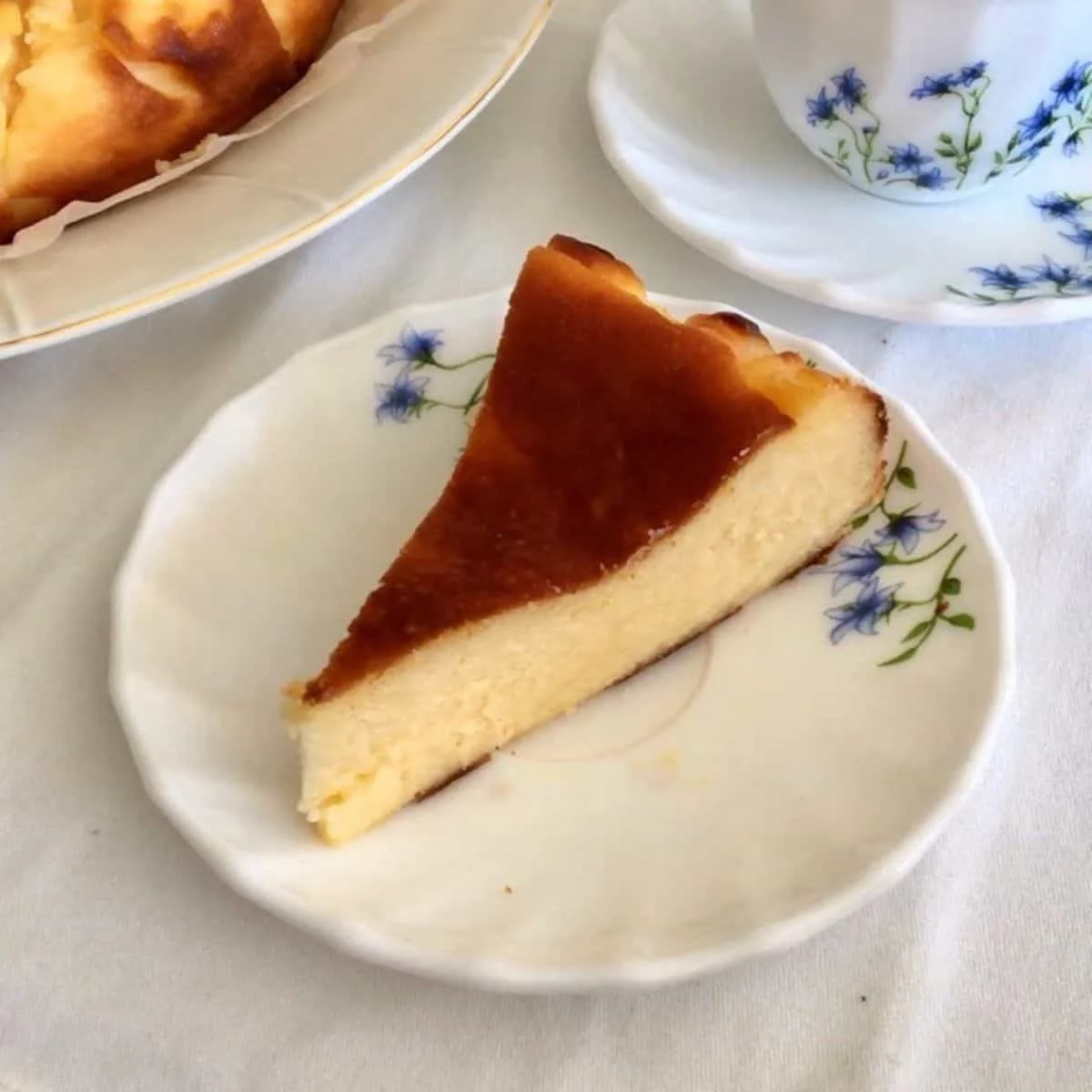
Basque burnt cheesecake has a deeply caramelised top and a soft, custardy centre. This simple, rich version is baked hot and served at room temperature for its fullest flavour and creamiest texture.
Ingredients
- 450 gcream cheese, in blocks, softened to room temperature
- 135 g (2/3 cup)white sugar
- 3 largeeggs, at room temperature
- 240 ml (1 cup)whipping cream, chilled
- 1 teaspoonvanilla extract
- a pinchsalt
- 24 g (3 tablespoons)plain flour
- to tastesoftened butter, for greasing
Instructions
- 1
Line the tin
Grease the base and sides of a 7-inch or 8-inch springform tin with softened butter. Butter a large piece of baking paper all over and press it into the tin, buttered side up, leaving at least 5 cm of paper above the rim all round. Press a second, unbuttered piece of baking paper over it so the inside is covered. Set the tin on a baking tray.
- 2
Mix the batter
Heat the oven to 200°C. Using a hand-held or stand mixer, beat the softened cream cheese in a large bowl at medium speed for about 1 minute, until smooth. Add the sugar, stopping to scrape down the sides, and beat for about 2 minutes until very smooth and the sugar has dissolved.
- 3
Add eggs
Beat in the eggs one at a time, mixing each for less than 15 seconds or just until incorporated. Scrape down the sides of the bowl as needed.
- 4
Finish the batter
Add the whipping cream, salt and vanilla and beat for about 30 seconds, until combined. Sift the flour over the batter and fold it in with a rubber spatula until smooth and silky; a few tiny flour lumps are all right. Pour the batter into the prepared tin.
- 5
Bake the cheesecake
Carefully slide the tray onto the lower-middle oven rack and bake for 35–45 minutes, until the top is a burnt golden colour. The cheesecake will rise considerably; start checking it at 35 minutes, as ovens vary. Carefully remove it from the oven: the centre should wobble like jelly.
- 6
Cool and serve
Leave the cheesecake to cool completely to room temperature; it will sink as it cools. Remove the springform ring, then lift the cake by the excess baking paper and transfer it to a serving plate. Peel the paper away from the sides and trim the excess with scissors if you like. Cut into wedges and serve at room temperature, or cover and refrigerate overnight; serve chilled or bring it back to room temperature.
- 7
Store leftovers
Keep leftovers covered in the fridge for no more than 3 days. To freeze, wrap individual wedges in cling film and place them in an airtight freezer container for up to 2 weeks.
What is Basque burnt cheesecake?
This crustless cheesecake takes its name from the Basque Country, and is closely associated with San Sebastián. Its defining contrast is a dark, caramelised surface with a soft, creamy middle.
This version relies on cream cheese, cream and a hot oven rather than a biscuit base or a water bath. Baking paper rises above the tin to contain the batter as it puffs up.
Nutrition and macros by portion
The nutrition label shows one serving as written: 518 calories, 9g protein, 31g carbs, 41g fat.
| Portion | Adjustment | kcal | Protein | Carbs | Fat |
|---|---|---|---|---|---|
| Lighter | Smaller cheesecake slice | 363 kcal | 6g | 22g | 28g |
| This serving | As written | 518 kcal | 9g | 31g | 41g |
| Hungry | Larger cheesecake slice | 777 kcal | 14g | 46g | 61g |
The sugar and flour provide most of the carbohydrates, while cream cheese and whipping cream contribute much of the fat. The eggs and cream cheese supply protein. Balance a slice with fresh fruit, or serve it after a lighter meal.
Choose the right ingredients
Cream cheese: Use block-style cream cheese and soften it to room temperature before mixing. This makes it easier to beat smooth and helps prevent lumps.
Eggs and cream: Room-temperature eggs blend more readily into the cheese, while the recipe calls for chilled whipping cream. Measure the flour carefully so it supports the batter without making the centre cakey.
Line the tin generously
Paper height: The baking paper should extend at least 5 cm above the rim because the cheesecake rises in the oven. Overlap a second sheet so the tin is covered all the way round.
Butter: Grease the tin and the first sheet of paper so the lining stays in place. Set the prepared tin on a baking tray, which makes it easier to move in and out of the oven.
Mix gently after the eggs
Smooth base: Beat the cream cheese first, then take time to beat in the sugar and scrape down the bowl. A smooth starting mixture helps the finished cheesecake bake evenly.
Eggs and flour: Add each egg briefly, stopping as soon as it is incorporated. Fold in the sifted flour with a spatula rather than continuing to beat the batter.
Watch the colour and wobble
Top: Bake at 200°C and begin checking at 35 minutes. The top should be a deep burnt-golden colour; oven performance can affect how quickly it gets there.
Centre: The cheesecake should still wobble like jelly when it comes out. It will sink as it cools, which is expected and helps give it its characteristic custardy texture.
Cool before serving
Cooling: Let the cheesecake reach room temperature before removing it from the tin. The centre continues to settle during this time, so avoid trying to unmould it while it is warm.
Serving: Serve at room temperature for a soft, creamy texture, or chill it overnight for a firmer slice. If chilled, you can bring it back to room temperature before serving.
What to serve alongside
Fruit: Fresh berries or sliced stone fruit add a bright, tart contrast to the rich cheesecake. Keep the accompaniment simple so the caramelised top remains the focus.
Drinks: Coffee or unsweetened tea makes a straightforward partner. Cut modest wedges if serving it after a full meal.
Recipe notes & tips
- Bring the cream cheese and eggs to room temperature before you start mixing.
- Scrape the bowl after adding the sugar and eggs so no unmixed mixture clings to the sides.
- Fold in the flour gently with a spatula to avoid overworking the batter.
- Start checking the top at 35 minutes, since ovens can brown the cheesecake at different rates.
- Let the cheesecake cool completely before lifting it from the tin.
- For neater wedges, wipe the knife between cuts.
Variations
- Citrus note: Add finely grated lemon zest to the batter for a fresh aromatic touch.
- Coffee flavour: Stir a little cooled, strong coffee into the cream before mixing it into the batter.
- Berry topping: Serve each slice with fresh berries for a tart contrast.
- Chocolate finish: Dust the cooled cheesecake lightly with cocoa powder just before serving.
- Chilled slices: Refrigerate the cheesecake overnight for a firmer, denser texture.
Common mistakes to avoid
- Cold cream cheese: It can leave lumps in the batter; soften it to room temperature before beating.
- Overbeating the eggs: The method calls for less than 15 seconds per egg; stop once each is incorporated.
- Low baking paper: The cheesecake rises considerably; leave at least 5 cm of paper above the tin.
- Baking by time alone: Begin checking at 35 minutes and use the burnt-golden top as your colour cue.
- Expecting a firm centre from the oven: A jelly-like wobble is intended; the cheesecake settles as it cools.
- Unmoulding while warm: Wait until it has cooled completely to room temperature before removing the ring.
How to store
Cover and refrigerate leftovers for up to 3 days. Freeze individual wedges wrapped in cling film in an airtight freezer container for up to 2 weeks; thaw before serving.
Frequently asked questions
Can I use a 7-inch or an 8-inch tin?
Either size is suitable for this recipe. Line the tin generously with baking paper, leaving at least 5 cm above the rim.
How do I know when the cheesecake is baked?
The top should be burnt golden, and the centre should still wobble like jelly when you take it out. Start checking at 35 minutes, as ovens vary.
Is it meant to sink as it cools?
Yes. The cheesecake rises in the oven and sinks as it cools; this is expected.
Should I serve it warm or cold?
Let it cool completely first. It can be served at room temperature, or chilled overnight and eaten cold or brought back to room temperature.
Can I make it ahead?
Yes. Once completely cool, cover it and refrigerate overnight. Serve it chilled or allow it to return to room temperature.
How long does it keep?
Keep it covered in the fridge for no more than 3 days. Wrapped wedges can be frozen in an airtight container for up to 2 weeks.
Cook it from the original
This recipe comes from butfirstchai.com. Their page has the author’s own photos, notes and tips — the best place to cook it from.
Open the recipe on butfirstchai.com