
Nasi Goreng: Indonesian Fried Rice
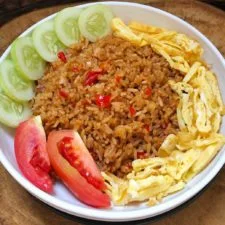
Nasi goreng is Indonesian fried rice, here cooked with a fragrant shallot-and-chilli paste, sweet soy sauce and a sliced omelette. It makes a satisfying one-plate meal and is a useful way to turn cooked rice into something richly savoury and caramelised.
Ingredients
- 150 g (1 cup)cold cooked white rice
- 3shallots, peeled and chopped
- 2 clovesgarlic, peeled and chopped
- 2 largechillies (optional)
- 1.25 ml (¼ tsp)dried shrimp paste (optional)
- to tastesalt
- 75 ml (5 tbsp)sweet soy sauce
- 75 ml (5 tbsp): 45 ml (3 tbsp) for the rice and 30 ml (2 tbsp) for the omelettevegetable oil
- 1egg, for the omelette
- to tastetomato, for garnish
- to tastecucumber, for garnish
Instructions
- 1
Cook the omelette
Whisk the egg with a pinch of salt. Heat 30 ml (2 tbsp) vegetable oil in a wok and cook the egg for about 5 minutes. Let it cool until it is no longer too hot to handle, then roll it up and slice it.
- 2
Make the paste
Use a mortar and pestle or food processor to grind the shallots, garlic, chillies, dried shrimp paste and salt into a coarse paste.
- 3
Fry the paste
Heat the remaining 45 ml (3 tbsp) vegetable oil in a wok over medium-high heat. Add the paste and sauté for about 2 minutes, until fragrant.
- 4
Add the rice
Tip the cooked rice into the wok.
- 5
Add the sauce
Pour in the sweet soy sauce.
- 6
Separate the grains
Mix thoroughly, breaking up any clumps until the rice grains are separated.
- 7
Fry until glossy
Keep frying until the moisture has evaporated and the grains look shiny and well caramelised, about 10 minutes.
- 8
Plate and garnish
Transfer the rice to a plate and garnish with tomato, cucumber and the sliced omelette.
What is nasi goreng?
Nasi goreng means fried rice in Indonesian and is a familiar dish in Indonesian cooking, including street-food stalls. This version combines rice with a savoury aromatic paste and sweet soy sauce, then serves it with omelette and fresh garnishes.
The contrast is part of its appeal: the rice is savoury and glossy, while the egg, cucumber and tomato bring softer and fresher notes.
Nutrition and macros by portion
The nutrition label shows one serving as written: 1100 calories, 17g protein, 108g carbs, 69g fat.
| Portion | Adjustment | kcal | Protein | Carbs | Fat |
|---|---|---|---|---|---|
| Lighter | Use less frying oil | 770 kcal | 12g | 76g | 48g |
| This serving | As written | 1100 kcal | 17g | 108g | 69g |
| Hungry | Add more cooked rice | 1650 kcal | 26g | 162g | 104g |
The cooked rice and sweet soy sauce provide most of the carbohydrates, while the vegetable oil supplies much of the fat. The egg and small amount of shrimp paste contribute protein, though the egg is the main protein source here. Add extra cucumber or other vegetables alongside to balance the plate with more fresh produce.
The rice makes a difference
Cooked rice: use rice that has been cooked ahead and cooled, as the grains are easier to separate in the wok. Break up any compacted portions before adding it.
Freshly cooked rice: if that is what you have, spread it out to release steam and cool it before frying so it is less likely to turn claggy.
Build flavour with the paste
Shallot and garlic: grind them with the other paste ingredients to help their flavour spread evenly through the rice.
Chilli and shrimp paste: both are optional, so adjust them to your taste or leave them out. Fry the paste until fragrant before adding the rice; the recipe allows about 2 minutes.
Fry for separate, glossy grains
Break up clumps: stir and separate the rice as you mix in the sauce, working until the grains are no longer stuck together.
Watch the finish: continue frying for about 10 minutes, until excess moisture has evaporated and the rice looks shiny and caramelised. Keep it moving so the sauce coats the grains evenly.
Make the omelette ahead
Egg: cook it in the wok with the specified 30 ml (2 tbsp) of oil, then let it cool enough to roll and slice. Preparing it first means it is ready to add as a garnish when the rice is done.
Serving: arrange the omelette on or beside the rice with tomato and cucumber, as described in the method.
Serving ideas
The recipe serves the fried rice with sliced omelette, tomato and cucumber, giving the plate a mix of warm rice and fresh accompaniments.
For a more substantial meal, serve it with extra vegetables or another protein alongside; keep the rice and omelette as the centre of the plate.
Recipe notes & tips
- Have the paste, sauce and garnishes ready before you start frying.
- Use a wok or wide pan so the rice can be stirred and separated.
- Taste before adding extra salt, since the sweet soy sauce and shrimp paste are already savoury.
- Keep the optional chilli out of the paste if you prefer a milder result.
- Let the omelette cool slightly before rolling it, so it is easier to handle.
Variations
- Milder paste: leave out the chillies for a gentler flavour.
- No shrimp paste: omit it for a version without dried shrimp paste.
- Extra vegetables: serve with more cucumber or tomato for a fresher plate.
- More egg: cook an additional egg omelette and serve it alongside the rice.
- Less sweet: start with less sweet soy sauce, then add more to taste.
Common mistakes to avoid
- Using warm, clumpy rice: cool it first and separate the grains before frying.
- Adding rice before the paste is fragrant: sauté the paste for about 2 minutes first.
- Leaving clumps intact: break them apart as you mix in the soy sauce.
- Stopping too soon: keep frying until the moisture has evaporated and the grains look glossy.
- Rolling the omelette while very hot: let it cool until it is comfortable to handle.
How to store
Refrigerate leftovers promptly in a covered container and use within 2 days. Reheat until steaming hot throughout, adding a small splash of water if the rice has dried out; refrigerate the omelette with the rice or separately.
Frequently asked questions
Can I use freshly cooked rice?
Yes, but let it cool and release steam before frying. Cold rice is easier to separate and less likely to clump.
Can I leave out the chilli?
Yes. The chillies are optional in this recipe, so omit them for a milder nasi goreng.
Is the dried shrimp paste essential?
No, it is also marked optional. Leaving it out will change the savoury depth, but the dish can still be made without it.
How do I stop the rice from clumping?
Start with cooled cooked rice and break up clumps as you stir in the sauce. Continue frying until the grains are separated and the moisture has evaporated.
How do I know when the rice is done?
The recipe gives about 10 minutes of frying after mixing. Look for grains that are separated, shiny and well caramelised, with no excess moisture.
What should I serve with nasi goreng?
This version is served with sliced omelette, tomato and cucumber. You can add extra fresh vegetables alongside if you like.
Cook it from the original
This recipe comes from cookmeindonesian.com. Their page has the author’s own photos, notes and tips — the best place to cook it from.
Open the recipe on cookmeindonesian.com