
Ricotta gnocchi
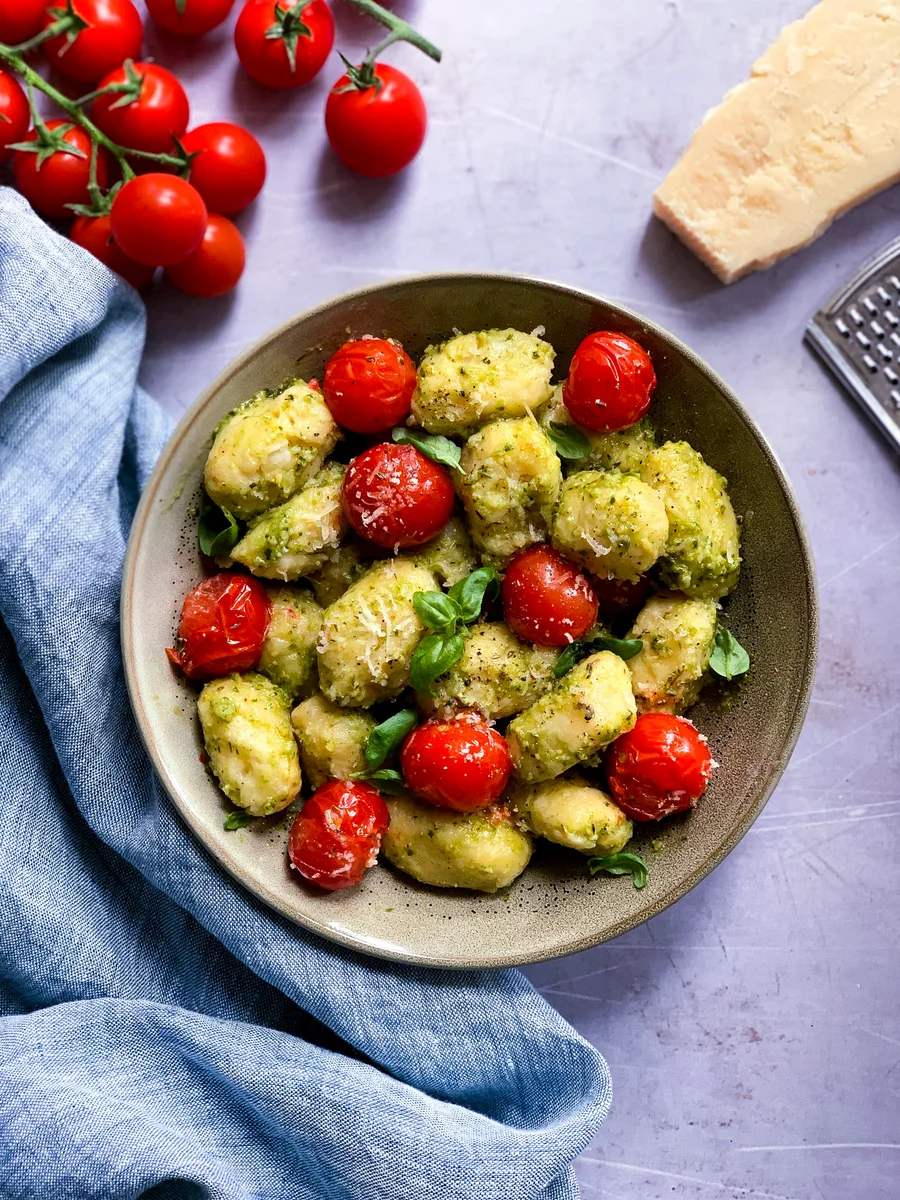
These soft potato and ricotta gnocchi are tossed with pesto and served with roasted cherry tomatoes, Parmesan and fresh basil. Making the dough from scratch gives you a satisfying meal with a bright, herby finish.
Ingredients
- 3 medium (about 300 g)potatoes
- 150 gplain flour, plus extra for dusting
- 1egg
- 60 gricotta
- ½ teaspoon, plus a pinch for the tomatoessalt
- 20–24cherry tomatoes
- 1 tablespoonolive oil
- to tastedried thyme
- 2 tablespoonspesto
- 30 gParmesan, to serve
- to tastefresh basil
- to tasteblack pepper
Instructions
- 1
Cook the potatoes
Prick the potatoes all over with a fork. Microwave for 6–8 minutes until tender, or bake at 180°C for about 30 minutes.
- 2
Mash the potatoes
Halve the cooked potatoes and leave them to cool. Mash until smooth.
- 3
Mix the dough
In a bowl, combine the mashed potato, flour, egg, ricotta and salt until evenly mixed. If the dough is too wet, add flour a little at a time; it should remain slightly sticky.
- 4
Flour the surface
Place the dough on a work surface generously dusted with flour.
- 5
Divide the dough
Cut the dough into four pieces.
- 6
Shape the gnocchi
Roll each piece into a rope about 1.5 cm thick. Cut it into gnocchi about 1.5–2 cm long.
- 7
Add the ridges
Use a fork or a gnocchi board to make ridges in the pieces.
- 8
Roast the tomatoes
Heat the oven to 200°C. Wash the tomatoes and put them in a baking dish or on a tray. Add the olive oil, a pinch of salt and thyme, toss to coat, then roast for 10–12 minutes.
- 9
Boil the gnocchi
Bring a large pan of salted water to the boil. Add the gnocchi and cook for about 4–5 minutes, until they rise to the surface.
- 10
Grate the Parmesan
Grate the Parmesan.
- 11
Toss and serve
Drain the gnocchi, return them to the pan and stir through the pesto. Serve with the roasted tomatoes, grated Parmesan and fresh basil, and finish with black pepper.
What are ricotta gnocchi?
Gnocchi are small Italian dumplings, often made with potato and flour. This version adds ricotta to the potato dough, then pairs the dumplings with pesto and oven-roasted tomatoes.
The method relies on a soft, slightly sticky dough rather than a firm one. Handle it gently and use flour on the work surface to make shaping easier.
Nutrition and macros by portion
The nutrition label shows one serving as written: 625 calories, 24g protein, 95g carbs, 17g fat.
| Portion | Adjustment | kcal | Protein | Carbs | Fat |
|---|---|---|---|---|---|
| Lighter | Use less pesto and Parmesan | 438 kcal | 17g | 67g | 12g |
| This serving | As written | 625 kcal | 24g | 95g | 17g |
| Hungry | Add a larger portion | 938 kcal | 36g | 143g | 26g |
The potatoes and flour provide most of the carbohydrates, while ricotta, egg and Parmesan contribute protein. Olive oil, pesto, ricotta and Parmesan account for much of the fat. Serve with extra greens or salad to add vegetables alongside the gnocchi.
Choosing the potatoes and ricotta
Potatoes: the recipe uses about 300 g in total; cook them until completely tender so they mash easily and evenly.
Ricotta: measure 60 g and mix it into the cooled mash. If the mixture feels wet, incorporate a little extra flour at a time rather than adding too much at once.
Getting the dough right
Mix just until the ingredients come together into an even dough. A little stickiness is expected, so avoid working in extra flour unless the dough is difficult to handle.
Dust the work surface well, divide the dough into four, and roll each portion separately into a rope about 1.5 cm thick. Cut pieces around 1.5–2 cm long.
Why make ridges?
A fork or gnocchi board gives each piece ridges. They also help the pesto cling to the dumplings, so take a moment to shape them if convenient.
There is no need to press hard: keep the pieces intact and set them on the floured surface while you finish shaping the batch.
Roasting the tomatoes
Toss the washed tomatoes with olive oil, a pinch of salt and thyme, then roast at 200°C for 10–12 minutes. They are ready when softened and beginning to split.
The tomatoes cook while you shape and boil the gnocchi, making good use of the oven time. Keep an eye on them towards the end, as their size can affect how quickly they soften.
When are the gnocchi done?
Cook the gnocchi in a large pan of boiling salted water for about 4–5 minutes. They are ready when they rise to the surface.
Drain them once cooked and mix with pesto while still warm. Serve promptly with the tomatoes, Parmesan, basil and black pepper.
What to serve alongside
The roasted tomatoes and pesto bring acidity and herbiness to the soft dumplings, while Parmesan adds a savoury finish. Add fresh basil just before serving for its fragrant flavour.
For a fuller plate, serve with a crisp green salad or lightly cooked greens. Keep accompaniments simple so the homemade gnocchi remain the focus.
Recipe notes & tips
- Let the cooked potatoes cool before mixing the dough so the egg does not cook on contact.
- Add any extra flour gradually; too much can make the gnocchi dense.
- Keep the work surface well floured to stop the soft dough sticking as you roll it.
- Use a large pan of water so the gnocchi have room to move as they cook.
- Roast the tomatoes until softened, but take them out before they collapse completely.
- Stir the pesto through the drained gnocchi while they are warm for an even coating.
Variations
- Add garlic: roast a crushed garlic clove with the tomatoes for extra savoury flavour.
- Use other herbs: replace the thyme with dried oregano or rosemary.
- Add greens: fold in wilted spinach just before serving.
- Change the pesto: use a different herb pesto if you have one to hand.
- Add chilli: finish with a pinch of chilli flakes for a little heat.
Common mistakes to avoid
- Adding too much flour: work it in a little at a time so the dough stays soft.
- Handling the dough too much: mix only until combined to help keep the gnocchi tender.
- Skipping the flour on the surface: dust it generously so the dough is easier to roll and cut.
- Overcooking the tomatoes: check them after 10 minutes and remove them once softened.
- Cooking by time alone: use the gnocchi floating to the surface as the doneness cue.
- Leaving the gnocchi in the water: drain them once cooked so they do not become waterlogged.
How to store
Refrigerate leftover cooked gnocchi and tomatoes in a covered container for up to 2 days. Reheat gently in a pan with a splash of water, or microwave until piping hot; the texture is best freshly cooked.
Frequently asked questions
Can I make the dough ahead?
It is best to shape and cook the gnocchi soon after making the dough, as it can become stickier while it stands. You can prepare the tomatoes ahead and reheat them when serving.
Can I freeze the gnocchi?
Freeze the uncooked pieces in a single layer on a floured tray until firm, then transfer them to a freezer-safe container. Cook from frozen in boiling water, allowing extra time until they rise to the surface.
Do I need to peel the potatoes?
The method does not specify peeling. If the skins are still in the mash after cooking, remove them before mashing for a smoother dough.
How do I know when the tomatoes are ready?
After 10–12 minutes at 200°C, they should be softened and starting to split. Roast a little longer if they are still firm.
Can I use fresh thyme instead of dried?
Yes. The method calls for thyme with the tomatoes, while the ingredient list specifies dried thyme; use whichever you have and season to taste.
What if my dough is very sticky?
Dust the surface and your hands with flour, then add a small amount more to the dough if needed. Stop once it is manageable, as excess flour can make the gnocchi heavy.
Cook it from the original
This recipe comes from clemfoodie.com. Their page has the author’s own photos, notes and tips — the best place to cook it from.
Open the recipe on clemfoodie.com