
Simple Vietnamese Bun Rieu
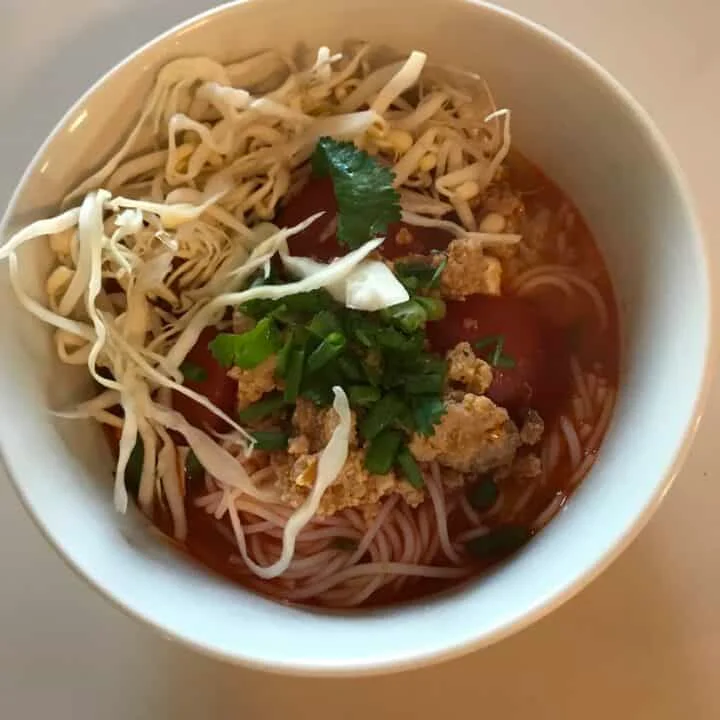
Bún riêu is a Vietnamese noodle soup with a savoury crab-and-pork mixture, tomatoes and a bright, hearty broth. This version is made for a generous family-style bowl, with fresh herbs, crunchy vegetables, lime and chilli to finish.
Ingredients
- 1 tablespoon (15 ml)cooking oil
- 1shallot, thinly sliced
- 4tomatoes, quartered
- 4 quarts (3.8 litres)water
- 2 cartons of 32 ounces each (2 × 946 ml)chicken broth
- 1 tablespoonsalt
- 1 pound (454 g)ground pork
- 1 pound (454 g)ground shrimp
- 1 jar of 7 ounces (198 g)shrimp paste
- 1 jar of 7 ounces (198 g)crab paste
- 2shallots, minced
- 2eggs
- 2 tablespoonssalt
- 1 tablespoonsugar
- 1 tablespoonblack pepper
- 1 tablespoonfish sauce
- 1 packagevermicelli noodles
- To tastelime wedges
- To tasteThai bird’s eye chillies
- 1 bunchcilantro, chopped
- 1 bunchspring onions, chopped
- 1 bunchwater spinach stems, split
- 1 small headlettuce, cut into thin strips
- 1/2 headgreen cabbage, cut into thin strips
- 1/2 headred cabbage, cut into thin strips
- 1/2 headred cabbage, cut into thin strips
- 1 cup (about 240 ml)bean sprouts
Instructions
- 1
Cook the noodles
Cook the vermicelli according to the instructions on the package.
- 2
Rinse the noodles
Once cooked, drain the noodles and rinse them under cold water to wash away excess starch and help keep them from sticking together.
- 3
Portion the noodles
Take a handful of noodles and wrap them around your hand to make a portion. Place it in a storage bowl beneath a damp towel, then repeat with the remaining noodles so they are ready while you make the broth.
- 4
Mix the meat
Combine the pork, shrimp, shrimp paste, crab paste, minced shallots and eggs.
- 5
Season the mixture
Stir in the salt, sugar, black pepper and fish sauce.
- 6
Soften the shallot
Heat the cooking oil in a pot, add the sliced shallot and sauté until lightly browned.
- 7
Cook the tomatoes
Add the tomatoes and sauté until they have softened.
- 8
Boil the broth
Pour in the water and chicken broth. Bring the liquid to a boil and let it boil for 3 minutes.
- 9
Lower the heat
Reduce the heat to medium.
- 10
Cook the mixture
While the broth is at a gentle rolling boil, scoop in the crab-and-pork mixture, about 1 tablespoon at a time. Let it cook for 15 minutes.
- 11
Check the centre
Break one meatball in half and check that the pork and crab mixture is cooked through.
- 12
Divide the noodles
Divide the prepared vermicelli among the serving bowls.
- 13
Add the herbs
Top the noodles with spring onions and cilantro.
- 14
Ladle and serve
Ladle broth over the noodles. Serve with extra crab meat, herbs, lime wedges and Thai chillies, letting everyone customise their bowl. Bean sprouts, shredded cabbage, mint and spring onions are also common toppings.
What is bún riêu?
Bún riêu is a Vietnamese noodle soup, commonly associated with a tomato-rich broth and a savoury crab mixture. Its name refers to the rice vermicelli and the soft crab mixture that gives the soup its distinctive character.
This version pairs crab and shrimp pastes with pork, shrimp and eggs, then balances the bold broth at the table with herbs, lime and fresh vegetables.
Nutrition and macros by portion
The nutrition label shows one serving as written: 451 calories, 44g protein, 34g carbs, 17g fat.
| Portion | Adjustment | kcal | Protein | Carbs | Fat |
|---|---|---|---|---|---|
| Lighter | More vegetables, fewer noodles | 316 kcal | 31g | 24g | 12g |
| This serving | As written | 451 kcal | 44g | 34g | 17g |
| Hungry | Add extra noodles | 677 kcal | 66g | 51g | 26g |
The vermicelli and sugar contribute most of the carbohydrates, while the oil, pork, eggs and pastes contribute much of the fat. Pork, shrimp, crab and eggs provide protein; serve the soup with plenty of its fresh vegetables to balance the noodles and rich meat mixture.
Build the flavour base
Shallot: sauté it until lightly browned to give the broth a savoury starting point without taking it too dark.
Tomatoes: cook them until soft before adding the liquids. They bring a gentle acidity and help give the soup its characteristic tomato-led flavour.
Mix the crab and pork
Paste and seasoning: combine the crab paste, shrimp paste, fish sauce and seasonings evenly with the pork, shrimp, shallots and eggs. These ingredients make the mixture strongly savoury, so distribute them well through the bowl.
Gentle cooking: add spoonfuls of the mixture to a gently rolling broth. This lets them cook in the soup; check a piece by breaking it open to make sure the centre is cooked through.
Keep the noodles separate
Cold rinse: after cooking, drain and rinse the vermicelli to remove surface starch, which helps prevent the strands clumping.
Serving bowls: portion the noodles before adding broth, rather than simmering them in the pot. This keeps the soup easier to serve and lets each person choose their own toppings.
Finish each bowl to taste
Fresh toppings: cilantro, spring onions, bean sprouts and shredded cabbage add freshness and crunch. Water spinach stems and lettuce offer more vegetables alongside the noodles.
Bright and hot: serve lime wedges and bird’s eye chillies separately. A squeeze of lime or a little chilli can be added to each bowl to suit individual tastes.
Plan the cooking time
Noodles first: prepare and portion the vermicelli before making the broth, as directed, so it is ready when the soup is done.
Broth and mixture: after the liquid boils for 3 minutes and the heat is reduced, cook the spoonfuls of crab-and-pork mixture for 15 minutes. Check that one is cooked through before serving.
What to serve alongside
The noodles, meat mixture and broth make a substantial bowl on their own. Arrange the herbs, leafy vegetables, cabbage, sprouts, lime and chillies on the table so everyone can add what they like.
For a lighter balance, fill out the bowl with extra fresh vegetables and keep the portion of noodles moderate.
Recipe notes & tips
- Rinse the cooked vermicelli in cold water to help keep it loose.
- Keep the noodles out of the broth pot until you assemble the bowls.
- Add the meat mixture while the broth is gently boiling rather than at a hard boil.
- Break a meatball open to check that the centre is cooked through.
- Offer lime and chillies at the table so diners can adjust their bowls.
- Prepare the vegetables and herbs while the broth cooks.
Variations
- Extra vegetables: Add more bean sprouts, lettuce or shredded cabbage to each bowl.
- More heat: Serve sliced bird’s eye chillies on the side for diners who want a spicier soup.
- Mint finish: Add fresh mint with the cilantro and spring onions.
- Lime-forward: Offer extra lime wedges for a brighter, tangier broth.
- Noodle portion: Use less vermicelli and more vegetables for a lighter bowl.
Common mistakes to avoid
- Skipping the rinse: Starchy noodles can stick together; rinse them with cold water after draining.
- Boiling the noodles in the soup: They can become difficult to portion; keep them separate until serving.
- Adding the mixture to a hard boil: A gentle rolling boil is easier to manage while the spoonfuls cook.
- Guessing doneness: Break one meatball open and check that its centre is cooked through.
- Seasoning only at the pot: Keep lime and chillies on the side so each person can adjust their own bowl.
How to store
Store leftover broth and noodles separately in covered containers in the refrigerator and use within 3 days. Reheat the broth until steaming, then pour it over the noodles; add fresh herbs and vegetables when serving.
Frequently asked questions
Can I prepare the noodles ahead?
Yes. Cook, drain and rinse them, then portion them into a storage bowl under a damp towel as described. Keep them separate from the broth until serving.
How can I tell when the meat mixture is cooked?
After the stated 15-minute cooking time, break one piece in half and check that the centre is cooked through.
Can I adjust the chilli and lime?
Yes. Serve both at the table and let each person add them to taste.
What vegetables can go on top?
The recipe includes lettuce, green and red cabbage, bean sprouts and split water spinach stems. The serving instructions also mention shredded cabbage and mint as possible toppings.
Can I store the noodles in the broth?
It is better to store them separately, as the recipe keeps the noodles apart from the soup for serving. This also makes reheating easier.
Cook it from the original
This recipe comes from cookingwithlane.com. Their page has the author’s own photos, notes and tips — the best place to cook it from.
Open the recipe on cookingwithlane.com