
Authentic Vietnamese Thit Nuong (Grilled Lemongrass Pork)
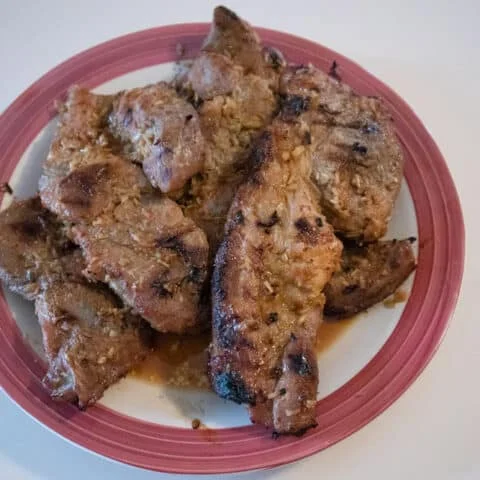
Thit nuong is Vietnamese grilled pork flavoured with lemongrass, garlic, shallots and fish sauce. Marinate it ahead, then grill or roast until tender with lightly caramelised edges and serve with rice, noodles or lettuce.
Ingredients
- 1.81 kg (4 pounds)pork shoulder
- 1 stalklemongrass, chopped
- 3 tablespoonsshallots, minced
- 1 tablespoongarlic, minced
- 4 tablespoonssugar
- 2 tablespoonsfish sauce
- 2 teaspoonssea salt
- 1 teaspoonpaprika
Instructions
- 1
Cut the pork
Cut the pork shoulder into pieces 7.5–10 cm (3–4 inches) long and set them aside.
- 2
Blend the aromatics
Put the lemongrass, shallots, garlic, sugar and salt into a food processor. Process until combined.
- 3
Add the fish sauce
Transfer the mixture to a large bowl, add the pork pieces and pour in the fish sauce.
- 4
Coat the pork
Distribute the marinade evenly over the pork.
- 5
Marinate overnight
Put the pork and marinade in a sealable bag and leave to marinate for at least 24 hours.
- 6
Heat the cooker
For grilling, heat the grill to medium-high. For baking, preheat the oven to 190°C (375°F).
- 7
Grill the pork
Place the pork in a grill basket and cook over medium-high heat. When it has a little char, turn it over so the other side caramelises similarly, then remove it from the grill.
- 8
Roast the pork
For the oven method, place the pork on a roasting pan and turn the pieces to cook them through. During the final 5 minutes, broil to add a little caramelisation.
- 9
Serve the pork
Once cooked through, serve with vermicelli rice sticks, jasmine rice or lettuce. Add fresh vegetables and prepared fish sauce as a garnish.
What is thit nuong?
Thit nuong means grilled meat in Vietnamese, and the dish is commonly made with pork seasoned with fragrant aromatics and fish sauce. This version gets its distinctive flavour from lemongrass, shallot and garlic, with sugar helping the surface caramelise as it cooks.
The recipe works as a make-ahead main: the pork rests in its marinade before being grilled or roasted. Serve it with rice, noodles or lettuce to make a meal.
Nutrition and macros by portion
The nutrition label shows one serving as written: 772 calories, 80g protein, 13g carbs, 42g fat.
| Portion | Adjustment | kcal | Protein | Carbs | Fat |
|---|---|---|---|---|---|
| Lighter | Serve with extra lettuce | 540 kcal | 56g | 9g | 29g |
| This serving | As written | 772 kcal | 80g | 13g | 42g |
| Hungry | Add more jasmine rice | 1158 kcal | 120g | 20g | 63g |
The pork supplies most of the protein and fat, while the sugar contributes some carbohydrates; the rice or noodles served alongside add further carbohydrates. Balance the plate with lettuce and fresh vegetables, and choose a rice or noodle portion that suits your meal.
The flavour base
Aromatics: Processing the lemongrass, shallots, garlic, sugar and salt makes a cohesive mixture that can coat the pork. The recipe also lists paprika, though it does not specify when to add it.
Marinating the pork
Even coating: Mix the pork thoroughly with the marinade and fish sauce so the pieces are covered. The recipe calls for at least 24 hours in a sealed bag, so plan ahead before cooking.
Grilling for colour
Heat: Medium-high heat gives the pork a chance to develop a little char. Turn the pieces when one side has caramelised, and remove them once cooked through.
Roasting instead
Oven method: Roast the pork on a roasting pan at 190°C (375°F), turning the pieces so they cook through. The recipe finishes with 5 minutes under the broiler for extra surface colour.
How to serve it
Rice or noodles: Jasmine rice and vermicelli rice sticks are both suggested accompaniments. Fresh vegetables and prepared fish sauce can go on top or alongside.
Lettuce: For a lighter-feeling serving, use lettuce as the base or wrap for the pork. Add the vegetables and fish sauce at the table.
Recipe notes & tips
- Cut the pork into similarly sized pieces so they cook at a similar pace.
- Use a sealable bag to make it easier to coat the pork evenly in the marinade.
- Allow at least 24 hours for marinating, as specified in the recipe.
- Turn the pork during cooking to colour both sides.
- Keep an eye on the pork under the broiler during the final 5 minutes.
- Prepare the rice, noodles or lettuce before taking the cooked pork off the heat.
Variations
- Rice bowl: Serve the pork over jasmine rice with fresh vegetables.
- Noodle bowl: Pair it with vermicelli rice sticks and prepared fish sauce.
- Lettuce wraps: Serve the pork with lettuce leaves and vegetables for wrapping.
- Oven-cooked: Roast the pork at 190°C (375°F) and finish under the broiler for 5 minutes.
- Grilled: Cook the pork over medium-high heat, turning once it has developed a little char.
Common mistakes to avoid
- Short marinating: The recipe calls for at least 24 hours, so start the day before cooking.
- Uneven coating: Mix the pork thoroughly with the marinade and fish sauce before bagging it.
- One-sided browning: Turn the pork so both sides can caramelise.
- Skipping the doneness check: Cook the pork through before serving.
- Unwatched broiling: Check the pork during the final 5 minutes so it only gets lightly caramelised.
How to store
Refrigerate leftover cooked pork in a covered container and use within 3–4 days. Reheat until steaming hot throughout; store rice, noodles and fresh lettuce separately.
Frequently asked questions
Can I make this without a grill?
Yes. The recipe gives an oven option: bake at 190°C (375°F), turning the pork to help it cook through, then broil for 5 minutes at the end.
How long should the pork marinate?
Leave it in the marinade for at least 24 hours, as directed in the recipe.
What should I serve with thit nuong?
Serve it with vermicelli rice sticks, jasmine rice or lettuce. Fresh vegetables and prepared fish sauce are suggested as garnishes.
When do I add the paprika?
Paprika is included in the ingredient list, but the method does not say when to add it. The method’s food-processor step lists lemongrass, shallots, garlic, sugar and salt.
How do I know when the pork is ready?
The method says to cook it through, turning it as needed. It does not give a specific internal temperature.
Cook it from the original
This recipe comes from cookingwithlane.com. Their page has the author’s own photos, notes and tips — the best place to cook it from.
Open the recipe on cookingwithlane.com